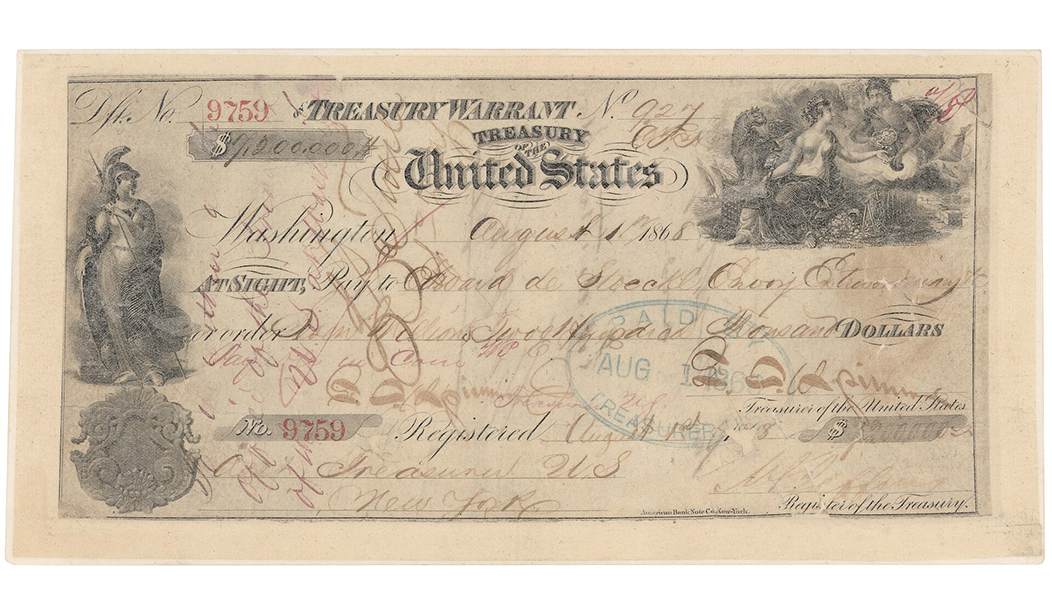

Today is an auspicious day to be an Alaskan. Why? Because it's Seward's Day, officially and legally an Alaska state holiday. 159 years ago today, on March 30th, 1867, the Alaska Purchase Treaty was signed, the agreement that sealed the purchase of Russian Alaska by the United States. This shouldn't be confused with Alaska Day, which occurs on October 18th and observes the official, formal transfer of governance of all of what was Russian Alaska to the United States.
Secretary of State William Seward was the primary advocate of the purchase, and Russia, having just suffered the catastrophic cost of the Crimean War, was desperate for cash. It was seen then as a win for both sides. It didn't hurt that Russia had no idea what all Alaska had to offer. Neither did the United States, either, for that matter, leading wags to dub the purchased territory as "Seward's Folly" and "Seward's Icebox." But Mr. Seward, as we see today, had the last laugh, and he who laughs last, laughs best.
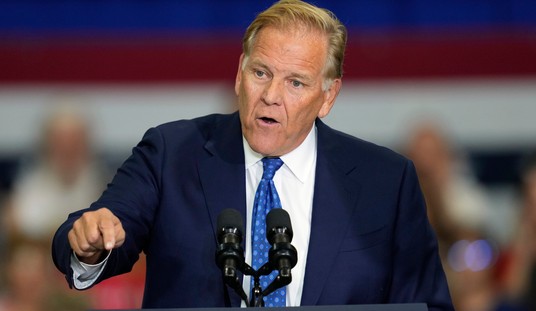
Governor Mike Dunleavy released a statement commemorating the day:
Today we celebrate Seward's Day, honoring the visionary foresight of William H. Seward, who brokered the purchase of Alaska from Russia for just $7.2 million in 1867, paving the way to the Alaska we all know and love today. pic.twitter.com/2qTwmJeVnX
— Governor Mike Dunleavy (@GovDunleavy) March 30, 2026
Governor Dunleavy said:
It’s 159 years since William Seward purchased Alaska, from the Russians, for the United States of America for $7.2 million, probably the greatest deal of any type, real estate or otherwise in the history of the world.
So on March 30th, Monday, go out and celebrate Seward's Day. Or at least, give it some thought as to what this man did for out great state and our country.
Russia didn't know what they were selling. And America, or at least most Americans, didn't know what we were buying.
Read More: CPAC 2026: An Alaskan Looks at Texas
Gold and Silver Prices Rocketed Mining Value in Alaska to All-Time High in 2025
William Henry Dall, for whom the Dall Sheep (Ovis dalli) and the Dall's porpoise (Phocoenoides dalli) are named, was one of the first European-descended explorers to venture into Alaska's vast interior, and he always insisted that the American public in general were in approval of the purchase, but this was well before any formal polling measures were done, and it's likely he was not unbiased. The jokes continued, with another joke name, "Walrussia" becoming popular.
Even in 1867, though, most American newspapers were coming around to the idea. Plenty of people suspected there was mineral wealth in the Great Land, and they were correct. It didn't take long. 29 years later, the world spread like wildfire that there was gold in Alaska, first found in the Klondike district of Canada's Yukon. While that wasn't technically an Alaska strike, thousands nevertheless flooded into panhandle towns like Dyea and Skagway to then hike over the Chilkppt Pass to the Yukon River, where they could float down the Yukon River to the Klondike. It was a hard journey through a howling wilderness, and the prospectors were advised to bring a year's rations or risk starvation. Many died on the trail until towns started to appear along the trail, one of this, Dawson City in the Yukon, remains on the banks of the Yukon.
Then, in 1899, the Nome gold rush made that coastal town on the Bering Sea explode. The Nome strike was different, as it was mostly "flour" gold, very fine dust, that could be panned out of the beaches facing the Bering Sea. That was one of the biggest gold rushes in Alaska, with tent cities on the beach spanning miles. Things in Nome and the area around got rough enough that a famous gun hand, one Wyatt Earp, was hired on to bring a little order to things.
Since then it's been a wild ride of new energy and mineral wealth in the Great Land. Aside from the fisheries, the great hunting, the recreational opportunities, and the vast beauty of Alaska, there is the North Slope oil, which came fully on line with the completion of the Trans-Alaska pipeline in 1977. There's natural gas in them thar tundras, too, and the Trump administration is still wrangling to get a natural gas pipeline built from the North Slope to the Kenai Peninsula town of Nikiski. There's more gold, silver, lead, antimony, rare earth metals, you name it - and under the current administration, "drill, baby, drill" and "mine, baby, mine" are becoming the order of the day.
But that's not the best part about Alaska. I've always described my state with four words: Vast, wild, clean, and free. Even with all the energy and mineral development, Alaska still remains mostly untouched - and when you consider the word "mostly" as applied to Alaska, that's a lot of untouched land. You can drop Texas, California and Montana into Alaska and have room left over for a Delaware or two. Even with all the development underway and planned, there's plenty of pristine wilderness left over. In Alaska, we really can have our cake and eat it, too.
Russia knows now what they sold, for about 2 cents an acre. And that's too bad. The purchase of Alaska ended up being some of the best money the United States ever spent. And the agreement was struck and signed 159 years ago today.