
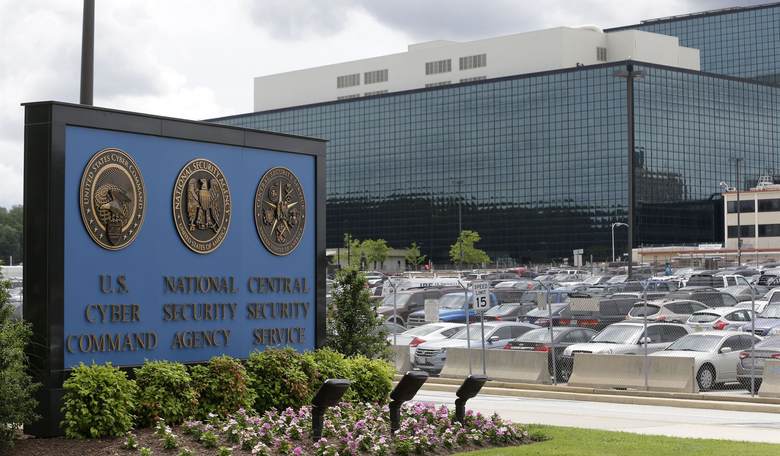
As the United States faces elevated global tensions, the National Security Agency’s primary classified internal communications network, NSANet, went offline on Tuesday, potentially disrupting the agency’s ability to share top-secret information at a crucial moment.
The highly classified network that NSA employees use to communicate sensitive information internally is down, according to a CNN report later confirmed by RedState. There is currently no evidence that a cyberattack caused the outage, and as officials work to determine the scope of the problem, the agency has ordered staggered arrival times for personnel at its Fort Meade, Maryland, headquarters to avoid overloading the system.
The highly classified network that the National Security Agency uses for its internal communications is down, according to six people familiar with the matter. At this point there is no evidence of a cyberattack, sources said. CNN has asked the National Security Agency for comment. https://t.co/bUJ5TEtBxY
— CNN (@CNN) November 17, 2026
White House spokesperson Lauren Bis said Tuesday that officials “see no evidence that this was a cyberattack” and that “there is no crisis, or anything like that, for Americans to be worried about.” NSA is expected to continue operations as multiple redundancies and backup networks remain available to maintain secure communications with President Trump, who is in the Philippines ahead of meetings in China with Xi Jinping and Vladimir Putin.
CBS News subsequently reported that a U.S. official attributed the disruption to scheduled system maintenance, while other sources pointed to routine patching. Officials said mission-critical capabilities remained operational.
NSANet is a specialized intranet used by agency personnel for classified communications. Unlike a public network, it’s isolated from the ordinary internet, relying on fiber-optic protection and satellite links with strong encryption. Intelligence sharing among the Five Eyes partners (the United States, United Kingdom, Canada, Australia, and New Zealand) also remains intact amid the disruption of NSANet.
.@SecMullinDHS: “I can tell you with complete certainty that we are not under attack. There’s no cyber threat…” https://t.co/J62GR187gZ
— Daily Wire (@realDailyWire) November 17, 2026
The NSANet failure is the latest in a series of recent technology disruptions throughout the U.S. On Friday, the Federal Aviation Administration ordered a nationwide ground stop that halted flights for hours after a data flood linked to routers during a copper-to-fiber upgrade; officials have said there is no indication of a cyberattack. Last week, a Microsoft outage affected Outlook and Teams for users worldwide. Banking services, including at Chase, also experienced interruptions; yet, in each case, the affected organizations have attributed the problems to routine technical issues rather than malicious activity.
For now, officials insist the outage isn’t a crisis and alternative channels allow secret information to travel throughout NSA channels. Still, the timing is awkward. But with President Trump in the Philippines preparing for meetings with Xi Jinping and Vladimir Putin, the temporary loss of the NSA’s primary classified internal network has heightened public suspicion after a string of recent technology failures across aviation, banking, and major software platforms. Until the outages stop and clearer explanations for the failures emerge, many will remain unconvinced that the disruptions are purely coincidental.