
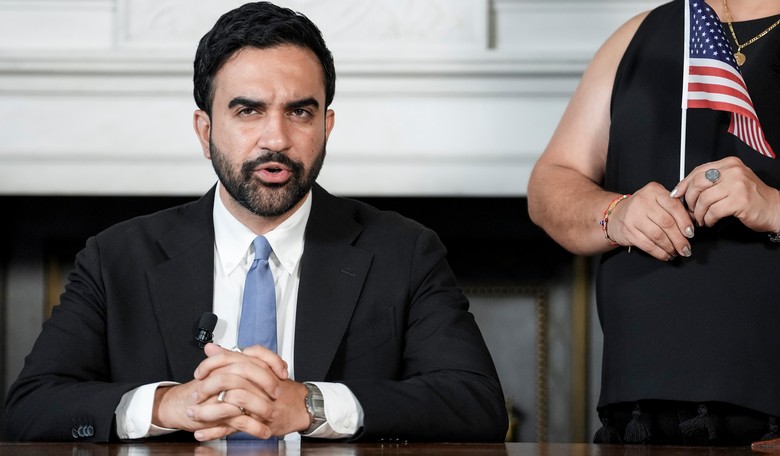
Mayor Zohran Mamdani has a "plan" to close Rikers Island. He paints it as a way to address a variety of issues.
But as we explained, his "plan" actually already starts out as a failure. For one thing, it wasn't actually his plan to close Rikers; there was already a requirement from the city council to close it by 2027. His "plan" was actually trying to push that back to 2032 because they haven't gotten the borough jails proposed to take the place of Rikers done yet.
There's also a deficit between the number of people that they can house in Rikers versus the people they say they could house in the new borough jails. The new borough jails (assuming they even get built) are only projected now to house about 4,100 inmates. There are presently more than 6,000 inmates being held in Rikers. So once again, when it comes to Mamdani, the math isn't working. We've seen that with his grocery store plan and his take on the problem with rent-stabilized units being vacant.
Now he argues he has alternatives, and you won't believe what one of them is — paying family members of the inmates to house them — with taxpayer dollars.
A little-known program that pays New Yorkers to provide housing for ex-con family members released from jail would be expanded as part of Mayor Zohran Mamdani’s sweeping plan to close Rikers Island by 2032.
Hizzoner’s 88-page “Close Rikers Strategic Plan,” released Friday, includes plans to expand the “Kinship Reentry Housing Program,” introduced in 2021, from supporting 50 families to 300 families.
Mamdani wants to pump $3.55 million in taxpayer dollars into the program this fiscal year and expand the investment to $7.1 million in following years.
Families had previously been paid $500/month for up to a year. But as our sister site Townhall observed, that would be $6,000/year x 300 families, meaning $1.8 million. So either they're going to be paying more, or where is all that money going?
Then there's this:
“This program provides a stable home for people returning to community from Rikers or prison, including 100 people with diagnoses of serious mental illness, substance use disorder or other complex behavior health needs,” the Close Rikers plan says of the Kinship expansion proposal.
“It provides direct financial assistance, financial management services, clinical therapeutic support, peer navigation and other wraparound resources.”
So then why are you letting them out at all, much less into a family situation where you could have a problem? If they have all those issues, their place is in a hospital, if not a jail. How is this actually keeping the city safe?
"New Yorkers are paying for crime twice — first for the offense and then again to pay for these programs," said Councilwoman Joann Ariola (R-Queens).
Even a Democrat politician had an issue with this.
“Only in New York City do we come up with a program that pays families to take in their own relatives coming out of jail,” said Councilman Phil Wong (D-Queens). “Maybe if some of these families had been more involved in their lives in the first place, they wouldn’t have ended up behind bars, but now taxpayers are expected to foot the bill?”
Plus, that's only 300 people for a ton of money, although Mamdani's larger plan talks about other diversionary options, which would then have other issues. The math still isn't working here.