






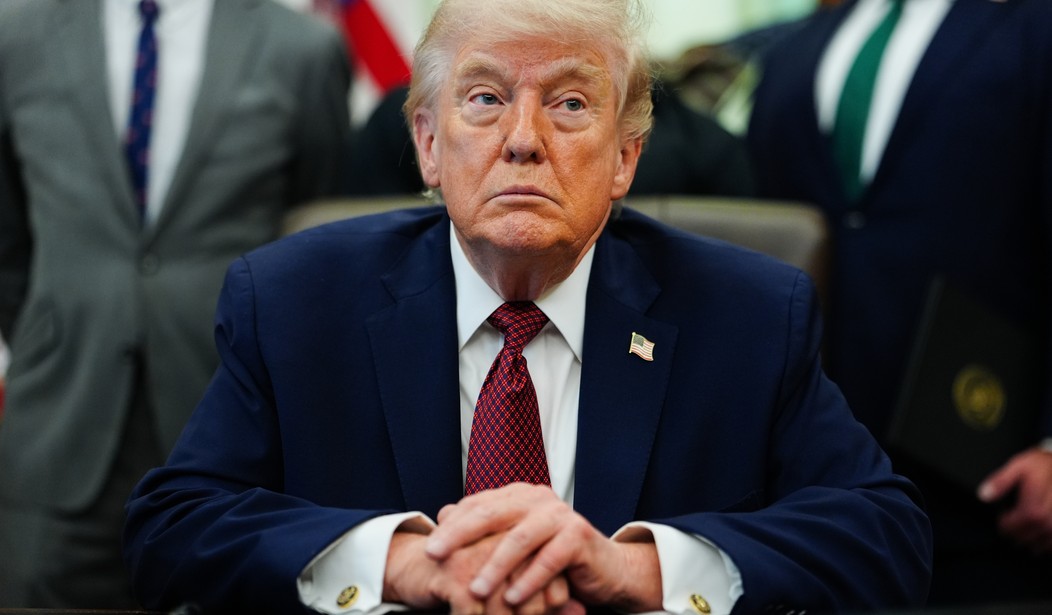
A New York Times piece published first thing this morning lays the blame for Iran’s swollen nuclear stockpile squarely at Donald Trump’s feet. The headline calls Iran’s atomic arsenal “a problem he helped create.” The framing is clean, the narrative is tidy, and it leaves out enough inconvenient history to constitute a significant distortion of the record.
The core argument goes like this: Iran was complying with the Joint Comprehensive Plan of Action (JCPOA), Trump pulled the United States out in 2018, and Iran responded with an enrichment spree that has since pushed it close to nuclear breakout capability. Therefore, Trump owns the problem.
That sequence of events is technically accurate as far as it goes. The issue is how far it goes, and what it deliberately leaves behind.
The Times piece treats the JCPOA as a functional agreement that Trump simply discarded. It does not address Iran’s documented pattern of nuclear deception stretching back more than two decades, a pattern that predates the deal and continued through it.
Iran’s main enrichment facility at Natanz was not a declared site. It was a covert program exposed in 2002 by an Iranian opposition group, the Mojahedin-e-Khalq. The Fordow enrichment facility, buried deep underground and later repurposed under the JCPOA, was similarly undisclosed until Western intelligence services detected it. Iran only informed the International Atomic Energy Agency (IAEA) of Fordow’s existence in September 2009, after the West already knew about it. The IAEA’s position was that Iran was bound to declare the facility the moment construction began, not 180 days before it received nuclear material, as Iran claimed.
As former IAEA Deputy Director General Olli Heinonen observed in 2013, “If there is no undeclared installation today…it will be the first time in 20 years that Iran doesn’t have one.”
That observation preceded the JCPOA by two years. The Times does not mention it.
Instead, the piece acknowledges the deal’s sunset provisions, which would have allowed Iran to enrich on an industrial scale beginning around 2030. That concession is framed as a flaw, but a manageable one. Notably, it does not examine with any rigor whether the deal’s inspection architecture was sufficient to catch Iran cheating in real time.
Critics of the JCPOA, including serious arms control analysts and not just political opponents, raised pointed concerns about the inspection regime from the beginning. The deal required Iran to implement the IAEA’s Additional Protocol, which provides for more intrusive inspections than the baseline safeguards agreement. However, the Additional Protocol is not a universal document. Each country negotiates its own version, and the model protocol does not cover military sites.
Iran made that limitation explicit. Iranian officials stated that the JCPOA did not require access to military facilities and that such access would not be granted. The Parchin military complex, where the IAEA had long suspected Iran of testing high-explosive components for a nuclear weapon, remained off-limits to inspectors throughout the JCPOA period. Satellite imagery later showed Iran demolishing and paving over structures at Parchin while the deal was being negotiated and after it took effect.
The JCPOA also closed a separate IAEA investigation into the Possible Military Dimensions of Iran’s nuclear program as a precondition for the deal’s implementation. Critics argued that the investigation was shut down prematurely, before Iran provided credible answers about its past weapons-related activities.
The EBSCO Research analysis of the JCPOA noted, bluntly, that “it is far from clear that the inspection/verification regime outlined in the unclassified version of the JCPOA is adequate.”
In January 2018, Israeli Mossad agents conducted one of the most consequential intelligence operations in recent memory. Fewer than two dozen operatives broke into a warehouse in the Shorabad district of Tehran and extracted approximately 100,000 documents, paper files, and digital records, comprising Iran’s clandestine nuclear archive.
The archive documented Iran’s AMAD Project, a structured nuclear weapons development program. U.S. intelligence assessed the program began in the late 1980s and ran through 2003. The documents themselves covered AMAD Project activity from 1999 through 2003 and included warhead designs, production plans, and years of weapons-related research.
What made the archive directly relevant to the JCPOA was how it came to be in that warehouse. Beginning in February 2016, just after the JCPOA entered into force, Iranian officials moved thousands of documents about building nuclear weapons into 32 safes at the previously undisclosed Shorabad location. The JCPOA gave the IAEA rights to visit declared facilities associated with Iran’s nuclear program. In response, Iran moved its most sensitive weapons records somewhere the IAEA had no authority to look.
Israeli Prime Minister Benjamin Netanyahu presented the archive publicly in April 2018, shortly before Trump withdrew from the deal. According to the IAEA’s subsequent investigation, its second inquiry into Iran’s past nuclear activities, launched in 2018, the agency found evidence of undeclared nuclear materials and activities at four separate locations. Samples taken from three of those sites confirmed the presence of processed uranium. Iran provided no technically credible explanation for any of it.
The IAEA Board of Governors passed resolutions demanding Iranian cooperation in June 2020, June 2022, and November 2022. In June 2025, the IAEA formally declared Iran noncompliant with its NPT safeguards obligations for the first time since 2005.
The Times piece does not mention the Mossad archive operation. It does not mention the four undeclared nuclear sites. It does not mention the IAEA’s formal finding of noncompliance.
But it does lean on the fact that both the IAEA and Trump’s own administration certified Iranian compliance in 2017. That is accurate. It omits the context surrounding those certifications and the serious objections raised at the time.
The Foundation for Defense of Democracies and other critics argued that Iran was technically complying with the deal’s numerical limits while simultaneously stonewalling inspectors on military sites, failing to answer questions about past weapons activities, and retaining the industrial knowledge and centrifuge infrastructure that would allow a rapid breakout once restrictions expired. Trump certified compliance in April and July 2017 while simultaneously arguing that Iran was violating the deal’s spirit, a distinction the Times treats as a rhetorical dodge rather than a substantive concern.
A Fox News analysis of current negotiations notes, citing nuclear policy analyst Matthew Ruhe, “The JCPOA failed to ensure IAEA inspectors could monitor, and account for, the entirety of Iran’s program and its compliance with the deal. This problem has worsened significantly in the decade since, as Iran systematically stonewalled inspectors.”
Technical compliance with a flawed verification regime is not the same as genuine transparency. The Times collapses that distinction.
Even analysts who supported the JCPOA acknowledged its most fundamental structural problem: it was not a permanent solution. The deal’s restrictions on enrichment levels were set to expire in 15 years. Key limits on centrifuge deployment were set to lift in 10. After 2030, Iran would have been legally entitled to enrich uranium on an industrial scale with international validation for its program.
Then-President Obama himself acknowledged this in a 2015 NPR interview, conceding that Iran’s breakout time, the time needed to produce enough fissile material for one bomb, would effectively approach zero once the deal’s provisions expired.
The RAND Corporation’s analysis of the JCPOA was harsh in noting the agreement “wasn’t a permanent limitation of the Iranian nuclear program, but a pause.” Critics who described it as “kicking the can down the road” were not engaging in hyperbole. They were describing what the deal’s own architects admitted it was.
The Times argument is built on a true premise: Iran’s nuclear stockpile is far larger today than it was in 2015, and the timeline of that accumulation follows Trump’s 2018 withdrawal. That is factual.
The argument fails when it presents that timeline as a sufficient explanation for the current crisis while omitting the following:
- Iran’s two-decade history of concealing nuclear facilities from international inspectors
- The JCPOA’s explicit exclusion of military sites from inspection authority
- Iran’s movement of nuclear weapons documents to undeclared locations immediately after the deal took effect
- The Mossad archive revealing Iran’s continued weapons-related record-keeping through at least 2015
- The IAEA’s discovery of undeclared nuclear material at four separate Iranian sites during and after the deal’s operation
- The deal’s own sunset provisions, which Iran’s leadership had already indicated it intended to exploit
- The IAEA’s formal 2025 declaration of Iranian noncompliance
A deal that excluded military sites from inspection, closed an unresolved weapons investigation as a precondition for implementation, and expired within 15 years was not a guarantee against an Iranian bomb. It was, at best, a delay. And if Iran was already concealing weapons-related materials in undeclared warehouses within weeks of the deal taking effect, the nature of that delay deserves serious examination.
The Times chose not to examine it. Instead, it offered a clean villain in Donald Trump and a whitewashed timeline, and called it journalism.
Editor's Note: For decades, former presidents have been all talk and no action. Now, Donald Trump is eliminating the threat from Iran once and for all.
Help us report the truth about the Trump administration’s decisive actions to keep Americans safe and bring peace to the world. Join RedState VIP and use promo code FIGHT to get 60% off your VIP membership.

Join the Conversation
VIP members get the ability to comment on articles.