







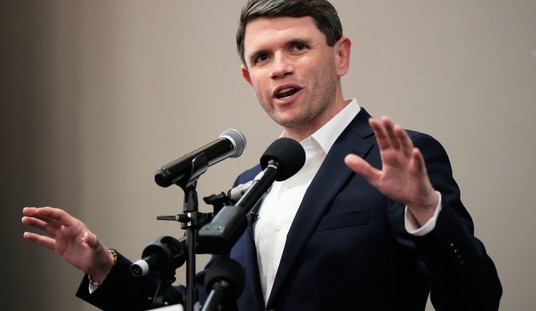
Director of the National Institutes of Health (NIH) and Acting Director of the Centers for Disease Control and Prevention (CDC) Jay Bhattacharya took to the CPAC stage to declare, "It's no longer Tony Fauci's NIH."
Thank God for that.
Dr. Bhattacharya's remarks followed the powerful speech of Reza Pahlavi, and he admitted, "That was a tough act to follow. What an amazing speaker."
But he forged ahead, detailing how the agencies he helms are doing their part to Make America Health Again (MAHA).
Bhattacharya said:
"I want to tell you a great story about how we can make America healthy again. And I'm going to begin with a perspective from 1944 that still challenges us today. There was a man named Vannevar Bush. He wrote a book called, The Endless Frontier,' that warned that the scientific progress of the United States was becoming unevenly distributed. Too much research capacity, he argued, was concentrated in a small number of institutions. He called on the federal government not just to invest in science, but to build a system that expanded opportunity across the country. And for 80 years, we've answered that call with extraordinary commitment. I've been now to the great scientific institutions of the country, and I've seen American scientists just devoted to the cause of discoveries that will make America healthy again."
As a man who has been in medicine and the scientific space for decades, Bhattacharya knows of what he speaks. As the Feel-Good Friday offering attested, our nation is advanced in our research, techniques, and surgical breakthroughs. Through the NIH, Bhattacharya leads this foremost biomedical research and advancement. The NIH supports 80 percent of all biomedical research conducted around the world, and for a mind and heart like Bhattacharya's, it dictates a sense of duty.
Earlier on the CPAC stage, CMS Director of Medicare/Deputy Administrator Chris Klomp talked about Chinese infiltration and theft of America's innovation and research. Bhattacharya reinforced this urgent issue, saying:
"With that leadership comes responsibility. If the U.S. steps back from leadership in biomedical research, emerging technologies and global health, we risk ceding that leadership to others, particularly China. Whose governing values, ethical frameworks, and strategic priorities differ from ours. I'm telling you, today, that we are at a Sputnik moment.
"The Chinese biomedical research enterprise is challenging American supremacy. You heard earlier in this conference from others who have told you about how the Chinese have taken big advances in their biomedical research enterprise. Many Americans receive their medicines from factories that are in China. The newest therapies for cancer, genetic diseases, they use Chinese manufacturing and expertise even though the underlying ideas were created by American scientists and funded by American taxpayers."
Dive Deeper: CPAC 2026: Reza Pahlavi Lays Out Vision - to Cheers From Iranian Americans - to Make Iran Great Again
CPAC 2026: Team CMS, Dr. Oz Talk Beating Big Pharma and Fraud, Following 'North Star' of Truth
The CPAC audience booed over this fact, and Bhattacharya affirmed that their displeasure was appropriate. He broadened on the truth that America must be the one to set the standard for all areas of science.
"The work we do here in the United States sets the standards for the world, grounded in openness, scientific integrity, and respect for human dignity and human rights, rather than allowing them to be defined elsewhere. In 2025, the NIH invested almost $50 billion in biomedical research. And I'll tell you, it's no longer Tony Fauci's NIH."
This was good news to the CPAC crowd, and they cheered at this.
"That investment has led to discoveries that has transformed medicine and saved millions of lives. The NIH-supported research has turned HIV into a manageable condition and is enabling gene therapies that can cure sickle cell anemia, improve cancer treatments and outcomes, prevent and treat heart disease and rare disorders. We are on the verge of a century where American biomedical leadership and American investments in science will pay off in making the lives of every single American better."
Bhattacharya explained how this could be done, giving an example of a toddler known as Baby KJ, who was born with a rare genetic condition that would have been a death sentence. The new NIH made a difference in this child's life.
"Through NIH-funded research, American scientists discovered a way to replace the genes that were making him sick and then correct the underlying defect so that he will live a long and healthy life. That is what biomedical leadership looks like. It's delivering health for the American people, and that is what President Trump and Secretary Kennedy are all about."
Bhattacharya pledged that the new NIH would return to the American people the investment that they made in research, particularly in the area of chronic disease. Bhattacharya acknowledged that:
"The advances that we've made have not translated over for the benefit of the American people the way they really should. Rates of cancer, cardiovascular disease, diabetes, Alzheimer's disease, and other conditions continue to rise. And these diseases account for the vast majority of health care costs in the United States. The way to solve the budget deficit is by making America Healthy Again."
After Bhattacharya outlined the challenges, he spoke to the potential solutions through a two-pronged approach. Creating a market-based approach to scientific research and repurposing existing drugs to address chronic disease.
"Let me start by talking about how we can fund science. Currently, the NIH funds science by blending together two components: One is support for scientific ideas for research projects themselves. The other is support for the research labs of the country, often referred to as indirect costs, includes administrative systems, shared research support. Over time what's happened is that this structure has created a reinforcing cycle where as an institution attracts top scientists, they win more grants, and then that also brings support for the institution."
However, this approach has created a silo, where only 20 top medical and research institutions receive a third of NIH money. To solve this, Bhattacharya's plan is to create competitions for the grant aspect, and for the support aspect, make it market-based.
"They need to be a competition based on costs. If you separate out the competition for the awards, the research science, we go identify the scientists and fund those great ideas. And then the institutions compete for the institutional funds. And then we essentially create a portal where the scientists themselves lead the way rather than any woke institution."
In terms of repurposing drugs, Bhattacharya saw this as a way to address the high cost of pharmaceuticals, and it was already producing results.
"A drug for Type 2 diabetes called Metformin is now widely used to treat polycystic ovary syndrome. It's a cheap drug that can make the lives of so many women better. A drug once prescribed for morning sickness, Thalidomide, and actually caused a huge scandal when it was used for the wrong thing, is now used as an important therapy for blood cancers like multiple myeloma. Even a common beta blocker. for hypertension called Propanolol can act as a safer replacement for toxic treatments for kids with vascular tumors.
"Huge problems can be addressed with medicines we just already have, if only we had the research to actually figure out what they can be used for."
By bypassing the research required of new drugs, the years of testing, and the drug approval process, millions of dollars could be saved and then invested into how to use existing drugs to treat different forms of illness.
"Drug repurposing then serves as a critical role in areas where traditional market incentives fall short, such as rare diseases. By lowering costs, it creates a viable pathway for intervention where none might otherwise exist. And we're already seeing promising examples. Researchers are investigating whether a shingles vaccine, a vaccine that I took a while ago, might actually reduce the risk of Alzheimer's disease. Cancer medications are becoming explored as potential treatments for macular degeneration. You can cure blindness by a drug that already works for cancer. The efforts are grounded in scientific rigor, supported by existing data, and accelerated by the ability to move more quickly into advanced clinical trials."
Bhattacharya was confident that, with the employment of these strategies, "We will win the race to be the leading nation in biomedical research in the 21st century, which is a central goal of the present. And we will do it the American way."
Editor's Note: The Democrats are doing everything in their power to undermine the integrity of our elections.
Help us tell the truth about the SAVE America Act and how it will prevent voter fraud. Join RedState VIP and use promo code FIGHT to get 60% off your VIP membership.


Join the Conversation
VIP members get the ability to comment on articles.