








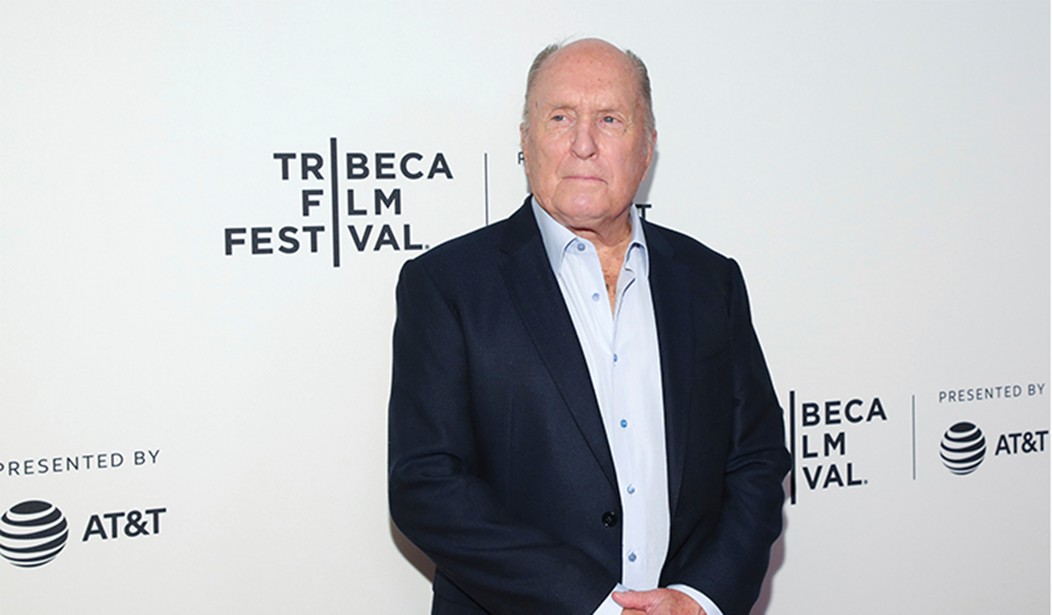
Every Robert Duvall performance is an unexpected one. Unlike many actors who have had the length of a career as long as his, his performances are unique and nuanced, diverse and always revelatory. Duvall's roles as Tom Hagen in "The Godfather" and "The Godfather II," Major Frank Burns in "M*A*S*H," Gus McCrae in "Lonesome Dove," and Lt. Col. Kilgore in "Apocalypse Now" are the works that most people tend to reference as his most memorable performances. The ones that stick with me are Mac Sledge in "Tender Mercies," Frank Hackett in "Network," and Sonny Dewey in "The Apostle."
Duvall said to American Cowboy magazine that "Lonesome Dove"s Gus McCrae was the role that stuck with him the most. After he completed the 1989 television miniseries, Duvall said he was ready to retire.
I can retire now, I’ve done something I can be proud of. Playing Augustus McCrae was kind of like my Hamlet.
The world is grateful that he kept giving us Hamlet-level performances for another 30 years after that, until his last screen appearance in the 2022 period thriller, "The Pale Blue Eye."
On Sunday, the Great Director called, and scene on his denouement. Robert Duvall has passed away at the age of 95.
Rest in peace Robert Duvall. A giant amongst actors.🙏 pic.twitter.com/swSL4weseb
— shane@mrbluesky99 (@mrbluesky99) February 16, 2026
Robert Duvall, the steely-eyed actor whose performances in the first two Godfather films, Apocalypse Now, The Great Santini, Lonesome Dove and The Apostle made him one of the finest actors of any generation, has died. He was 95.
Duvall, who received an Academy Award — one of his seven Oscar nominations — for his performance as an alcoholic country singer in Tender Mercies (1983), died Sunday at home on his Virginia ranch “surrounded by love and comfort,” his wife, Luciana, announced.
Duvall's wife posted this tribute to him on his official Facebook page.
STATEMENT FROM LUCIANA DUVALLYesterday we said goodbye to my beloved husband, cherished friend, and one of the greatest actors of our time. Bob passed away peacefully at home, surrounded by love and comfort.
To the world, he was an Academy Award-winning actor, a director, a storyteller. To me, he was simply everything. His passion for his craft was matched only by his deep love for characters, a great meal, and holding court. For each of his many roles, Bob gave everything to his characters and to the truth of the human spirit they represented. In doing so, he leaves something lasting and unforgettable to us all. Thank you for the years of support you showed Bob and for giving us this time and privacy to celebrate the memories he leaves behind.
Duvall's great influence and the person who helped set the trajectory of his career was playwright and screenwriter Horton Foote. Foote witnessed Duvall's stage performance in Foote's play, "The Midnight Caller," and recommended Duvall for his first film role as Boo Radley in "To Kill a Mockingbird." Foote would later write the screenplay for Duvall's Jackson Fentry in the 1972 film, "Tomorrow," and for Duvall's Oscar-winning performance as Mac Sledge in "Tender Mercies." Francis Ford Coppola would also figure prominently in Duvall's career, first in "The Godfather" and "The Godfather Part II," and then as Lt. Col. Kilgore in 1973's "Apocalypse Now."
A private, unpretentious person who eschewed the Hollywood limelight, the longtime Virginia resident composed and performed his own country ballads for his character, Mac Sledge, in his understated Tender Mercies performance.
Duvall also received Oscar noms for his work as Hagen and Kilgore and for portraying tough-as-nails Marine pilot Bull Meechum in The Great Santini (1979); for starring as Pentecostal preacher Eulis “Sonny” Dewey in The Apostle (1997), which he also wrote, sang in, directed and financed; for playing the vicious but somehow charming corporate lawyer Jerome Facher in A Civil Action (1998); and for appearing as small-town magistrate Joseph Palmer, the father of Robert Downey Jr.’s character, in The Judge (2015).
This is not surprising. As a regular media watcher and writer, all I can recall of Robert Duvall is his remarkable performances in his lengthy filmography. I don't recall any political takes, scandals, or Hollywood weirdness. Duvall was a serviceable actor who loved his craft. So, it didn't matter whether it was independent or big budget, he poured himself into the character and into the work.
Robert Selden Duvall was born in San Diego on Jan. 5, 1931. His father, a career military man who eventually became an admiral, moved the family to the East Coast when he was 10, and the Duvalls resided mostly in the Annapolis, Maryland, area.
Following high school, Duvall enrolled at Principia College in Elsah, Illinois, where he majored in drama. He played an adult in a production of Arthur Miller’s All My Sons and “was like totally at peace,” he said in a 2013 interview with Vanity Fair. “I thought, ‘Oh, wow, maybe I have something here.’”
In 1955, Duvall enrolled in The Neighborhood Playhouse School of the Theatre in New York City on the G.I. Bill. He studied under Sanford Meisner, and his theater-mates were none other than Dustin Hoffman, with whom Duvall shared an apartment, and the late Gene Hackman. It was Meisner who cast him in "The Midnight Caller," where playwright Horton Foote would fortuitously see his performance.
Read More: Get Woke, Go Broke: Hollywood Now Has to Learn the Hard Way
Oscar-Winning Actor Gene Hackman, His Wife, and Their Dog Found Dead in Santa Fe Home
Duvall landed roles off-Broadway and on TV on Playhouse 90 and Naked City before Foote remembered him from Meisner’s production of The Midnight Caller and recommended Duvall, then 31, to play the simple-minded Boo in To Kill a Mockingbird.
[...]
His other movies include The Eagle Has Landed (1976), The Greatest (1977), The Betsy (1978), The Stone Boy (1984), The Lightship (1985), Let’s Get Harry (1986), The Handmaid’s Tale (1990), A Show of Force (1990), Rambling Rose (1991), Convicts (1991), Wrestling Ernest Hemingway (1993), Falling Down (1993), Geronimo: An American Legend (1993), The Paper (1994), Sling Blade (1996), Gone in Sixty Seconds (2000), John Q (2002) and Assassination Tango (2002), which he also wrote, directed and produced.
In 1992, Duvall formed Butcher’s Run Films, which produced A Family Thing (1996) and the 1996 TNT telefilm The Man Who Captured Eichmann, in which he played the merciless Nazi Adolph Eichmann.
Duvall is survived by his fourth wife, Luciana. Duvall did not have any children.
Editor’s Note: Do you enjoy RedState’s conservative reporting that takes on the radical left and woke media? Support our work so that we can continue to bring you the truth.
Join RedState VIP and use the promo code FIGHT to get 60% off your VIP membership!
Join the Conversation
VIP members get the ability to comment on articles.