








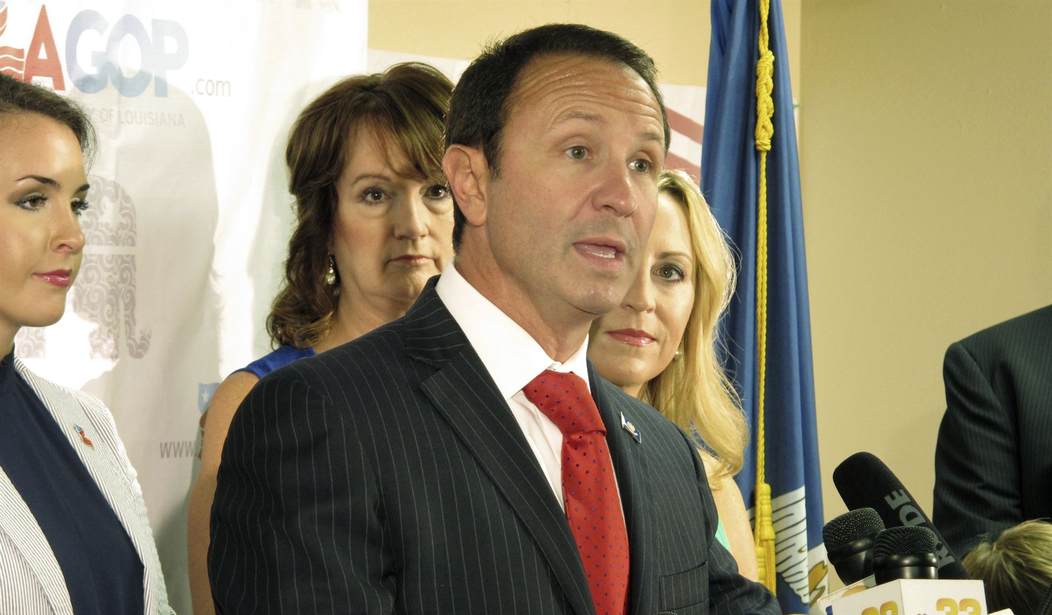
Gov. Jeff Landry recently signed the Louisiana Energy Protection Act into law, which protects the state’s oil and gas producers from environmental activists seeking to bankrupt them over alleged downstream impacts of climate change.
The law prevents anyone from attacking the industry with frivolous climate-focused lawsuits like one that was filed in a Washington state court last year, which is attempting to sue six oil companies after a woman died of heat stroke.
This is a good step for science, energy policy, and, frankly, sanity.
It is insane to try to connect a heatwave, or any bad weather, to a particular oil producer. This isn’t like suing a chemical plant for poisoning nearby residents. There is no way to track a molecule of carbon dioxide emitted from a particular company’s oil, from one power plant, or car exhaust, and see how it contributed to a storm. That is not how the Earth’s climate works.
Louisiana is a great example. Louisiana residents use the most energy per household of any state. A huge amount of electricity is necessary to beat the heat and humidity necessary to live there comfortably. Fortunately, Louisiana residents are blessed with low energy costs; nearly 70 percent of the state’s electricity is generated with cheap and abundant natural gas. The rest is made up by nuclear, then coal.
No one living in Louisiana, which is also one of the poorest states, is going to give up affordable air conditioning to stop carbon dioxide emissions. Nor are they going to give up cars, medical devices, pharmaceuticals, or their cellphones, which all rely on the byproducts of petroleum refining, a major industry for Louisiana.
Louisianans shouldn’t have to go without any modern conveniences. None of us should, and the companies that run the industry shouldn’t be bullied out of business by lawfare over a few degrees of warming spread out over more than 150 years, which is no disaster.
RELATED: Stop the Climate Shakedowns: How Foreign-Funded Lawfare Inflates Energy Prices
Supreme Court Sides With Chevron in $745M Louisiana Case
These lawsuits ask courts to accept a long chain of weakening speculation and assumption. First, they need to take for granted that emissions contribute significantly to warming. They then leap to the claim that slight global warming is causing disasters.
To do the latter, lawfare pushers increasingly rely on a very popular and politically driven area of computer-model-driven science called “single event attribution.” It assumes a given weather event was caused by, or made worse by, climate change, then calculates how much worse. Next, it assumes that a portion of that influence can be traced to a particular company.
And then, of course, we are asked to believe that damages won can be apportioned fairly.
Every link in this chain is more dubious than the last, and too often, defendants are afraid to challenge the so-called science.
A single oil company in Louisiana is going to contribute an immeasurably tiny portion of global emissions, and there is no honest way to tell how any emissions impact any specific weather event.
Different weather and climate conditions have many contributing factors. Take sea level rise, for example; effects like soil sinking from tectonics, natural erosion, ground compaction, and aquifer withdrawals often have a huge impact on local relative sea level and have nothing at all to do with global warming.
Louisiana residents know this. Much of the state south of I-10 is barely above sea level, and in places like New Orleans, below it. Residents of the Pelican State have been battling issues with flooding long before modern fossil fuel use and global warming.
There are hundreds of these ridiculous attribution-driven lawsuits filed in courts across the country, particularly in blue states. Louisiana, along with states that have passed similar laws, is doing the right thing for its residents as well as local industry by stopping this ludicrous lawfare.
Affordable and reliable electricity, as well as petroleum byproducts, make modern life possible and make us more resilient to bouts of dangerous weather, regardless of climate change. These environmental groups and their proxies are trying to bankrupt the companies that make modern amenities, technologies, and long, healthy lifespans possible by providing energy and thousands of products we all demand and use every day.
Editor's Note: This article was updated post-publication for clarity.
Linnea Lueken ([email protected]) is a senior research fellow with the Arthur B. Robinson Center on Climate and Environmental Policy at The Heartland Institute. X: @LinneaLueken
Editor's Note: Do you enjoy RedState's conservative reporting that takes on the radical Left and woke media? Support our work so that we can continue to bring you the truth.
Join RedState VIP and use promo code FIGHT to receive 60% off your membership.

Join the Conversation
VIP members get the ability to comment on articles.