






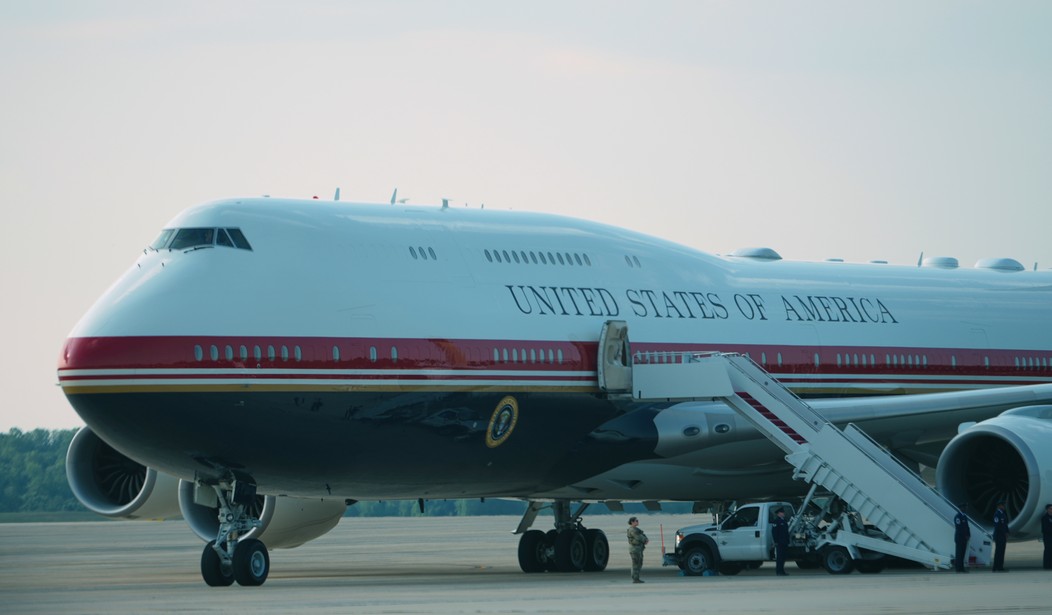
President Donald Trump took to the skies this week aboard a newly modified Boeing 747-8, a $400 million aircraft secured from the government of Qatar now serving as an interim Air Force One. The plane flew Trump to North Dakota, offering a practical solution while the Air Force completes work on the long-delayed VC-25B replacement fleet. Predictably, legacy media critics have wrung their hands over the arrangement, completely missing the forest for the trees.
Far from an indulgence, this represents a masterclass in the "Art of the Deal" style of pragmatism: securing elite, reliable transport today without delaying global operations or burdening American taxpayers with the cost of a new hull from scratch.
The jumbo jet itself came at absolutely no direct cost to the American public. Trump’s diplomatic leverage successfully secured the aircraft unconditionally as a strategic gesture from a vital regional ally. While the U.S. military handled necessary retrofitting for presidential security and communications, these conversion funds were poured entirely into American high-tech defense manufacturing and domestic security infrastructure. Skeptics obsess over the classified nature of these standard defense integrations, yet the core reality stands tall: Public funds did not buy this plane.
For the first time, the VC-25B bridge aircraft has flown over the Washington, D.C. area with the callsign "AIR FORCE ONE." @POTUS is on his way to North Dakota today. pic.twitter.com/VVwTbsyAKi
— Andrew Leyden (@PenguinSix) July 1, 2026
It serves as a highly capable interim asset until Boeing finally delivers the permanent replacements, which have been bogged down by the development challenges all too familiar to massive defense projects.
A dominant four-engine configuration makes perfect engineering sense for this role. The Boeing 747-8 provides the range, redundancies, and immense payload capacity demanded for presidential missions, which involve heavy communications gear, staff, and security contingencies. Twin-engine commercial designs offer fuel efficiency, but presidential aircraft must prioritize mission assurance over minor cost-cutting on fuel. An engine-out capability on oceanic or remote legs adds an indispensable layer of safety that aligns with the unique demands of transporting the commander in chief. This is not excess; it is engineering matched to a high-stakes mission.
THE NEW AIR FORCE ONE UNLOCKED. 🇺🇸✈️ pic.twitter.com/5BVOH84Y9h
— The White House (@WhiteHouse) June 20, 2026
ALSO SEE: Red, White and Blue Takes Flight — Trump Boards Luxe New AF1 for Maiden Voyage
Freedom's New Ride: VC-25B Bridge Jet Lands at Andrews to Protect the President
The temporary nature of the bridge jet underscores its sheer utility. It functions as an available-now, transferable-later asset while the primary VC-25B program crawls forward. Past administrations faced similar crippling delays in replacing the aging, 35-year-old 747-200 fleet. Capitalizing on a high-quality gift from a partner nation and modifying it in American shops accelerates national capability without starting from a blank sheet. This approach aggressively conserves resources at a time when defense budgets face intense competing pressures, from modernizing our nuclear triad to improving overall military readiness.
What a privilege to be aboard the inaugural flight on the brand new Air Force One! A truly unforgettable day. ✈️🇺🇸 pic.twitter.com/0vGswnULwK
— Karoline Leavitt (@karolineleavitt) July 2, 2026
The diplomacy here also merits notice, despite the predictable outrage from the left. Qatar hosts key U.S. military facilities and remains an essential cooperative partner on regional security. Accepting a gift of this scale and immediately putting it to government use demonstrates the tangible benefits of strong alliances. It is not unusual for nations to provide equipment support to close partners; turning it into a functional, secure presidential transport shows immense American resourcefulness.
Skeptics will continue to whine about appearances, but the operational facts remain clear. The aircraft strengthens the presidential fleet at a moment when reliable global mobility matters most. It entirely avoids the higher expense and timeline risks of sole reliance on a delayed defense program. In an era of tight fiscal scrutiny, leveraging allied support to secure a proven American-made airframe represents prudent management rather than extravagance. This interim step keeps the focus where it belongs: on effective governance, national capabilities, and a fairer deal for the American taxpayer.
Editor's Note: Do you enjoy RedState's conservative reporting that takes on the radical Left and woke media? Support our work so that we can continue to bring you the truth.
Join RedState VIP and use promo code FIGHT to receive 60% off your membership.


Join the Conversation
VIP members get the ability to comment on articles.