








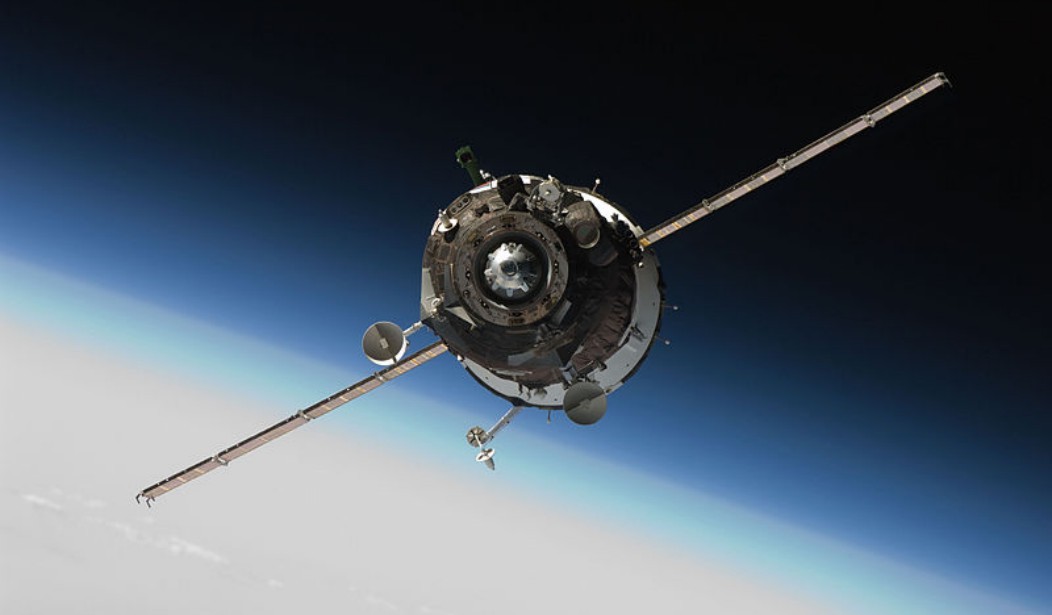
In a win for the brand-new fiscally sane and common-sense NASA, the space agency is turning to the private sector to save a vital piece of space infrastructure, slashing waste and saving taxpayers a boatload of cash.
The Neil Gehrels Swift Observatory, launched in 2004 with an expected two-year lifespan, has delivered far more than planned. For over two decades, it has tracked gamma-ray bursts, the universe's most energetic explosions, contributing valuable data alongside other instruments.
Now its orbit is decaying, and the agency has contracted a private firm for a first-of-its-kind robotic boost to keep it operational. The cause is straightforward. Satellites in low Earth orbit constantly experience a slight drag from the thin upper atmosphere. Recent heightened solar activity has intensified this effect.
NASA has a space telescope that has been running for 22 years, hunting the biggest explosions in the universe. It is currently falling out of orbit. This week, for the first time in history, NASA is sending a robot to grab it in space and push it back up.
— The Modern Pulse (@manavspeakfacts) June 28, 2026
The Neil Gehrels Swift… pic.twitter.com/o49AqXpxlt
Solar flares and storms heat and expand the thermosphere, increasing density at higher altitudes. The result is greater aerodynamic resistance, pulling spacecraft downward faster than anticipated. For Swift, this has accelerated its descent. Without intervention, it risks falling below a safe altitude later this year and reentering the atmosphere by the end of 2026.
The plan involves Katalyst Space Technologies' LINK spacecraft, set to launch soon on a Northrop Grumman Pegasus XL. The robotic servicer will rendezvous, capture, and raise Swift's orbit at a cost of about $30 million. This marks a notable step in on-orbit servicing, moving beyond one-off demonstrations to practical extension of valuable assets. This mission underscores a few realities worth considering.
🚀🛰️ NASA’s Swift Boost mission is set to launch on June 27, aiming to extend the life of the nearly 22-year-old Swift Observatory. As Earth’s thin upper atmosphere slowly pulls the satellite into a lower orbit, this bold mission will raise its altitude, giving the legendary…
— Stellarix (@Stellarixorine) June 26, 2026
NASA’s Swift Boost mission is set to launch on June 27, aiming to extend the life of the nearly 22-year-old Swift Observatory. As Earth’s thin upper atmosphere slowly pulls the satellite into a lower orbit, this bold mission will raise its altitude, giving the legendary space telescope more years to continue studying gamma-ray bursts, black holes, neutron stars, and the universe’s most powerful cosmic explosions.
First, space is an unforgiving environment where natural forces like solar cycles demand respect and preparation. Expanded atmospheric drag from solar maximum periods affects not just aging telescopes but the broader satellite fleet, including communications and observation platforms. Similar dynamics could threaten longer-term assets like the Hubble Space Telescope, which operates in a comparable regime and lacks built-in propulsion for easy orbit maintenance. Prudent management means anticipating these vulnerabilities rather than assuming indefinite stability.
Second, the partnership with a private company reflects an efficient approach to federal resources. Swift has already exceeded expectations many times over. Investing modestly to preserve its ongoing contributions, through commercial innovation, stretches taxpayer dollars further than building entirely new replacements. This is exactly how the federal government should operate — getting out of the way and letting private innovators do the heavy lifting.
@NASA, we undertake the near . This month, a first-of-its-kind mission will begin, racing against the clock to capture and boost our Neil Gehrels Swift Observatory before it re-enters Earth’s atmosphere. pic.twitter.com/BPWJCP9CSv
— Stellarix (@Stellarixorine) June 23, 2026
RELATED: Amazing Moments From SpaceX's Starship Flight, With a Stunning Ending
From Artemis to Genesis: America Reclaims Scientific Edge
In an era of constrained budgets, this kind of pragmatic collaboration offers a model worth replicating — focusing on results over spectacle. Critics might question any expenditure on an aging instrument when newer telescopes like the James Webb are online. Yet Swift fills a specific niche in rapid-response astronomy, complementing broader efforts.
Its data has informed decades of research, and extending that return makes sense when the alternative is total loss. The mission also builds capabilities that could benefit future defense and commercial satellites facing the same orbital pressures. Ultimately, this rescue effort illustrates the balance required in space policy: acknowledging environmental realities such as solar influences on orbits, supporting sustained scientific yield, and encouraging private ingenuity to solve technical challenges.
NASA and its partners deserve credit for moving quickly on a creative solution. As solar activity continues to fluctuate, maintaining reliable access to space assets will require exactly this blend of foresight and adaptability. Extending proven tools like Swift is not extravagance but responsible stewardship of investments already made.
Editor's Note: Do you enjoy RedState's conservative reporting that takes on the radical Left and woke media? Support our work so that we can continue to bring you the truth.
Join RedState VIP and use promo code FIGHT to receive 60% off your membership.



Join the Conversation
VIP members get the ability to comment on articles.