






The stalled talks between the United States and Iran over the fragile ceasefire have once again highlighted the high costs of instability in the Middle East. As negotiations drag on without resolution, with Iran conditioning any easing of its restrictions in the Strait of Hormuz on the lifting of U.S. blockades and an end to the broader conflict, American families are feeling the pinch where it hurts most: at the gas pump.
The Strait of Hormuz serves as a critical choke point, carrying roughly one-fifth of the world's seaborne oil and a significant share of liquefied natural gas. Iran's actions, combined with the ongoing U.S. and Israeli pressure, have created real disruptions to global energy flows. Even with some limited tanker movements, the uncertainty has kept oil markets volatile. Brent crude has swung sharply in recent weeks, and that volatility translates directly into higher prices for drivers here at home. U.S. gasoline prices have climbed above $4 per gallon nationally in recent stretches of this conflict, a noticeable increase from pre-escalation levels around $3.
BREAKING: The United Arab Emirates said it quit OPEC and OPEC+, dealing a heavy blow to the oil exporting groups and their de facto leader, Saudi Arabia, at a time when the Iran war has caused a historic energy shock and unsettled the global economy https://t.co/4BUHcdVlh1 pic.twitter.com/MvzLTfabuk
— Reuters (@Reuters) April 28, 2026
This is not abstract economics. For working families, truckers, and small businesses, every extra dime at the pump means tighter budgets, higher costs for groceries and goods, and added strain on household finances. Diesel prices have risen even more sharply in some regions, rippling through the supply chain and contributing to broader inflationary pressures. This situation underscores a core reality in foreign policy: Weakness or hesitation invites exploitation, while clear strength and resolve can deter it.
The current standoff stems from years of Iranian aggression, including support for proxy attacks and nuclear ambitions that previous administrations often met with insufficient firmness. President Trump's approach — maintaining pressure through sanctions, blockades where necessary, and backing Israel's security needs — aims to prevent Tehran from dictating terms or expanding its influence.
BREAKING 🔴
— Open Source Intel (@Osint613) April 28, 2026
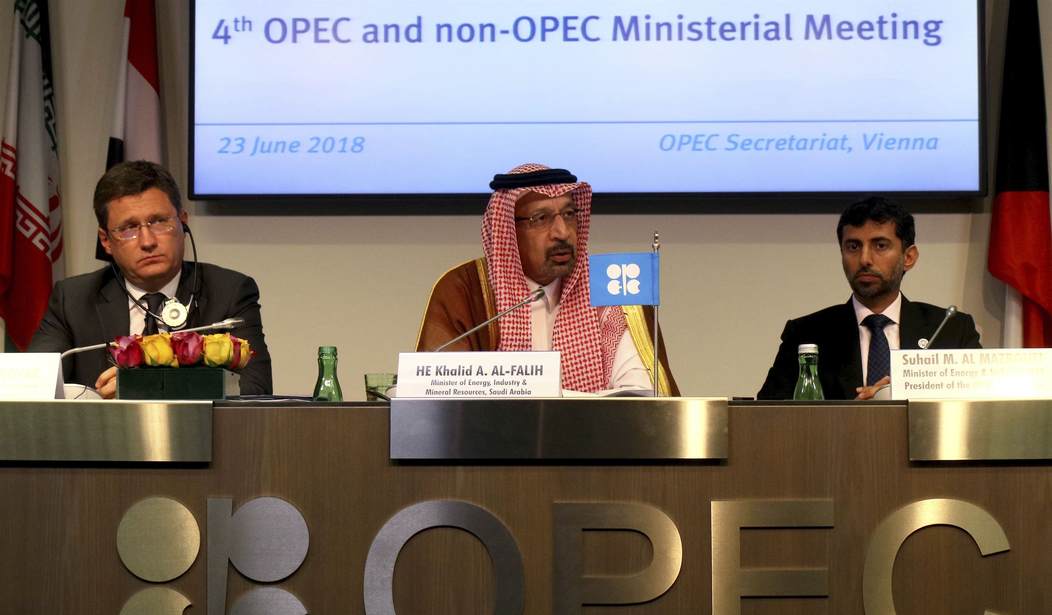
The United Arab Emirates, OPEC’s 3rd largest oil producer, announced it will leave OPEC and OPEC+ effective May 1.
The move would free the UAE from cartel production quotas, allowing it to pump oil at full capacity, set its own export strategy and price crude… pic.twitter.com/ANSQBgVrUb
BREAKING
The United Arab Emirates, OPEC’s 3rd largest oil producer, announced it will leave OPEC and OPEC+ effective May 1.
The move would free the UAE from cartel production quotas, allowing it to pump oil at full capacity, set its own export strategy and price crude without group restrictions.
That could pave the way for higher UAE output, stronger state revenues and downward pressure on global oil prices.
Lower prices and increased supply would likely be welcomed by President Trump, who has long criticized OPEC production limits and called for cheaper energy.
ALSO SEE: 'Rockets and Feathers': Why Gas Prices Stay High Even As Oil Falls
Rejecting deals that sideline Iran's nuclear program, as Secretary of State Marco Rubio has indicated, reflects a necessary realism. Half-measures that allow Iran to pocket concessions without addressing its destabilizing behavior only prolong the problem. At the same time, the economic fallout reminds us why energy independence remains essential. America's domestic oil and gas production has provided a crucial buffer, sparing us the worst of the global shock that some allies are experiencing.
Yet reliance on volatile foreign choke points still exposes consumers to price spikes. The recent announcement by the United Arab Emirates of its planned exit from OPEC, citing a desire for greater flexibility and domestic investment, points to shifting dynamics in global energy markets that could eventually benefit consumers if more producers prioritize output over cartel-style restrictions.
Long-term stability in the region would help ease these pressures, but it cannot come at the expense of American interests or the security of key partners like Israel. A durable outcome requires Iran to abandon its efforts to close vital sea lanes, halt support for terrorism, and verifiably constrain its nuclear activities. Until then, the costs — measured in higher fuel prices and economic uncertainty — will continue to land disproportionately on ordinary Americans rather than on the regime in Tehran.
Policymakers should treat this episode as a practical lesson. Reducing dependence on Middle Eastern energy routes through expanded domestic production, strategic reserves, and diversified global suppliers would strengthen our position.
OPEC: The UAE is leaving OPEC on May 1. Qatar left during Trump's first term. The 65-year-old cartel that controlled global oil prices for generations is collapsing. Trump blockaded Iran, surged US exports to record levels, & now the cartel is breaking apart. Biden begged OPEC to… pic.twitter.com/GzYBtPBbkp
— @amuse (@amuse) April 28, 2026
OPEC: The UAE is leaving OPEC on May 1. Qatar left during Trump's first term. The 65-year-old cartel that controlled global oil prices for generations is collapsing. Trump blockaded Iran, surged US exports to record levels, & now the cartel is breaking apart. Biden begged OPEC to pump more. Trump is making OPEC irrelevant.
Strength projected consistently, paired with pragmatic diplomacy that does not reward bad actors, offers the best path to protecting both national security and household wallets. Americans have shown resilience through past energy disruptions; the goal now is to learn from them and build greater self-reliance so future crises sting less.
Editor's Note: Do you enjoy RedState's conservative reporting that takes on the radical Left and woke media? Support our work so that we can continue to bring you the truth.
Join RedState VIP and use promo code FIGHT to receive 60% off your membership.

Join the Conversation
VIP members get the ability to comment on articles.