








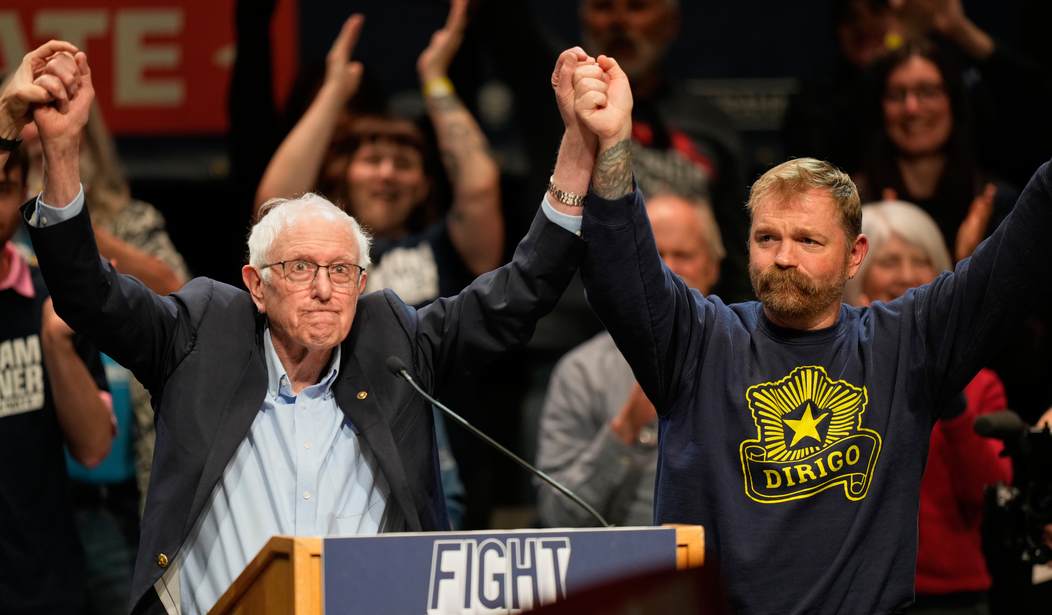
Democrats are ready to make Brett Kavanaugh and abortion a central issue in Maine's Senate race, and the strategy tells you almost everything you need to know about how little else they have going for them.
Graham Platner and national Democrats are planning to make Senator Susan Collins' (R-ME) 2018 vote to confirm Kavanaugh the centerpiece of their general election campaign, arguing it ultimately helped lead to the overturning of Roe v. Wade.
Sahil Kapur lays out the Democrats' strategy to tie Collins directly to abortion
New: Brett Kavanaugh takes on a starring role in Maine’s Senate race
— Sahil Kapur (@sahilkapur) June 11, 2026
Platner and Democrats plan to re-weaponize Susan Collins’ pivotal vote to confirm him; in 2022 he cast a pivotal vote to nuke Roe.
Collins indicated in 2018 he wouldn’t do that. She’s said she was misled on…
New: Brett Kavanaugh takes on a starring role in Maine’s Senate race.
Platner and Democrats plan to re-weaponize Susan Collins’ pivotal vote to confirm him; in 2022 he cast a pivotal vote to nuke Roe.
Collins indicated in 2018 he wouldn’t do that. She’s said she was misled on that front but stood by her vote.
Her campaign says Dems are repackaging “6-year-old leftovers” that failed in 2020, all to “distract from the complete dumpster fire happening on their side of the street.”
And there’s another Kavanaugh link in this race that is ruffling feathers. @natashakorecki & me:
The problem is that abortion remains fully legal in Maine. There is no waiting period, no gestational limit before viability, and medication abortion is available by mail. Maine voters are not staring down an abortion ban. Democrats are asking them to relitigate a confirmation battle from eight years ago. The Collins campaign is dismissing the effort as a recycled attack line that already failed to defeat her once before, and they are not wrong to. That criticism cuts to the core of the political challenge facing Democrats.
Democratic voters have already chosen Platner despite months of damaging headlines, inflammatory Reddit posts, a tattoo critics identified as a Nazi Totenkopf symbol, and serious questions about whether his "oysterman" identity was little more than a campaign prop. Primary voters looked past all of it. The general electorate is a different story. Platner now needs independents who will not view the race through the same partisan lens.
Read More: Report: The Graham Platner 'Redemption' Tour Hits a Snag As Another Alleged Ex Spills the Tea
Watch: Legacy Media Hot Take on Platner and What Gets Considered 'Abuse' Has Jaws Dropping
That is where the Kavanaugh strategy becomes more complicated, and more than a little ironic.
Platner is also facing separate allegations of physically threatening behavior from a former girlfriend, allegations he has denied. Those arrived after earlier stories involving sexually explicit messages that Platner allegedly sent to multiple women after his marriage, another controversy that generated weeks of headlines during the primary campaign.
That is the central irony Democrats do not seem to want to acknowledge:
"Now, with Senate control on the line, Kavanaugh's shadow is looming large in Maine in more ways than one. In 2018, Collins defended the Supreme Court nominee as he faced allegations of sexual assault and sexual misconduct that Democrats called disqualifying for a position of power."
Every time Democrats bring up Kavanaugh, they invite a debate about allegations, credibility, and the treatment of women, one that cuts in more than one direction, given what has already surfaced about their own candidate. It is also worth noting that Platner has compounded his problems with his own rhetoric. He has repeatedly claimed Collins "voted to send me to Iraq," a line he has used on the stump and in interviews. The problem is that Collins voted for the Iraq War resolution in 2002, and Platner did not enlist until late 2003, after finishing high school. He was not drafted. He enlisted voluntarily twice and later worked for the private security firm Blackwater after his service.
Democrats' own internal polling tells the story of why they keep coming back to this well:
In March, Senate Majority PAC's own polling found that going after Collins on abortion, framing her as the deciding vote for the justices who overturned Roe, was the second-strongest issue to get traction with registered Democrats, behind healthcare and Medicaid cuts.
That finding may explain the strategy. But motivating base Democrats is not the same as winning Maine, and the numbers are already moving in the wrong direction for Platner. A Platner internal poll, the kind campaigns only release when the results are favorable, showed him ahead by just four points, 49 to 45. As Nate Silver noted, internal polls typically exaggerate a candidate's standing by about 4 points, which puts this race effectively in a toss-up. That matters enormously in the context of Collins' history: She has outperformed her polls by 8, 8, and 12 points in her last three elections.
Collins has held this seat for decades in a blue state because persuadable voters keep coming back to her. Whether they decide an eight-year-old confirmation vote matters more than everything that has surfaced about Platner this cycle is another question entirely. Based on what we know, that seems like a very difficult case to make.
Editor's Note: Do you enjoy RedState's conservative reporting that takes on the radical left and woke media? Support our work so that we can continue to bring you the truth.
Join RedState VIP and use promo code FIGHT to receive 60% off your membership.

Join the Conversation
VIP members get the ability to comment on articles.