






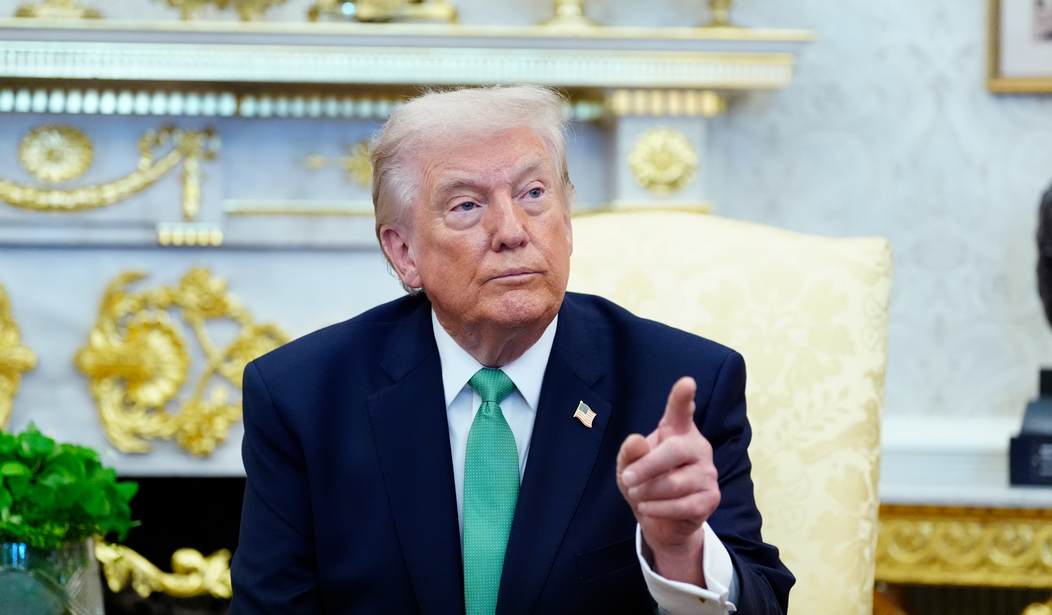
The White House has rolled out a new National Policy Framework for Artificial Intelligence, and it reads like an admission that Washington thinks AI is moving too fast to leave ungoverned and too powerful to ignore.
The March 20, 2026, framework runs through the fights already forming around AI, from child safety to power demand to copyright and censorship, all of it tied to one question: Who sets the rules before the technology starts setting them itself?
The administration is framing it as a push for national standards:
Today, the @WhiteHouse released a commonsense National AI Policy Framework that ensures every American benefits from AI.
— Director Michael Kratsios (@mkratsios47) March 20, 2026
As @POTUS has said — we need one federal AI policy, not a 50 state patchwork. This gets us there.
Eager to work with Congress on this important legislation. pic.twitter.com/flnv8cD0lP
The argument is straightforward: one federal standard, not a 50-state patchwork, and move quickly.
Beyond that, the document reads very differently, less like a forward-looking blueprint and more like a response to a technology already embedded across schools, workplaces, politics, and government, expanding faster than lawmakers can track and, in some cases, faster than they seem willing to acknowledge.
And in some cases, faster than they can realistically contain.
“Congress should establish ... age-assurance requirements ... for AI platforms and services likely to be accessed by minors.”
It also calls for platforms likely to be used by minors to reduce the risks of sexual exploitation and self-harm, while making clear that child privacy protections still apply to AI systems and the data they collect for training and advertising.
That is not the language of a government dealing with a harmless tool. It reflects a belief that AI can scale risk quickly, especially for users who cannot fully understand or control it.
“Congress should ensure that residential ratepayers do not experience increased electricity costs as a result of new AI data center construction and operation.”
That concern shifts the conversation out of theory. AI is not just software. It is physical infrastructure, energy demand, and a buildout large enough that policymakers are already warning Americans not to absorb the cost themselves.
Read More: ‘Old Man Yells at Claude’: Sanders Uses Chatbot to Warn About Chatbots
$510M AI Smuggling Case Blows Hole in U.S. Export Controls on China
As recently as earlier this week, federal prosecutors alleged that more than $510 million in restricted AI hardware was funneled to China through shell companies, underscoring how quickly this competition has moved from development to enforcement.
Here are the most pressing topics in AI policy the National Framework addresses:
— Director Michael Kratsios (@mkratsios47) March 20, 2026
1. Protecting Children and Empowering Parents: Many Americans are concerned about children interacting with AI. Congress should require age-assurance tools and ensure AI platforms give parents…
The framework takes a careful position in the copyright fight.
“Although the Administration believes that training of AI models on copyrighted material does not violate copyright laws, it acknowledges arguments to the contrary exist and therefore supports allowing the Courts to resolve this issue.”
In practice, that leaves the biggest unresolved question in AI to the courts while signaling that the administration is not eager to slow development in the meantime.
That same balancing act shows up in how the framework approaches speech.
“Congress should prevent the United States government from coercing technology providers, including AI providers, to ban, compel, or alter content based on partisan or ideological agendas.”
That language lands differently when the government is already integrating these systems into its own operations. The Senate has approved ChatGPT, Gemini, and Copilot for staff use, meaning Washington is not just writing rules for AI. It is beginning to rely on it.
The document never quite says it outright, but the pattern is consistent. The White House is describing AI as an engine for growth while outlining risks that touch children, infrastructure, speech, labor, and national security all at once.
This is not a government getting out in front of a future problem.
It is a government reacting to a present one that is already moving ahead of it.
Editor’s Note: Do you enjoy RedState’s conservative reporting that takes on the radical left and woke media? Support our work so that we can continue to bring you the truth.
Join RedState VIP and use the promo code FIGHT to get 60% off your VIP membership!

Join the Conversation
VIP members get the ability to comment on articles.