Americans who remain so dim that they rely on mainstream media for news know for certain that the war in Iran is not going well at all for President Trump and his Israeli partners.
Trump announced it on Feb. 28. So, it’s been underway for 22 whole days. And all the two allies have accomplished from the air is the total destruction of Iran’s navy, its air force, 85 percent of its air-defense and radar systems, most of its missiles and launchers, the morality police system, communication systems were hacked and scrambled, and its command and control network dismantled explosively, more than 8,000 targets.
Dozens of Iran’s senior military and security leaders, who were busy exterminating some 40,000 civilian protesters recently, have disappeared in sudden explosions, along with some 6,000 Revolutionary Guard troops and a couple of the theocratic regime’s Supreme Leaders, who no longer reign supreme on earth.
This has to be disconcerting to any surviving officials; no matter where they go, Mossad and the CIA track them down. And then their successors.
The allies totally control the skies over a land that’s almost as vast as Alaska, meaning they can eliminate pretty much any target they want, even in daylight. The number of drone attacks Iran can launch dwindles by the day. Syria, its major arms highway, is gone as a terror ally. Iran’s terror proxies in the region are severely weakened, crippling the mullahs’ efforts to remain the world’s largest sponsor of terror.
And now the legendary A-10 with its 30-millimeter cannon is patrolling the Strait of Hormuz, delivering a stream of beer-bottle-sized bullets to any Iranian boats that venture out.
Saturday night, things worsened for Tehran. Trump issued a 48-hour ultimatum from 7:44 p.m. ET: Remove any threat to the Strait of Hormuz, or one by one, every single power plant will be destroyed.
SEE: BRRRRT in the Strait: A-10s Target IRGC Speedboats Amid Epic Fury Ops
Breaking: Donald Trump Issues 48-Hour Ultimatum to Iran — Open the Strait of Hormuz or Face Disaster
Except for all that, the repressive Iranian regime remains in fine fighting shape.
Yet the news headlines depict a different story. “War Sends More Tremors Through a Shaken World Economy” (N.Y. Times)
“Fallout From Prolonged Conflict With Iran Could Bring ‘Catastrophic Consequences'” (NYT)
“GOP braces for Trump to possibly deploy troops inside Iran” (The Hill)
“Trump’s dire strait” (Politico)
"How Trump and His Advisers Miscalculated Iran's Response to War" (NYT)
“Trump struggles against perception that he’s losing control of Iran war.” (The Hill)
"Congress looks for Trump exit plan as the Iran war drags on" (Associated Press)
A Wall Street Journal op-ed described a recent N.Y. Times edition:
Inside the paper are six more pages of war headlines, almost all relentlessly negative.
There are disdainful pieces about the secretary of state (“For Trump and Rubio, It’s Destroy and Deal”) and about the central U.S. ally in the effort (“U.S. War Alliance with Israel Is Reshaping Mideast, but Carries Risk” and “Netanyahu Has War He Always Wanted, but on Trump’s Terms”).
There’s more economic gloom (“Seized Oil Tankers Are Costing U.S. Tens of Millions” and “Oil Price Surge Rattles Weak Pakistan Economy”).
It’s almost as if the media, in understood league with leaderless Democrats, are cheering in favor of the country that has been at war with the United States for 47 years, killing more Americans than any terrorist state, along with thousands of its own people through the years and in recent weeks.
Can Trump Derangement Syndrome really run this deep? Whoopi Goldberg on ”The View” even suggested that Trump started the war to distract news coverage from the failure to capture Nancy Guthrie’s kidnapper. I confess I had missed that trick.
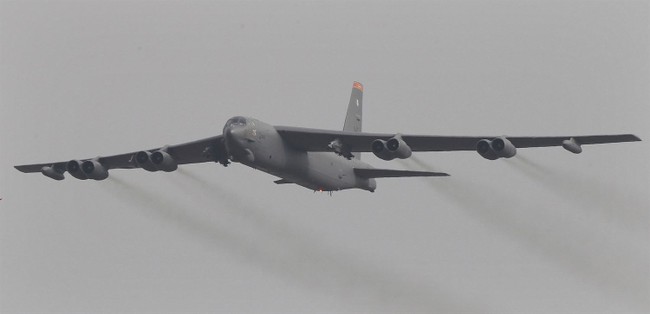
After decades of abiding Iran’s deadly attacks across the region, its determined and advancing efforts to develop nuclear weapons with the means to deliver them, attempting ineffective negotiations, Obama even paying billions to buy the mullahs off, Trump, in tandem with Israel, decided to end it.
He Tweeted:
We are totally destroying the terrorist regime of Iran, militarily, economically, and otherwise, yet, if you read the Failing New York Times, you would incorrectly think that we are not winning.
Here are some comparative durations for U.S. military involvement:
World War II—1,365 days.
Korean War – 1,128 days.
Vietnam War – 19 years.
Afghanistan War – 7,236 days.
Panama War to capture President Manuel Noriega – 42 days.
Capture of Nicolás Maduro in Venezuela – 150 minutes.
Military conflicts always contain controversial and negative coverage. What’s different this time is that unlike, say, Vietnam, no correspondents are on the ground and total U.S. deaths to this point are 13 versus up to 600 per week in Vietnam. Still, mainstream media coverage is relentlessly negative, even if the bad news needs fabrication.
No problem finding coverage of the damaged school or Iranian missiles fired at Diego Garcia, 2,600 miles away in the Indian Ocean. But did you know neither one got through? And for stories on heroism and exposés of false TV news reports, you need to come here.
There is an absence of even basic accounts of the thorough damage being inflicted on a rogue regime by a volunteer military using an impressive array of technology, weaponry, dedication, and professionalism.
On top of Maduro's efficient extradition in January confounding Venezuela's expensive radar and air-defense missile systems purchased from China and Russia.
As Elizabeth Stauffer wrote about media coverage last week:
They’ve left little doubt that denying Trump a victory matters more to them than securing one for America.
In his latest war analysis this weekend, historian John Mosier wrote:
When I say this, I do so with sadness. As far as depending on the legacy media (newspapers and television) for reporting and analysis goes, don’t bother.
I have long maintained that traditional media’s powerful influence was not so much telling people what to think. It was telling them what to think about.
We see that virtually every week that Congress is not on vacation, an obsession with inside-the-Beltway stories like fiery committee hearings or legislative strategies far from the daily lives of average Americans.
But conversely, the other power of media is what it chooses to ignore, not to cover, in this case, anything positive now or in the future from the military actions ordered by Trump.
Mosier aptly points out in a previous war analysis, Iran Is Finished, They Just Can't Admit It:
The problem with totalitarian states that rule through repression, is that when their inabilities get to a certain point, they implode.
Not unlike Iran's hardened underground nuclear and missile bunkers that were impervious to destruction, until quite suddenly, they weren't.
The professor speculates that a combination of allied cyberattacks and the regime's own communications lockdown has basically paralyzed communications across the world's 17th-largest country. "That explains why hardly anyone inside Iran has any idea what's actually happening in real time."
He adds:
I believe that explains why the surviving leaders keep making insane threats about what they’ll do. Sure, you could argue that they’re just stupid, but I think the real reason is their difficulty in grasping that in three weeks, most of their military assets are gone.
Explanations for the distorted U.S. media coverage are varied and evolving. To my eyes, they start with TDS and the modern sickness of cognitive dissonance.
After 11 years of indoctrination, hoaxes, fake trials, media bias, and poisoned partisanship, a significant number of Americans are mentally incapable of seeing anything positive about Donald Trump. That he, for instance, is proactively preventing a regime of theocratic maniacs from building weapons of mass destruction and the means to deliver them anywhere, as they had long promised.
Ed Morrissey, my weekly podcast partner at sister site HotAir.com, calls the media’s wartime partisan bias “narrative maintenance.”
To remain consistent to the dominant narrative theme of "Trump is bad," they feel instinctively compelled to criticize him and whatever he does. Even if that means appearing to support an opponent in a deadly war to prevent a rogue Muslim regime from acquiring weapons of mass destruction.
A relieved former Secretary of State Condoleeza Rice, not always a Trump fan, praised the president's bold action “to take care of Iran for good.” Now the director of the Hoover Institution, she has also suggested that no one could seriously believe that Iran would not use nuclear weapons on other countries if it obtained them.