
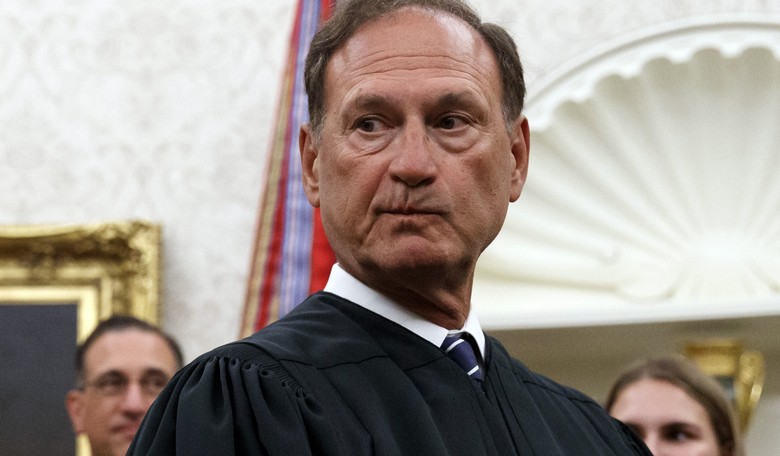
Justice Samuel Alito, a stalwart of the Supreme Court, is also the second-oldest member of the Supreme Court, at 76, behind only Justice Clarence Thomas, who is 78. Considering the likely makeup of the Senate in the 120th Congress, which will be seated in January, that could raise some problems if either man's health prompts a retirement.
Now, Justice Alito has confirmed he has no plans to retire in this term of the Supreme Court — meaning, before late June of 2027.
Supreme Court Justice Samuel Alito confirmed to Fox News that he has no plans to retire and is committed through at least the current term, which is set to end in late June.
Alito made the statement Thursday amid speculation about the future of the Supreme Court after a disastrous GOP performance in the midterm elections.
When the new congressional term begins in January, Democrats will be in firm control of the Senate, with predictions, including from Florida Gov. Ron DeSantis, that this will not change for at least six years. That would make it extremely difficult, if not impossible, for President Donald Trump to fill any potential vacancy with a conservative after this year.
The problem could come as soon as January of 2029. It's likely that the Democrat-controlled Senate will simply refuse to confirm any Supreme Court nominee put forth by President Trump, regardless of when that happens, as long as the president is still the guy making the nomination. There's a precedent for that, as Republicans in the Senate, led by then-Majority Leader Mitch McConnell (R-KY) refused to consider President Barack Obama's nomination of Merrick Garland to the court to replace the recently deceased Justice Scalia. It's more than likely the Senate Democrats will prefer to let any vacancy stand rather than consider a Trump appointment; it's a fair guess they intend to pack the court in any case, assuming they maintain their grip on the Senate and take back the White House in 2028.
"Chance of confirming a worthy successor to Justice Thomas and/or Alito during President Trump’s term: Zero. Chance of confirming a worthy successor during a hypothetical GOP admin 2029-2033: probably zero (GOP won’t be able to recapture enough seats in 28)," DeSantis posted to X on Tuesday night.
"Assuming Republicans lose the seats where prediction markets have the Democrats at 90+% to win, that would produce 55 Democrat Senate seats," DeSantis added.
That's just downright unsettling. The Supreme Court, in the last few years, has handed conservatives some serious victories, from the overturn of Roe v. Wade to Second Amendment and immigration issues; it haven't been perfect, but they've been all in all pretty good. But any court appointees from a Democrat president and Senate are more liable to be another Ketanji Brown Jackson than another Clarence Thomas.
Ed Whelan, a conservative legal expert who clerked for the late Supreme Court Justice Antonin Scalia, wrote on X that Trump is now effectively blocked from appointing federal judges or Supreme Court justices during the final two years of his term.
That's why it's important for the 119th Congress's Senate, in the remaining two months available to them, to confirm as many Trump-nominated judges as it can. It won't have the opportunity to vote for a Supreme Court justice, but the Republican Party will just have to deal with that eventuality as best they can, when it happens.
They might want to consider passing the SAVE America Act, too, while they're at it.