
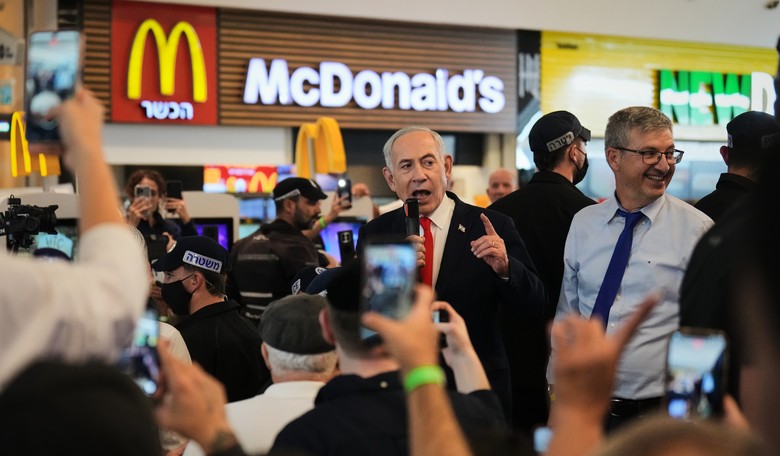
Israel's election has been held and ballots (mostly) counted. Prime Minister Benjamin Netanyahu's coalition, primarily his Likud Party, did not achieve an outright majority, but the PM may still be able to cobble together a ruling coalition.
Here's where the numbers stand as of this writing.
Prime Minister Benjamin Netanyahu's bloc is currently expected to enter the Knesset with 53 seats, the Central Elections Committee (CEC) announced on Wednesday morning after almost five million votes were counted.
Netanyahu's Likud is projected to enter with 26 seats, while United Torah Judaism, Shas, and Otzma Yehudit are expected to enter with seven seats, and the Religious Zionist Party is expected to enter with six seats, respectively.
The opposition bloc, comprising Yashar, B’Yachad, Yisrael Beytenu, and the Democrats, is expected to enter the Knesset with 48 seats, according to data from the CEC.
Gadi Eisenkot's Yashar is projected to enter the Knesset with 21 seats. B'Yachad, led by Naftali Bennett and Yair Lapid, is expected to enter with 12 seats. Yair Golan's Democrats are expected to enter the Knesset with eight seats, and Avigdor Liberman's Yisrael Beytenu is expected to enter with seven.
Here's the interesting bit:
The latest results by the CEC put 19 seats in the Arab parties, with the Joint List having 12 seats and Ra'am having seven seats in the next Knesset.
The turnout by Israeli Arabs, and yes, despite what leftists and the legacy media imply, Israeli Muslim Arabs can vote and even hold seats in the Knesset, is higher than usual in this election.
Here's the thing: right now, neither major party, nor any major bloc, has an outright majority. The primary opposition to Netanyahu comes from the Yashar Party, and the Yashar leader, former Israel Defense Forces commander Gadi Eisenkot, is expected to be willing to form a unity government with Netanyahu's Likud Party. The Arab parties, as well, are expected to look askance at forming a deal with Netanyahu. This could put the Arab parties in the interesting position of being kingmakers in Israel.
It doesn't look like a unity government is possible, at least, not yet.
The prospect of a unity government involving Netanyahu and Eisenkot has appeared unlikely, as Eisenkot has rejected serving under Netanyahu, including in a rotation government. Other opposition leaders have also ruled out joining a coalition led by the prime minister.
Eisenkot has called for the leader of the largest party in the opposition bloc to become its candidate for prime minister, though no agreement on the arrangement has been announced within the bloc.
It's going to be some time, very likely, before we learn of who the next prime minister will be, and what the political path ahead will be for Israel. Benjamin Netanyahu has been forceful against the Islamic terrorist groups that seem to have Israel surrounded, but the outcome of this election makes his continuing as PM seem unlikely.
The increased Arab participation could prove decisive in determining the next government's composition. Although Eisenkot and several other opposition leaders ruled out including Arab parties in their governing coalition during the campaign, their parliamentary support could allow the opposition to replace Knesset Speaker Amir Ohana, a Netanyahu ally, and gain greater control over the legislative agenda even before a new government is formed.
That, too, would be an interesting development.
There will doubtlessly be some deal-making going on in Israel once all the ballots are counted and the results confirmed, and at this point, it's not at all clear what Israel's next government may look like — or what effect it will have on American interests in the region. Stay tuned.