
The good old days, very often, were not all that good. This can apply to just a few decades ago, when, in the pre-antibiotic days, a case of pneumonia or a bad cut on the foot could end up being fatal. It can apply to a couple of centuries ago, when traveling from Europe to the New World meant literally taking your life in your hands, and knowing that even if you made it to the shore, the loved ones you had left behind were out of your reach forever.
And, it can apply to the climate. The Little Ice Age, which ended in the mid-19th century, was a hard time for people across the Northern Hemisphere, with bad winters, deep snows, and cold summers, leading to crop failures and hunger. History is replete with such events.
One of the worst years, though, in recorded history, may well be the year 536 AD. Here's why.
In the year 536, daylight itself went away.
Across Europe, the Middle East and parts of Asia, people looked up and saw a sun that gave little warmth and cast a strange, weak light. Summer brought snow in China. Crops failed virtually everywhere, spreading hunger worse than any plague. Then, only a few years later, an actual plague arrived to top things off.
For historians and climate scientists, 536 has become a leading candidate for the worst year to be alive.
Ah, but why? In 536 AD, the Industrial Revolution wasn't even a fever dream in the minds of the most imaginative. There were no coal-fired power plants, no big diesel pickup trucks; nobody was drilling for oil or natural gas. In fact, the only petroleum to even be detected was that which, in some places, literally bubbled to the surface. Humanity depended still largely on biomass for heating and cooking: Wood, dung, and charcoal.
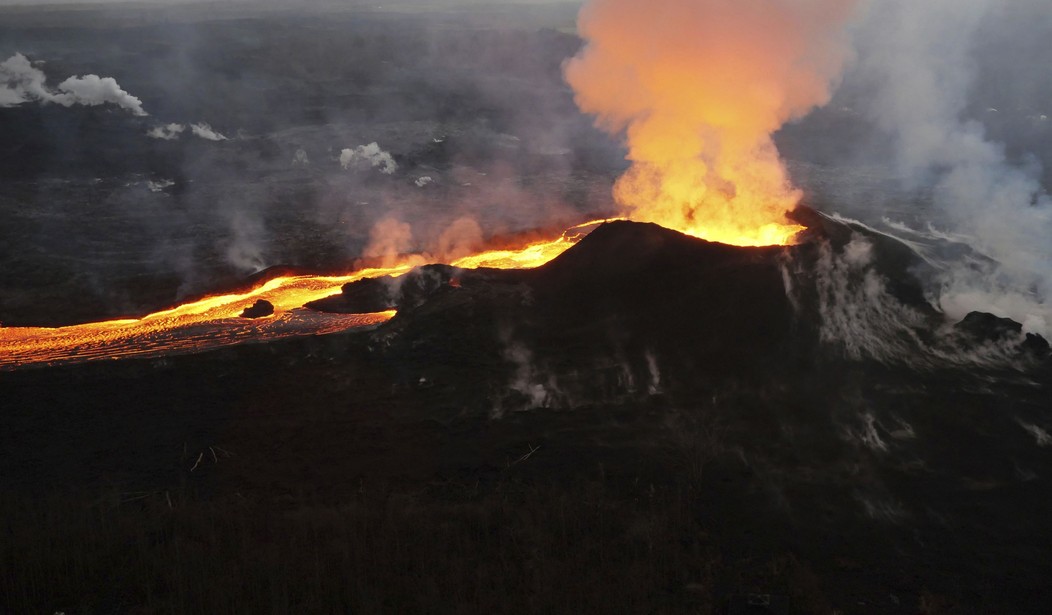
So what happened? Mother Nature, with a rock in her fist, wound up and gave the planet a good whack, almost certainly in the form of one big volcanic eruption.
Modern researchers now explain these accounts by one enormous volcanic eruption, perhaps in Iceland or somewhere else in the Northern Hemisphere. Some evidence also points toward additional eruptions in the years that followed.
“So we think what probably happened [in 536] is there was at least one but maybe up to three big volcanic eruptions, somewhere, either around the equator or in Iceland,” Dr. Miles Pattenden, a Senior Research Fellow in Medieval and Early Modern Studies at the Australian Catholic University, told ABC RN’s Counterpoint.
“They spewed ash up into the atmosphere that blocked out the sun. We know from written sources that there were serious drops in temperature, both in Europe and in China. There was snow in the summer,” he added.
There's ample evidence of a major eruption in that fateful year, including from dendrochronology, ice cores from glaciers showing evidence of sulfur and ash deposits, and various other volcanic traces. It may have been one major volcano, likely somewhere around Iceland or Greenland, or it may have been more than one.
Then, a couple of years later, humanity got hit again.
Less than five years later, another major eruption likely struck. The Ilopango volcano in present-day El Salvador erupted around 539 or 540, spreading the Tierra Blanca Joven ash layer across Central America and worsening the cooling already underway.
In simple English, it was a bad time to be human.
Read More: How One Good Volcano Can Cancel Years of Climate Claims
New Ice Core Study Shows Moderate Warming Happens Every Few Centuries
This was a time, as well, when there were written records of what the results of these eruptions were. Procopius, a historian in the Byzantine Empire, wrote of a year when the sun "gave forth its light without brightness." The Roman chronicler Cassiodorus said the sun had gone dim, appearing a "bluish color." There are Irish records of crop failures from 536 to 539, and then, in 541, shortly after the Ilpango eruption, the Plague of Justinian hit the weakened population of Europe, which Procopius wrote at one time was killing 10,000 people a day in Constantinople alone.
In fact, there's a correlation between colder climates and plagues; the Antonine Plague, the Plague of Cyprian, and the Plague of Justinian, among them.
So, what conclusions can we draw from the terrible year of 536 AD? Well, being prepared for the worst isn't a bad idea, and the year 536 AD and the few years that follow give us a pretty good idea what "worst" looks like. We also should remember that, the best efforts of humanity notwithstanding, one really big volcano can knock everything we've done into a cocked hat. In fact, one good-sized volcano can affect the global climate for a decade or more.
But the big lesson here is this: The climate scolds would have us surrender much of our comfortable modern lifestyles over a slow warming trend that is, by historical standards, even in the short span of recorded history, insignificant. Next to the power of nature, humanity's efforts are, frankly, puny.
As for worrying about the next big volcano, don't. There's nothing we can do to stop it. All we can do is prepare for the worst, and hope for the best. If it happens, it happens. That, too, is a lesson of 536 AD.