






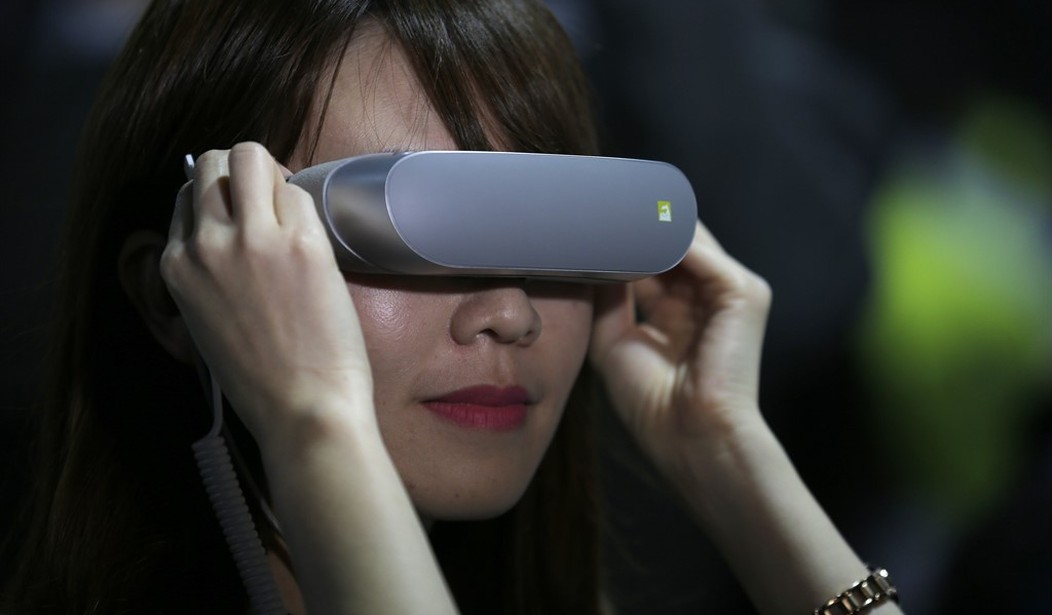
It's an amazing modern world we live in. Almost every one of us now carries around, everywhere we go, a device that a few years ago would have been an object of disbelief if we had seen it on "Star Trek." These things not only let us talk to each other, but also to do so face-to-face on video. They can play music, take pictures or video, tell us where we are and how to get where we are going, and much, much more.
Now, according to at least one source, we may be able to make another leap forward. But will it be for the best?
The next era of mobile technology will turn everyday Americans into "walking cameras" as AI-powered smart glasses monitor everything they see and hear, according to Qualcomm CEO Cristiano Amon.
During an appearance on "Mornings with Maria," Amon described a future in which ultra-fast 6G networks will allow smart glasses to stream information to AI models in real time. He said the shift could reshape both the technology industry and everyday life.
"6G is going to transform all of us into walking cameras because we have the ability to, everything that we see, send it to AI models that will interact with us and get intelligence right away," Amon said Friday. "And that's an exciting new device category."
That sounds interesting, but could we get lost in this kind of technology?
"As we humans start to interact with the computers the way we interact with ourselves, glasses is a very important real estate because it's close to our eyes, our ears, our mouth. And AI is [going to] see what we see, hear what we hear, read what we read. And then you have this intelligence very quickly."
Meta, Google and Apple have all invested in developing their own smart glasses, with newer models incorporating artificial intelligence. On Tuesday, Meta announced a new line of lower-cost AI glasses powered by the company's AI technology, Muse Spark.
So, this has the potential to become ubiquitous.
Read More: Who Might Our Appliances Be Talking to Right Now?
99 Percent Market Dominance - and It Ain’t a Monopoly, Just Organic Choices by Individuals
As you may have suspected, I have some questions.
First: There's a big difference between glasses and a cellular phone, which, if you are like me, you carry in a pocket. With a smartphone, you have to point it at something, turn on the camera, and actually make an effort. Glasses? You literally wear them around on your head. The impetus would seem to be to leave them on all the time. Which brings me to...
Second: Who, besides the user, can see the data these things generate? Who can see everywhere you go, everything you do, while wearing these things? There are already privacy concerns with smartphones, which is the main reason I keep mine in a pocket, and at least lay it face down when I'm not using it.
Third: What security is in place for these things? How hard will it be to hack them?
Fourth and finally: There will likely be some kind of heads-up display in these things. Will they be clean, or will part of the deal be that we will be bombarded with targeted advertising?
Here's the thing about technology: It doesn't often go backward. Like the automobile, the airplane, the internet, artificial intelligence, and virtual reality, this genie is out of the bottle, and it ain't going back in. The key to managing it will be prudence, which is all too lacking in this day and age.
Editor’s Note: Thanks to President Trump’s leadership and bold policies, America’s economy is back on track.
Help us continue to report on the president’s economic successes and combat the lies of the Democrats. Join RedState VIP and use promo code FIGHT to receive 60% off your membership.



Join the Conversation
VIP members get the ability to comment on articles.