








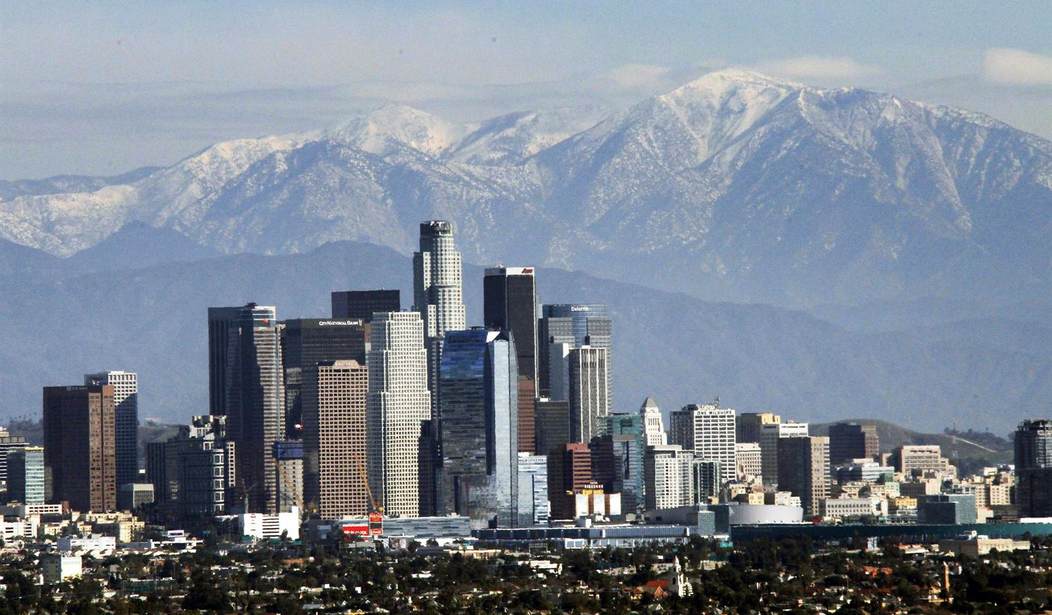
There's a reason they call the lands surrounding the North Pacific the "Ring of Fire," and no, it's not because of a Johnny Cash song. No, the reason for that appellation is that the northern coasts of the lands on the Pacific are hotbeds of tectonic and volcanic activity. Nowhere are Americans more aware of this than in California, which has been hit by some pretty serious temblors in the past.
Now, it looks like another big one may be on the way. Geologists are looking at the San Andreas and San Jacinto faults, and they are a tad worried about what they are seeing.
The San Andreas and San Jacinto fault systems are at their highest levels of tectonic stress in 1,000 years, raising the threat of a major, imminent earthquake that could devastate Southern California, a new study finds.
The faults could rupture separately or together, thanks to an "earthquake gate" between them at Cajon Pass, where the San Jacinto fault splits from the main trace of the San Andreas fault. Researchers discovered that the Cajon Pass can prevent or facilitate earthquakes moving between the faults, depending on how similar their stress levels are at the time of rupture.
And right now, the San Andreas and San Jacinto faults appear to have comparable, extremely elevated stress levels, potentially spelling trouble for Los Angeles, San Bernardino, Riverside and the Coachella Valley, the team warned.
It's happened before, and if it happens again, well, there are a whole lot more people living now in the area that's likely to be affected by such a quake.
The San Andreas and San Jacinto faults have caused 36 earthquakes with magnitudes of 6.4 or above in the past 1,000 years. Southern California's last "big one" was a magnitude 7.9 event in 1857, when a 205-mile (330 kilometers) segment of the San Andreas fault slipped horizontally between Parkfield and Cajon Pass. That rupture did not propagate through Cajon Pass, but a similar megaquake in 1812 did, suggesting this could happen again in what is now a much more built-up and densely populated environment, according to the study.
California won't drop into the sea; neither of these is that kind of fault. But boy, howdy, talk about billions in property damage, not to mention lives lost.
Read More: What's Going on With the Ring of Fire? Now It's a Volcano in Russia.
BREAKING: Massive Earthquake Hits Russia, Prompts Tsunami Warnings Throughout the Pacific (Updated)
Here's the thing: The study referred to here presents possibilities ranging from bad to apocalyptic, but there's little in the way of expected time frames. Yes, there is some serious stress building up along these faults, and yes, if they let go, results could be very, very bad indeed. But geologic time isn't like the human timescale we're used to; "soon" in geological terms might be tomorrow, it might be a thousand years from now. Although, from my own modest education in geology, it would seem the former to be more likely than the latter.
If you're in California, taking any fragile glassware down from open shelving and packing it securely away may not be the worst idea ever.
This seems appropriate.
Editor's Note: Do you enjoy RedState's conservative reporting that takes on the radical Left and woke media? Support our work so that we can continue to bring you the truth.
Join RedState VIP and use promo code FIGHT to receive 60% off your membership.



Join the Conversation
VIP members get the ability to comment on articles.