
Oil and natural gas prices are largely driven by global market prices. This has been the case, well, as long as there have been global markets for this stuff. And now, current affairs in the Middle East have caused a spike in global commodity prices.
Here's the thing: Domestic production is important, whether costs are high or low. Here in the United States, we have seen an increased emphasis on domestic production, and some on refining, although in all candor we need many more refineries than are in the works. But we're moving in the right direction.
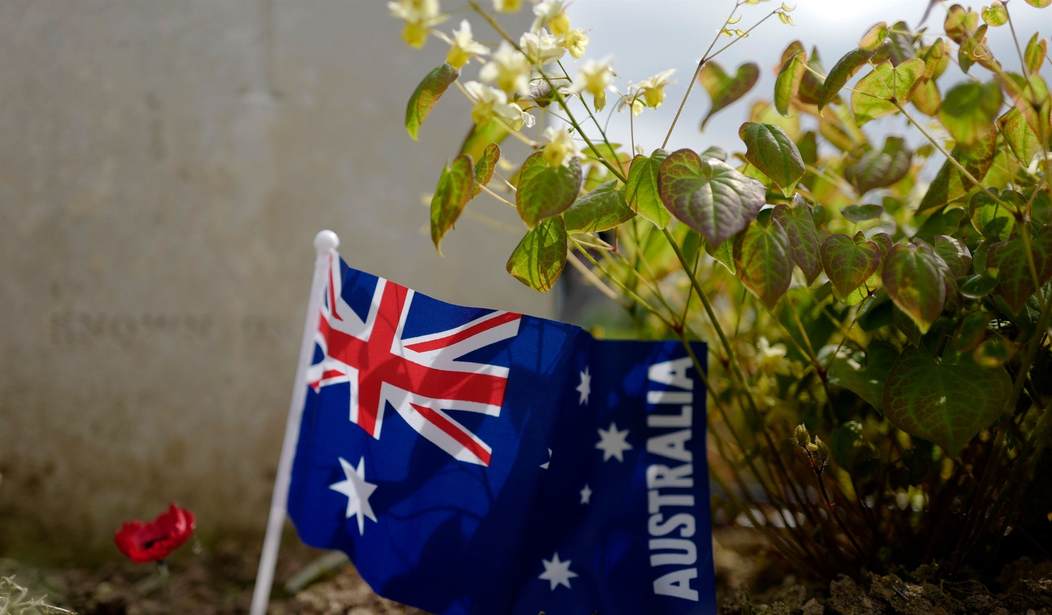
The same can't be said for Australia. Down Under, they have slashed domestic production, primarily of diesel fuel. You know what runs on diesel fuel? Agricultural equipment. You know what has happened to Australia's wheat crop? It's dropping - by half. Some media outlets are putting the best face they can on it, but it's still a nasty problem.
Farmers have drastically scaled back their wheat crops this year in a trend that threatens to worsen the country’s cost-of-living crisis after soaring fuel and fertiliser prices from the Iran war and dry weather prompts growers to rethink the food staple.
The three-month conflict in the Middle East and the closure of the Strait of Hormuz has already triggered a massive shake-up in global agriculture and sent commodity markets into a spin. Rabobank is now forecasting oil prices could spike to an average of $US120 a barrel in the coming months up from about $US70 before the conflict.
That much is true, but there's more to the story than that.
The energy shock has directly hit the agricultural supply chain, driving up the costs of running machinery and the manufacturing of chemical fertilisers that farmers rely on to grow food.
Vincent Carse, a commodity strategist at NAB, warned that Australia was more exposed from disruptions than other large grain-producing countries, owing to its reliance on imports from the Middle East.
The toll on local farming budgets this year is stark – Australian diesel prices are 35 per cent higher than pre-conflict levels while wholesale urea prices – a nitrogen fertiliser – have surged 70 per cent, heavily inflated by soaring natural gas processing costs.
That's going to put a serious drag on the Australian economy. Energy prices, after all, affect everything else in any economy.
Read More: Veganism's Hidden Danger: Student Suicide Now Tied to B12 Shortfall
Where's the Beef? US Products to Return to Chinese Store Shelves in New Trump Trade Win
But prices or not, domestic production can still offset some of the shock effect, and Australia has opted out, thanks in part to hand-wringing about climate change and Net Zero lunacy; the proponents of that in Australia don't seem to understand that buying fuel from abroad doesn't lessen the total amount used, and it's not as secure a source as domestic production.
In 2000, Australia was producing about 800 thousand barrels of oil per day. That figure, today, stands at 250-400 thousand barrels per day, less than half of the 2000 production. Australia now imports almost 90 percent of its refined petroleum products, including diesel fuel. Part of that, granted, is due to depletion of some major oil fields, but part is also due to the Aussies' lack of updated extraction techniques.
The picture with refineries may be even worse. Six refineries in Australia have closed since 2000, leaving the country with only two operating refineries. Again, part of this is competition from offshore "mega-refinineries" which are considerably more efficient (and modern). Those refineries are mostly in Singapore, China, South Korea and India.
In short, Australia has, partly because of the government's Net Zero concerns, mostly abandoned their domestic production. This has left the country more vulnerable to price hikes and, more importantly, supply shocks.
Watts Up With That's Eric Worrall has some added insights:
Australia was on the brink of moving to correct this disaster, back in March Premier Crisafulli announced a Queensland Government backed oil refinery and fuel storage programme.
Then the Australian Federal Government decided now was a good time to crash risk taking business investment, by announcing a major hike in capital gains tax, a programme to treat profits from capital gains as equivalent to employee wage income. A legislative minimum of 30% of any profit investors make from starting a new business then selling the business as a going concern now ends up in the pockets of the Australian Federal Government.
Capital gains taxes are and always have been a bad idea, not to mention stupid; what you tax you get less of, and a capital gains tax is a direct tax on investment. But here's the real zinger:
If only Australian domestic energy producers had an advocate in the Federal Government, who could argue the case Aussie energy investments to be excluded from the new tax hikes. Sadly Australia’s Federal Minister for Energy and Climate Change Chris Bowen has been too busy focusing on his role as President of Negotiations for the upcoming COP31 climate conference in Turkey to spend time fixing Australia’s energy problems. In any case, Bowen thinks everyone should convert to electric vehicles if they are worried about diesel prices.
I’m sure we’ll stumble through somehow. Perhaps President Trump can send us a few shipments of wheat, along with all the fuel the USA has been sending to Australia lately.
Ay, that's the rub; Australia's dependence on foreign energy sources has resulted in a catastrophic drop in agricultural output, and the minister for energy is more worried about the next UN climate change hand-wringing session.
This could very well have happened here. The Biden administration, as the Obama administration before it, was doing all they could to squash American petroleum production. Now we're seeing a resurgence, and that's good not only from the price standpoint, but also from the stability standpoint; gas and diesel may cost more as the global markets shift, but in the end, if we are at least producing it locally, we're far less vulnerable to supply shocks.
I'd say "Let that be a lesson to you, Australia," but I'm afraid it would be a wasted effort.