








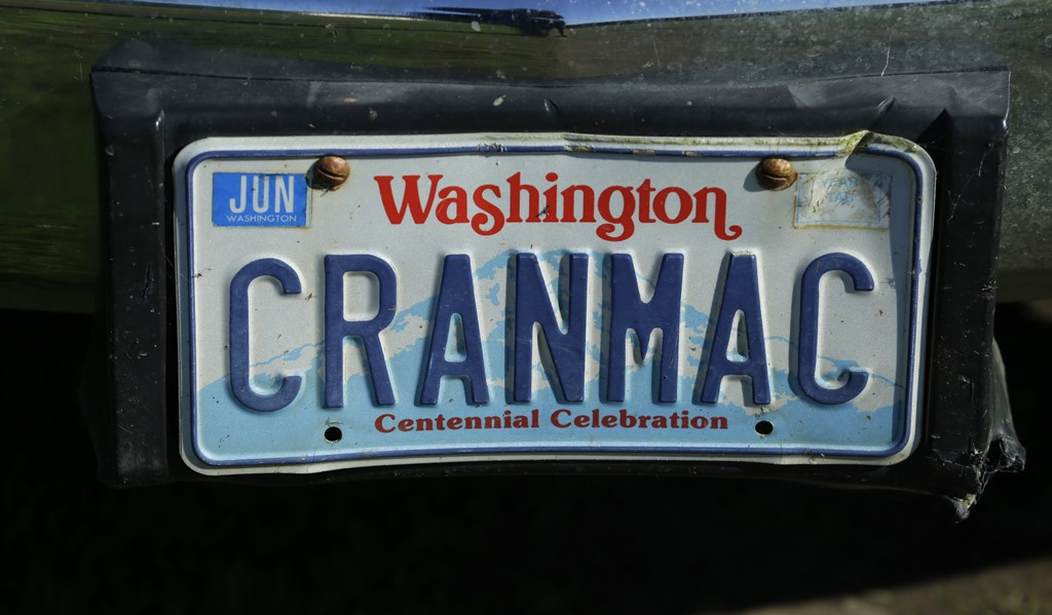
History's an interesting thing. The anniversaries of some things pass almost without notice, even when those things resulted in significant changes to our lives. Case in point: Saturday, April 25th, the day this was written, is the 125th anniversary of New York being the first state to require automobile owners to register their vehicles with the state.
That's right. Today is the 125th birthday of everyone's favorite government institution: The Department of Motor Vehicles, or DMV.
Back in 1900, there were just 4,192 motor vehicles in the U.S. But every year, the number of cars was skyrocketing (by 1908, it would reach 63,500). As automobiles grew in popularity, eventually replacing the horse and buggy, state governments needed a way to keep tabs on vehicles. The simple license plate was the solution, with a few letters and numbers stamped into a thin metal sheet to designate a car to its owner.
"New York became the first state to require owners to register their motor vehicles with the state," says Ian Lang, senior car advice editor at Bumper.com via email. "The New York legislature required vehicle registration on April 25, 1901, followed by California later that year. New York's first plates were homemade, bearing only the owner's initials without any numbers. It was Massachusetts that actually issued its first license plates in 1903."
So we have Massachusetts to thank for license plates, but for the DMV? New York has the blame for that, although, to be fair to New York, it was probably inevitable. In fact, the late adoption by the United States leads to one of the few examples of France being in first place in anything that didn't involve snails or surrendering to Germany.
These were the first instances of car registration in the U.S., but France beat them to the punch, with motor vehicle tags issued as early as 1893. In fact, all the way back in 1783, King Louis XVI mandated that carriage drivers in Paris have metal plates with their names and addresses fixed on their carriages.
"By 1918, license plates had been issued by all 48 contiguous states," says Lang. These plates were made out of either leather or metal and were not very standardized from state to state. "It was common for early plates to have just the state's name or abbreviation, a registration number, and, more often than not, the year."
Nowadays, of course, you can get custom plates, within reason. My one foray into this was in Colorado, when, about 1998, I bought a 1993 Bronco, all black, and being what it was - a black Bronco - I immediately started calling it the Dark Horse, and tried to get custom plates bearing the name. The state restricted how many letters, so I went with my first choice as DRKHORS, but that was evidently taken. I got my second choice, DARKHRS, which everyone misinterpreted as "Dark Hours." Custom plate fail.
Read More: Eight Busted in Michigan's New Stolen Auto Export Scandal
Trump Administration Kills the Most Annoying Car Feature Obama Forced on Drivers
License plates quickly became as standardized as people's experiences at the DMV were tedious and annoying.
Around the 1950s, license plate size and materials began to be standardized to what we see today. After 1956, all American, as well as Canadian plates measured exactly 6 by 12 inches (15 by 30 centimeters). In 1954, the Vehicle Identification Number (VIN) was also introduced as a reliable method of tying registration documents to a particular car.
License plates were originally a one-time deal; when you registered your vehicle, you got a plate that was good for as long as you owned the car or truck. At some point along the way, the tendency of government to become ever more intrusive and overbearing kicked in, and most states started requiring you to renew your registration every year, making you go stand in line forever at the DMV not just once, but every year.
We get around that here in Alaska by being, technically, "remote." Our plates bear a "P" instead of an expiration year, and they are, as they used to be everywhere, permanent. And, yes, in a lot of places, your plates are still stamped out by prison inmates. Idle hands are, after all, the devil's workshop.
For many decades, the DMV system has used prison labor to meet the constant demand for new license plates. "It is estimated that 80 percent of license plates in the United States are produced in prisons. Several of those prisons manufacture plates for multiple states, says Lang. "In prisons, the actual metal plates are stamped, then the plastic sheeting is applied."
Nowadays, more and more states are putting a lot of the DMV functions online. Alaska has done so; we have family in Colorado and Iowa, and we understand it's the same there. That seems, in a way, kind of sad; it leaves us all with fewer "Oh man, this one time I was waiting in line at the DMV" stories to tell.
Happy birthday, DMV!Editor's Note: Do you enjoy RedState's conservative reporting that takes on the radical left and woke media? Support our work so that we can continue to bring you the truth.
Join RedState VIP and use promo code FIGHT to receive 60% off your membership.



Join the Conversation
VIP members get the ability to comment on articles.