
The automobile has a huge place in American culture. The size of our nation requires it, especially in the wide-open spaces of the West. But there's more to it than just transporting ourselves from point A to point B. The automobile is part of our history. The first mass-production autos were built here, and when Henry Ford started cranking out Model Ts, he took the automobile from a rich man's toy to something everyone could afford. Within a couple of decades, our city streets were busy with autos of various makes — and free of horse manure.
More to the point, young people (at least in my day) saw the automobile as a symbol of freedom. With a car, we were liberated from either bicycles or shank's mare, which was how most of us were getting around before being able to drive. But, for the last few decades, the federal government has tried restriction after restriction to suck all the joy out of being on the open road.
One of the dumbest examples was an Obama-era restriction that caused the annoying engine-shutoff at a stoplight, with the accompanying herky-jerky restart when the light turned green. That was a stupid idea, and now, as my colleague Rusty Weiss informed us the other day, it's gone.
Rusty writes:
The Trump administration is eliminating Obama-era off-cycle credits that incentivized automakers to install automatic start-stop technology in vehicles, effectively killing what many drivers consider one of the most annoying features of newer models.
EPA Administrator Lee Zeldin highlighted the victory on Wednesday — building on the February repeal of the 2009 Endangerment Finding — while sharing a Wall Street Journal article highlighting drivers celebrating 'the demise of the most hated feature in their cars.'
Zeldin mocked the technology as an Obama administration climate zealot "participation trophy."
Issues & Insights, in an editorial released Friday, has more details.
The “feature,” which is the wrong word for what’s truly a nuisance, automatically shuts off a car’s internal-combustion engine when it is idling at a red light or stuck in traffic. It restarts the engine when either the foot comes off the brake pedal or the accelerator is pressed. The action is jerky — it too often feels like a minor collision — distracting and tiring, producing a driving experience that’s more wearisome than enjoyable.
It’s also likely that the system increases wear on a car’s starter and battery, forcing owners to replace them sooner than they otherwise would — though its few supporters claim this isn’t so.
The industry was coerced by the Obama administration to include the function in every new car to improve fuel efficiency and cut emissions. Automakers weren’t required to make it standard, but it became a mandate of sorts in 2012 because the government gave them a credit if they added the confounded gadget to their lineups.
That's great. But can I offer some more suggestions to the automobile industry, about making driving more fun again?
Read More: Trump Administration Kills the Most Annoying Car Feature Obama Forced on Drivers
Watch: Trump Signing Car Industry EO, Which Seeks to End 'Burdensome' Green Energy Regulations
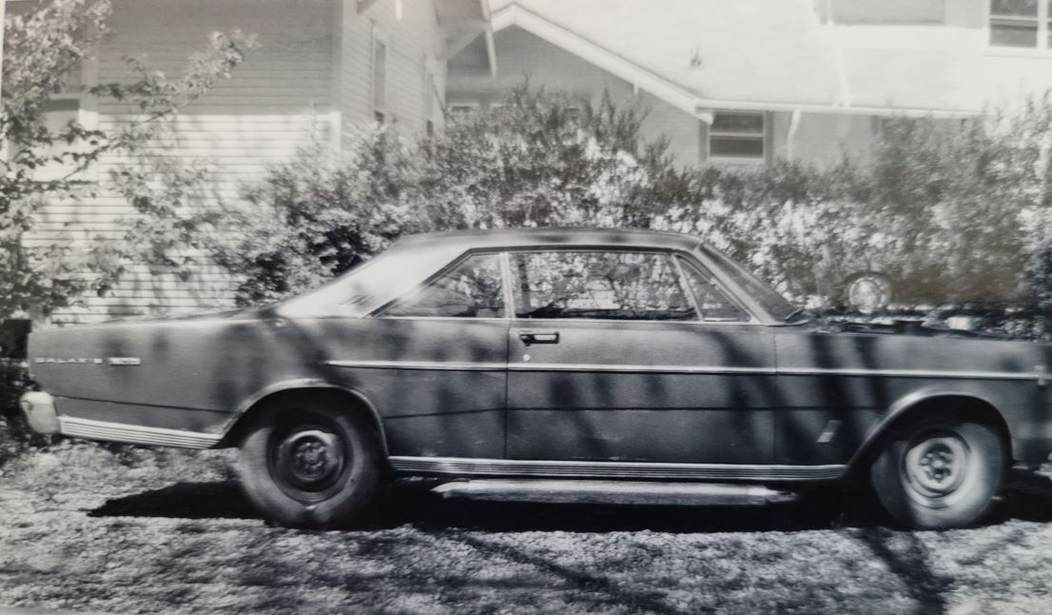
First, bring back engine sounds. Oh, there will never again be anything like the galloping rumble of a big-block V-8. The car at the top of this story, my high school freedom iron, had a thunderous 390 GT engine, and I can still hear the roar of that motor, given tone by those chrome sidepipes — remember sidepipes? Sidepipes were cool. These days, to get my big motor fix, I have to go visit my old buddy in Iowa, who has restored a 1968 Cougar XR-7, a reproduction of his high school freedom iron. He has equipped his Cougar with an even bigger motor, a 428 Cobra Jet, and the sound of that takes me right back to 1978. Incidentally, it was in that original Cougar, boasting a 302 small-block, that he and I set what I am sure is still the world's land speed record from the city limits of Decorah, Iowa, to the city limits of Waterloo, Iowa; 78 miles in 58 minutes, for an average speed of a skosh over 80 miles per hour. Reckless? Sure. Fun? Heck yeah.
Second, let's make cars look distinctive again. I know that it's a combination of safety engineering, aerodynamics, and general efficiency, but cars these days all look the same. There's no juice to them. There's nothing out there that can match the badass lines of something like a 1969 "Shotgun" Boss Mustang, or the 1964 Pontiac GTO, or the 1970 Dodge Challenger T/A. Trucks were cooler, too; I still remember my Dad's old 1955 Ford F-1, with its smooth, rounded lines.
Oh, and tail fins! Tail fins were way cool. Bring them back!
Third and finally, get the government out of the way, and let the manufacturers build us the cars we want, the cars we want to buy, and if we want to buy a newer, better-engineered, faster, safer, and more efficient version of an old muscle car, let us do so! Oh, the manufacturers are trying, but the new versions just don't seem to quite get it. Maybe they'd hit a little closer to the mark if some of the red tape were removed.
Old cars were fun. I had a blast roaring around the highways and byways of northeast Iowa in that 1966 Galaxie 500 you see above, and in the 1972 Gran Torino Sport that replaced it when I grenaded the Galaxie's motor all over the highway just outside of New Hampton, Iowa. And yeah, that was part of the fun, too; my old buddy mentioned above and I, to this day, tell the story of the state that motor was in when we tore it down. If you've ever found the remains of your engine's valves in the bottom of your oil pan, you'll know what I mean. New cars may be more efficient, safer, and all that, but they just aren't as much fun.
At least, though, we won't have to put up with that shutdown at stoplights horse squeeze.