
2026 will be a big year for Alaska. Ever since President Trump resumed office, ever since some key national priorities have changed where Alaska is concerned, things have been looking up here in the Great Land. Energy development is ramping up, "drill, baby, drill" is now the order of the day - as is "mine, baby, mine."
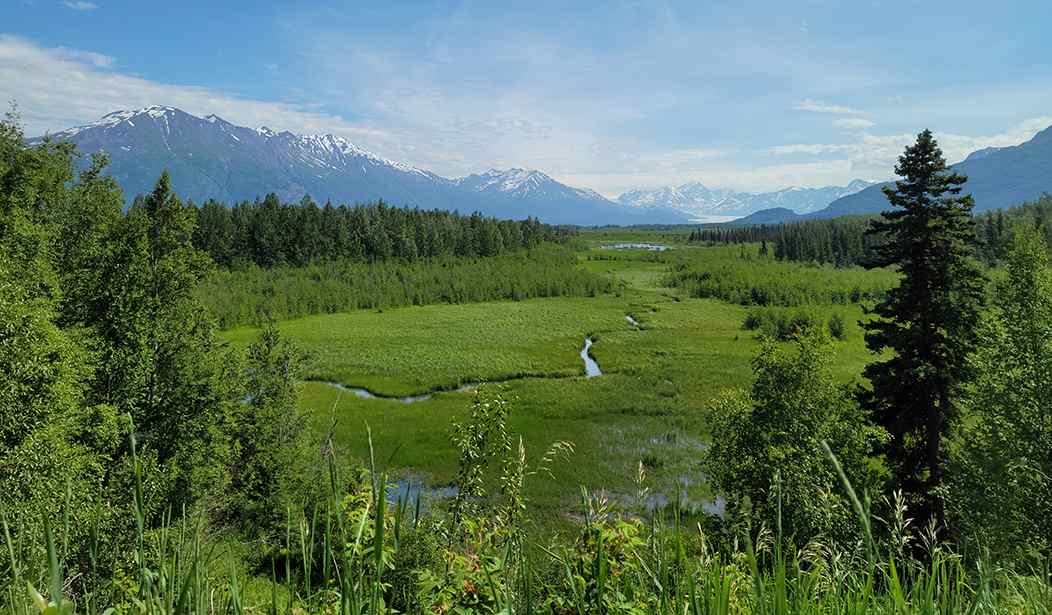
One of the great stashes here in America's treasure chest is the Ambler Mining District, north and west of Fairbanks. Ambler isn't an easy place to get to; it's pretty remote, and access right now is primarily by airplane. But as work in Ambler picks up, more and more treasures are being uncovered, and that is stepping up the urgency for the 200+ mile Ambler Road, which will allow trucks and heavy equipment to move to the district from the Dalton Highway.
We should remember, this isn't just a matter of mining for economic gain, although it certainly is that. No, reducing our dependence on foreign sources for various metals and materials is vital for our national security, and that's happening now, not only in Ambler, but across the Great Land.
But the riches uncovered! Ah, the riches! A recent piece at the website North of 60 Mining News has details:
Arctic and Bornite, the two most advanced deposits in the district, collectively host 9 billion pounds of copper, 3.5 billion lb of zinc, 88 million lb of cobalt, 57 million ounces of silver, and 737,000 oz of gold in all resource categories.
Arctic, the first UKMP deposit to be developed, is expected to produce 1.9 billion lb of copper, 2.3 billion lb of zinc, 388 million lb of lead,40.6 million oz of silver, and 386,000 oz of gold, over an initial 12-year mine life, according to a 2022 feasibility study.
Bornite, located roughly 16 miles to the south, is projected to add another 1.9 billion pounds of copper over a 17-year mine life based on a 2025 preliminary economic assessment.
Copper is vital in electrical transmission lines, and has a million other uses as well, including things ranging from plumbing to industrial heat exchangers. The same can be said for zinc, which is used in galvanizing steel, in batteries, in various alloys, and even as a dietary supplement. Cobalt is used in batteries for electric vehicles and other uses, as well as in various alloys.
Silver and gold - well, what can we say there? When mining these, one is literally digging money out of the ground.
And we are still finding new resources:
Studies carried out by the U.S. Geological Survey and the Colorado School of Mines indicate that Bornite could also be a significant source of germanium, a critical metal used in semiconductors, fiber optics, and advanced energy technologies.
"We are building the organizational capabilities at Ambler Metals needed to advance the UKMP through its next development phases, while the U.S. federal government continues to demonstrate strong and tangible support for domestic critical mineral production," said Trilogy President and CEO Tony Giardini.
There's a lot there, and now, we're going to go get it.
This involves a lot of infrastructure development, as well, and not only where the Ambler Road is concerned; there are also dealings between the state and federal governments, some of which involve the proposed Alaska natural gas pipeline.
Transferring federal Dalton Highway corridor land to state control is viewed as strategically important for both the Ambler Road and other infrastructure projects, including the proposed Alaska LNG pipeline, which together are central to the administration's broader resource development and energy strategy in America's 49th State.
"By opening these lands, we are empowering Alaska to chart its own course and develop energy, minerals, and infrastructure that strengthen America's security and prosperity," Interior Secretary Doug Burgum said during the Feb. 20 announcement of the lifting of the land order.
The right-of-way for the proposed pipeline will track mostly along the path of the oil pipeline, although it will terminate at the Kenai Peninsula town of Nikiski instead of the oil terminus at Valdez.
Read More: Statehood Win: 2M Acres Now Open for Alaska's Energy Boom
Alaska Antimony Breakthrough: Felix Reveals New Direct Smelting Path
As for the Ambler Road, there's one more consideration, and that is the question of whether or not the road will be open to private traffic. There will doubtless be some great hunting and fishing along that route, and since some taxpayer dollars are going into the financing, it makes sense that the taxpayers derive some access benefit. The same would - or should - apply to the possible Susitna West roadway.
This is how you do it. And, no, we're not tired of winning yet, in Alaska, or in America.
These policies, on energy and resource development both, are good for Alaska, they are good for the United States, and in the end, they will be good for the world. We need to keep moving, and that means making sure whoever controls Congress and whoever sits in the Oval Office is friendly to that process. That means voting, folks. I know I keep hammering this point home, but if the riches being developed are to continue, we have to keep a political environment in place that will allow it.
Our resource independence is vital to our national security. Ambler is part of that. Susitna West will be part of that. All of Alaska, America's Treasure Chest, is part of that. And for now, it's all working. Let's keep it working.