






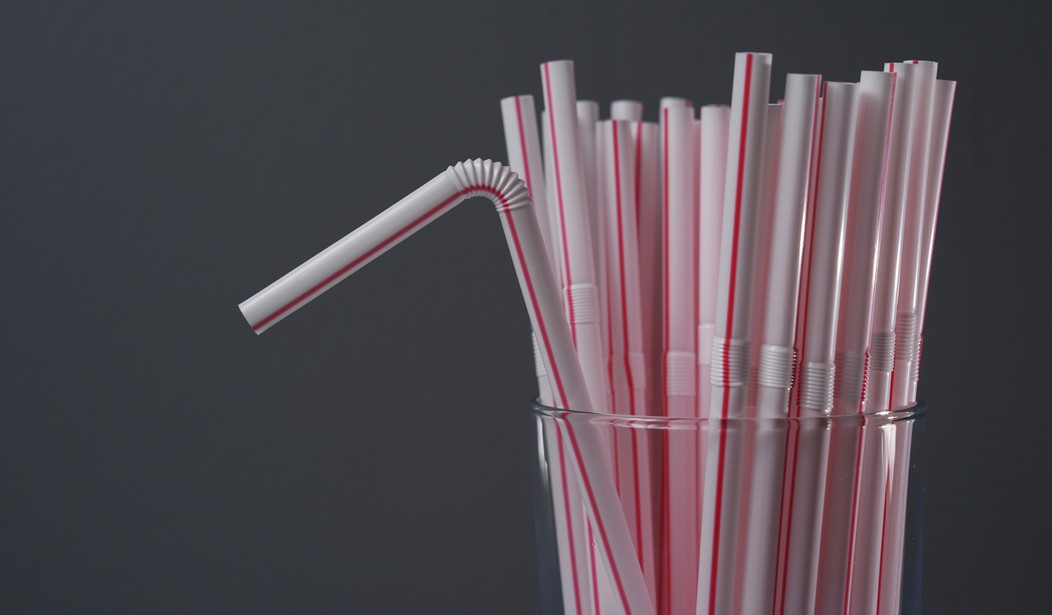
Microplastics, along with the possible trace products of pharmaceuticals in drinking water, have been a matter of increasing concern for a lot of people. For those concerned with this, a new bit of news out of Washington will be welcome: On Thursday, Secretary of Health & Human Services Robert F. Kennedy Jr. announced a new Trump administration effort to remove microplastics from the environment - and from people's bodies.
🚨 NEW: @RobertKennedyJr announces a new initiative to investigate the impact of microplastics on human health.
— Trump War Room (@TrumpWarRoom) April 2, 2026
"We will develop targeted, clinically safe strategies to reduce the microplastic burden in the body." pic.twitter.com/00Q0c7jtWg
Secretary Kennedy said:
We are launching STOMP, which stands for the Systematic Targeting of Microplastics. It's a $144 million national program to measure, understand, and remove microplastics from the human body. We are focusing on three questions: What is in our bodies, what causes harm, and how do we remove it? And we're answering them in that order. We will first build and standardize gold-grade tools capable of detecting and quantifying microplastics across tissue and fluids with precision.
Next, we will map how microplastics move through the body. How they cross biological barriers like the gut lining or the blood-brain barrier, where they accumulate, and how long they persist.
Third, clinically safe strategies to reduce microplastic burden in the body. We will also prioritize those at greatest risk.
The HHS official X account also weighed in on this joint venture between HHS and the Environmental Protection Agency (EPA):
.@POTUS and @SecKennedy are committed to confronting the threat of microplastics. In a historic initiative, HHS is launching a five-year program to develop strategies for removing microplastics from the human body. pic.twitter.com/3zNEq9REho
— HHS (@HHSGov) April 2, 2026
And:
— HHS (@HHSGov) April 2, 2026
Some fun and interesting graphic design thought went into this.
Lee Zeldin, the Administrator of the Environmental Protection Agency, made a joint announcement on his official X account:
🚨Just announced with @SecKennedy: The Trump EPA is including microplastics and pharmaceuticals as priority contaminants on the agency’s Contaminant Candidate List. We have heard from millions of Americans who are concerned about plastics and pharmaceuticals in drinking water and…
— Lee Zeldin (@epaleezeldin) April 2, 2026
The post continues:
...in drinking water and we are taking action. Our proposal, now open for public comment, also includes PFAS, disinfection byproducts, 75 individual chemicals, and 9 microbes that may be present in public drinking water systems. We will follow the science, pursue answers, and hold ourselves to the highest standards to protect the health of Americans.
Read More: New MAHA Report Shows Today's Kids May Live Shorter Lives Than Their Parents Despite Higher Spending
The MAHA Commission Unveils the 'Make Our Children Healthy Again' Strategy to Combat Chronic Disease
The EPA has also issued a press release on the initiative; that press release states in part:
Today, at an event with Department of Health and Human Services Secretary Robert F. Kennedy Jr., U.S. Environmental Protection Agency (EPA) Administrator Lee Zeldin announced a landmark set of actions to safeguard the nation's drinking water from microplastics, pharmaceuticals, forever chemicals, and dozens of other contaminants —delivering on the Trump administration’s promise to Make America Healthy Again (MAHA). At the heart of today's announcement is EPA's draft Sixth Contaminant Candidate List (CCL 6), which the agency is releasing for public comment, and is a critical tool under the Safe Drinking Water Act (SDWA) that drives research, funding, and future decisions on regulating emerging threats in public water systems.
The draft CCL 6 includes four contaminant groups—microplastics, pharmaceuticals, per- and polyfluoroalkyl substances (PFAS), and disinfection byproducts—as well as 75 chemicals and nine microbes that may be found in drinking water. For the first time in the program's history, EPA is designating both microplastics and pharmaceuticals as priority contaminant groups—a direct response to the concerns of millions of Americans who have long demanded answers about what they and their families are drinking every day. The CCL helps prioritize funding, research, and information collection to better understand the potential health risks of these substances in drinking water while advancing the agency’s commitment to gold standard science.
This will come as welcome news to a lot of people who have been concerned about this issue, an issue where we have never really seen any real study done on possible effects. Plastics have the rather interesting properties of being 1) irreplaceable in our modern, technological lifestyle, and 2) Ubiquitous in our environment due to their wide use.
The first step, as noted in the EPA press release, is to understand the risk. Then, decide what can be done about it. That, in such matters, is always the tricky part. What's more, the problem isn't just ours; the greatest producers of environmental microplastics, for example, are the Philippines, India, Malaysia, China, and Indonesia. The American HHS and EPA have no authority there.
At the very least, though, we can work to better understand the risks, and to put our own house in order.
Editor’s Note: Do you enjoy RedState’s conservative reporting that takes on the radical left and woke media? Support our work so that we can continue to bring you the truth.
Join RedState VIP and use the promo code FIGHT to get 60% off your VIP membership!

Join the Conversation
VIP members get the ability to comment on articles.