
My grandfather provided a living for his wife and two sons, one of whom was my father, throughout the Depression by working in a Ford garage. He was reportedly an excellent mechanic, with a knack for diagnosing and repairing almost any kind of machinery. The Depression was hard on that generation of Clarks as it was on everyone, but as Grandpa always said, fixing people's Model T and Model A Fords kept the family fed.
He also told me that he could, back then, completely overhaul the engine in a Model A in an afternoon: Pull the heads, grind the valves, replace rings and bearings, hone the cylinders, and put everything back together. Now, granted, that had to be done every 40-50,000 miles for those vehicles, or so Grandpa used to tell me.
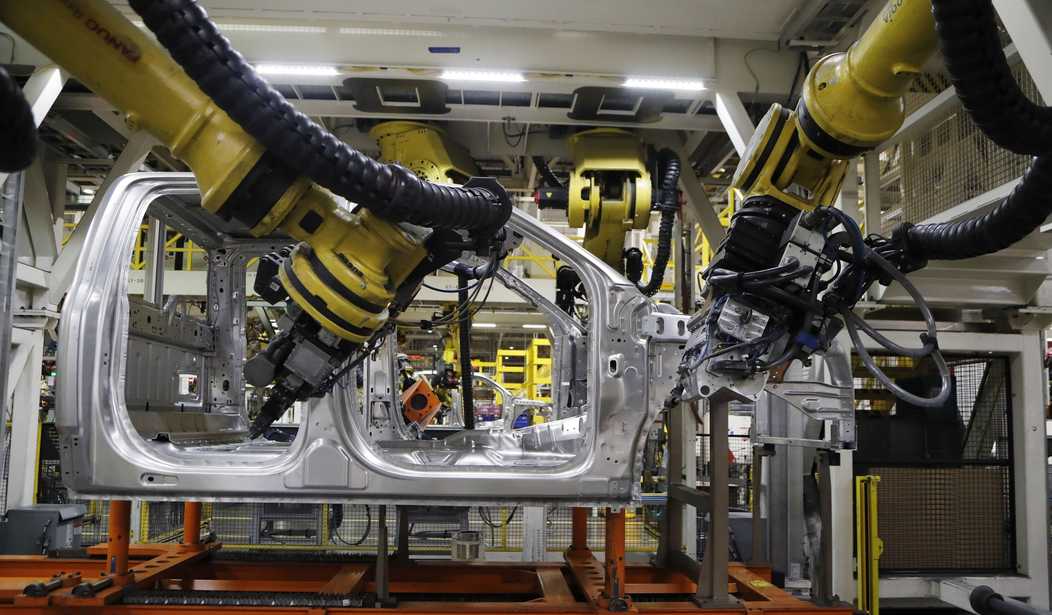
Autos today couldn't be more different. They are technological marvels, basically rolling smart-phones, designed and equipped with sophisticated computer software. Designing these marvels is a complicated process, and now a Swiss company is promoting the use of artificial intelligence to cut back on the time to market, and that raises some questions.
Artificial intelligence-powered vehicle design is revolutionizing the automotive industry, helping legacy brand designers match the speed of China-based carmakers in bringing vehicles to market.
That’s the claim being made by Switzerland-based Neural Concept for its AI engineering co-pilot platform that also suggests it can achieve up 30% shorter design cycles and $20 million in savings on 100,000-unit vehicle programs.
At the company’s presentation to CES Las Vegas 2025, it claimed its platform can also cut end-to-end product development times by up to 75%. It also claims to accelerate simulations by up to 10-times and boost auto characteristics, such as efficiency, safety, acoustics and aerodynamics, by up to 30%.
It looks like Neural Concept's AI isn't designing the cars; it is a tool that can help refine the design. That's an important distinction. Neural Concept's CEO made some interesting comments:
WardsAuto caught up with the company’s co-founder and CEO, Pierre Baqué, to find out more about the technology.
In an interview, Baque told us that the platform can be used in a multitude of ways to save costs, speed up time to market or to focus on bringing the latest technological innovations into exclusive products.
Time to market is a key concept. That's a vital metric for any manufacturer: How fast can you translate a concept into a design into a prototype into a product on the market? American and European manufacturers are contending with a nation that maintains a very fast time-to-market - China.
There are reasons China has this reputation; more on that in a moment.
Read More: You Don't Want AI to Govern Society
Elon Musk Now Claims Only AI-Robot Boom Can Avert Debt Crisis
Neural Concept has a fancy list of clients:
General Motors, Stellantis, Aston Martin and Subaru are among the company’s many clients, in addition to suppliers Mahle and Bosch. In September, Neural Concept announced announced a significant expansion of auto customers and adoption of its platform including Renault, Leonardo and SPAL Automotive.
Its NC Platform operates by placing a AI layer of design on the existing digital computer-aided engineering (CAD) systems, said Baqué.
“This is helping them [design engineers] design the car, render the assimilations and helping them make decisions on top of the digital layer,” he explained.
As noted, they are using AI as a tool, just like their CAD programs, just like a micrometer, for that matter. And that's unlikely to change; AI cannot create, it can't innovate, it lacks (at least, so far) that human intuition that enables us to make conceptual leaps that go beyond logic.
The elephant in the room? China. China is pushing its wares on the international automobile market, and they are almost certainly using their own AI products to do the same thing. Neural Concept is promoting its product as a way to keep up with China's fast design turnarounds, but there are other problems with China's fast design turnarounds that may serve as a cautionary notice for Neural Concept's customers. Specifically, China's automobile industry is beset with quality problems.
According to a report in the Russian Kommersant business paper, the share of Chinese cars in domestic taxi fleets has reached 70%-80% but their service life is equivalent to 93,200 miles (150,000 km), compared to 155,300-186,400 miles (250,000-300,000 km) for most Western brands, including South Korean and Japanese makes.
The report says private owners report similar problems with their Chinese models, including 70% reporting trouble with continuously variable transmissions. Other complaints involve engines, faulty warranties and difficulties in finding spare parts.
When you're getting complaints about efficiency and quality from Russia, well, you've got some pretty serious problems.
China's quality problems go far beyond automobile design. The country's various industries are beset with issues: Substandard building and manufacturing materials, poor quality control practices, and slipshod machining standards. These all result in things like bridges collapsing and lithium-ion batteries exploding.
Their use of AI, assuming that they are doing so, even to refine designs, are they doing this in as slipshod a manner as they do everything else? If so, American, Japanese, Korean, and European manufacturers don't have to worry for too long about Chinese competition. And the non-Chinese companies would do well to avoid the same trap.