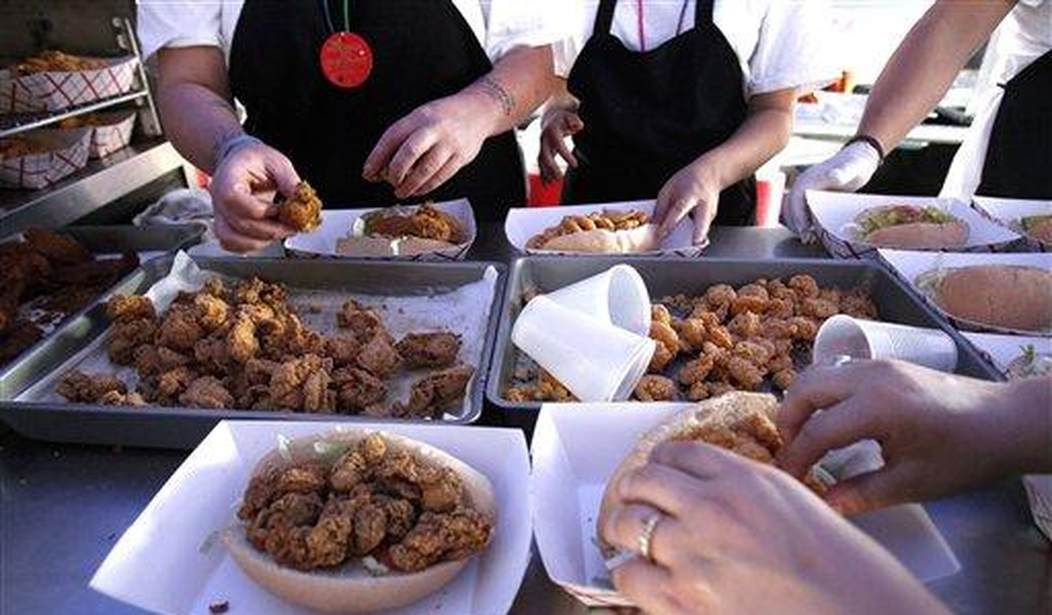

Throughout human history, people have eaten together. It's important; we're social beings. People who share their homes have always eaten together at the beginning and the end of the workday, and it's a time to connect with the people we share our lives with, to talk about plans for the day, and later, the events of the day. It's a time for parents and kids, for spouses, for households, for family and friends.
Cultural trends do change, however, and our modern era involves a troubling trend of isolation, especially among the younger generations. Social media and work-from-home models have replaced a lot of the face-to-face activities younger people used to rely on to expand their social circles.
Some Gen Z youths have found a workaround: Communal dining.
Members of the generation born between 1997 and 2012 are increasingly eager to dine right next to strangers, embracing long, communal tables in hopes of sparking conversation and perhaps even scoring a date.
Online restaurant reservation platform Resy found that 90% of Gen Z diners enjoy sitting at communal tables, compared with 60% of baby boomers. The report also revealed that 63% of younger diners see communal tables as a great way to meet new people.
It's not the worst of all possible ideas. I'm one of those 40 percent of Boomers who wouldn't much care for communal dining, but I'm also always open to new experiences. In my years as a corporate consultant, I did a fair amount of business in Japan. Japanese companies typically provide a cafeteria for their employees, along the model of what we would expect in a high school cafeteria.
Meeting new people on one's mind? Such a dining model wouldn't be the worst way to go about it. Some medical professionals agree.
For younger generations who grew up online and lost out on critical social development during the pandemic, the rise of communal dining makes sense, said Kelsey Latimer, Ph.D., a Florida psychologist, psychiatric nurse practitioner and founder of KML Psychological Services.
"I hear from my clients there is a desire to be more connected, especially after this generation was seriously impacted by COVID during critical years of connection," Latimer told Fox News Digital.
"There is an interesting dynamic in the younger generations of constantly being immersed in the belief that connection is everywhere 24/7 due to the online environment, while simultaneously feeling a sense of disconnection and lacking in authentic connection," she said.
Here's the thing: While there may be some value in that for disconnected young people, it doesn't have to be a binary.
Read More: What in the World Is GenZ Doing to Beer?
'We Messed Up': Cracker Barrel CEO Answers Questions for the First Time Since Rebrand Disaster
These days, my favorite dining experience is sitting across a table from my wife. And we just recently had our big family reunion/Thanksgiving dinner, with our kids, our sons-in-law, our grandchildren, and old friends. Good food and good company are inestimably enjoyable.
But there's value in seeking out new experiences and new company. Which brings me to that middle ground. One doesn't have to eat at a huge cafeteria-style table with strangers to connect with new people. I've struck up many an interesting conversation while parked on a barstool, ingesting a cheeseburger and a glass of beer. Our local lodge, which my wife and I visit with clocklike regularity every Saturday for lunch, is a convivial place where we have many times struck up conversations with new people at the next table. Sometimes they are other locals, sometimes they are people from other parts of the country or even other parts of the world.
There are many ways to meet new people, and a lot of them seem to be centered on food. This communal dining idea isn't exactly new, but it sure seems that the younger generations are seeing a new value in it.
Online restaurant reservation platform Resy found that 90% of Gen Z diners enjoy sitting at communal tables, compared with 60% of baby boomers. The report also revealed that 63% of younger diners see communal tables as a great way to meet new people.
About half said they've had interesting conversations with strangers while dining this way, one in three has made a new friend and one in seven has even met a romantic partner, according to Resy's November report on the dining trends that shaped 2025 and what may lie ahead for 2026.
Here's the thing: I don't know if this is a fundamental change in attitudes over the generations, so much as a matter of what people are comfortable with at different ages. I can only offer my own experience, of course, but I was much more adventurous in my youth than I am now, and I suspect most people are like that: More open to trying something new. I, and I expect many of my fellow Boomers, are more inclined to stay in our comfort zones. Because, you know what the thing is about your comfort zone? It's comfortable.
The model doesn't really matter. A barstool, a communal table, or a four-person booth, the setup doesn't matter. We are mentally and emotionally wired to enjoy our dining times with family and friends. It's good, it's healthy, and yes, it's good to meet new people, in just this way.
There's a reason that first dates so often involve a good dinner, after all.