
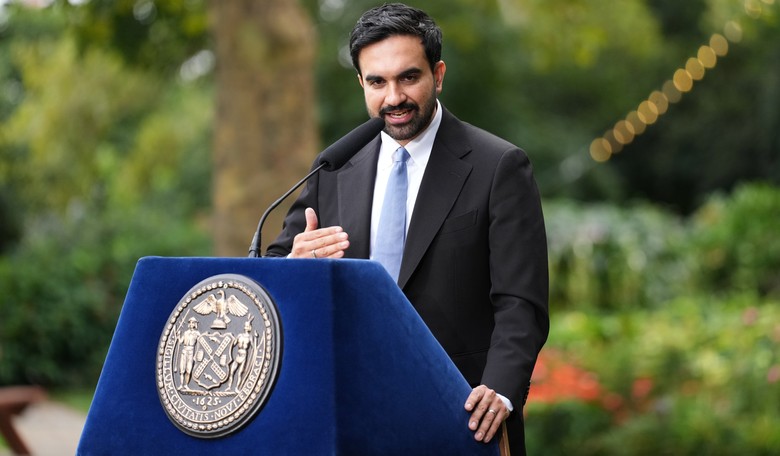
The recent political spectacle surrounding New York City Mayor Zohran Mamdani proves a timeless rule about radical political movements: No matter how far left a politician marches, the ideological purity police will eventually demand more.
On the anniversary of the Oct. 7 Hamas terrorist attacks, Mamdani attempted a delicate political high-wire balancing act. He issued an official statement acknowledging the massacre of more than 1,100 Israelis while devoting significant ink to echoing mainstream leftist progressive grievances against Israel's military response in Gaza.
Tfw the monster you created turns on you. https://t.co/WOMZYUbdEr
— Greg Price (@greg_price11) October 8, 2026
Mainstream local leaders, including Democrat Rep. Dan Goldman (NY-10), rightly slammed the mayor’s statement as egregious and deeply insulting for turning what should have been a solemn day of collective mourning into a partisan, anti-Israel platform.
Yet, the most revealing moment of the day did not come from moderate Democrats or conservative critics calling out the mayor’s tone-deaf statement. It came from Mamdani’s own socialist political base.
Mamdani is stone-faced as the protesters call him a traitor and sellout. https://t.co/oXducpYsMR
— Peter Sterne (@petersterne) October 8, 2026
When Mamdani appeared at a Union Square memorial event commemorating victims of the conflict, he was met not with appreciation from far-left activists, but with visceral fury. Protesters surrounded the self-described Democratic Socialist, shouting "traitor" and accusing him of capitulating to Zionist pressure simply for setting foot at an event that acknowledged Israeli grief.
One activist made the far-left mob’s logic explicitly clear, shouting at the mayor that he could never appease everyone and that his attempts at diplomatic nuance were a direct betrayal of their cause.
This incident lays bare the destructive circular firing squad that consistently defines modern progressive movement politics. Mamdani has built his entire political brand on harsh criticism of the Israeli government, routinely accusing Israel of war crimes, supporting boycott movements, and aligning himself with radical activist groups throughout his rise. Yet, the moment he performed the bare minimum human gesture of recognizing innocent civilian lives lost on Oct. 7, his own coalition instantly labeled him an enemy.
@petersterne There’s absolutely zero way to win with activist class. Everyone’s a sellout to them
— Jay (@bklnfin3st) October 8, 2026
For many observers, this episode is a classic, textbook illustration of how radical purity tests function in real time.
- Total Submission Over Civic Duty: The radical Left does not seek genuine debate, pragmatic compromise, or legitimate public service; it demands absolute submission. In their rigid worldview, ordinary expressions of sympathy for victims or basic civic duty are treated as acts of ideological treason.
- The Disposable Ally: Yesterday’s activist darling is instantly rebranded as today’s establishment sellout the very second they fail to follow the movement's ever-shifting consensus.
- The Fragility of Radical Coalitions: Activist movements built entirely on outrage and maximalist demands are inherently unstable, as they rely on constantly identifying internal enemies to maintain ideological momentum.
By entering the political arena through the activist fringe, Mamdani willingly chose to align himself with political factions that treat compromise as contamination. Now, holding executive office as the mayor of America's largest and most diverse city, he is learning the hard lesson that radical movements eventually consume their own champions.
When a political movement treats basic human empathy as a surrender, no leader, no matter how radical their credentials or how loyally they have served the cause, will ever be radical enough to satisfy the mob.