
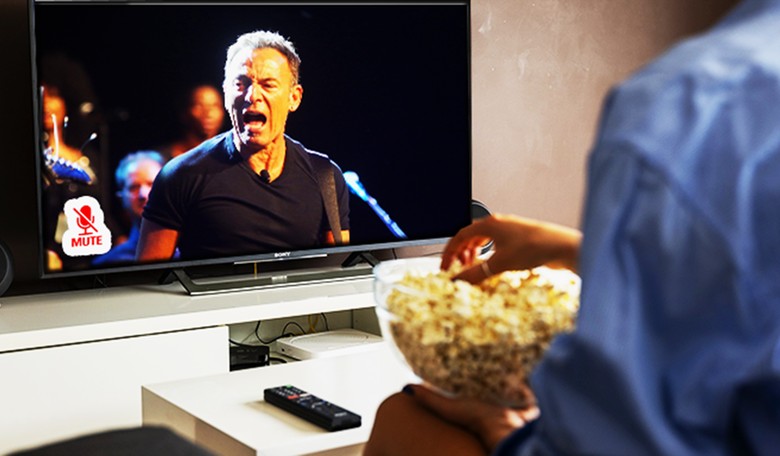
Bruce Springsteen has spent decades filling stadiums with anthems about working people, broken dreams, and American grit. Now he has lent that voice to the Power to the People Festival, a gathering held this past weekend, framed as resistance to the current administration.
The event drew the usual lineup of celebrity activists who treat political disagreement as moral crisis. What stands out is not the protest itself but the selective outrage that accompanied it.
Springsteen and his peers have every right to perform and speak their minds. Free speech protects even the most predictable celebrity lectures. The problem lies in the company they keep and the causes they elevate while ignoring harder truths.
Many of the same circles that cheer these stages have tolerated or soft-pedaled movements whose rhetoric and allies include open hostility toward Jews and open admiration for socialist and communist systems that failed everywhere they were tried. Those ideologies did not liberate the working class. They produced shortages, repression, and mass graves. The rich entertainers denouncing capitalism from private jets rarely pause to notice the contradiction.
Tom Morello sticks his fingers up in the air to send message to Trump during Bruce Springsteen’s ‘Power to the People’ protest concert. https://t.co/InEiI3maQQ
— Oli London (@OliLondonTV) October 4, 2026
The working people Springsteen once sang about do not need another lecture from multimillionaires. Most of them want secure borders, safe streets, affordable energy, and schools that teach reading instead of ideology. They are not asking celebrities to solve the nation’s problems.
They are asking them to stick to the music. When the same voices that claim to speak for the powerless consistently excuse or overlook antisemitism on the left and the romanticization of failed economic systems, the performance starts to look less like solidarity and more like fashion.
WATCH: Radicalism meets capitalism. At today’s “Power to the People” anti-Trump music festival featuring Bruce Springsteen and Dave Matthews, The Neighborhood Kids chant “Free, free Palestine!” and blast “Western imperialism,” then pivot to sales: “We got merch in that tent! ¡Viva la revolución!” Another performer, Grandson, directs fans to “Freedom Village,” where Indivisible, Third Act, the ACLU and other multimillion-dollar anti-Trump nonprofits gather, as he blasts the "AI apocalypse." Then, he celebrates the self-immolation of Aaron Bushnell in front of the Embassy of Israel in 2024, singing: “Martyrdom is meditation! Self-immolation!” The marketing language on the "Power To The People" festival's official website speaks to activating "the power everyday human beings have" to "shape" the world "on, and beyond, Election Day." The festival bears clear signs of alignment with the Democratic Party and spotlights the intersection of pop culture, nonprofit fundraising and partisan politics, revealing how celebrity drawing power translates into money, visibility and voters for organizations advancing a political agenda. The nonprofits are supposed to be "nonpartisan" but festival goers are clearly being directed to vote Democratic, raising questions about whether participation in the event is violating nonprofit laws. 🔗 to the article by @M_Dorgan and me: https://t.co/kIh8LEb5Lu
— Asra Nomani (@AsraNomani) October 3, 2026
History offers clear lessons. Socialist experiments concentrated power, crushed dissent, and left ordinary citizens poorer. Communist regimes turned neighbors into informants and emptied the shelves. Jewish communities have faced repeated waves of violence from movements that claimed progressive credentials while trafficking in old hatreds. Ignoring those records does not make them disappear. It only signals that some injustices matter more than others depending on the political team involved.
Americans are not asking for silence on every issue. They are pointing out the double standard. A movement that lectures America about justice while shrugging at chants and alliances that target Jews loses moral authority. A festival that rails against wealth while featuring the wealthy loses credibility. The audience that once connected with Springsteen’s earlier work can tell the difference between a song about hard times and a political rally dressed up as art.
Imagine that… Jack Smith showed up to a music festival in a Springsteen "No Kings" shirt, and I laughed out loud. This is the special counsel who spent years trying to put Donald Trump in prison. Now he wants to play hero at the "Power to the People Fest." Trump called him deranged and crooked this morning. After seeing him walk around in protest merch, I don't know how anybody can still pretend he was ever a neutral prosecutor.
— Gunther Eagleman™ (@GuntherEagleman) October 4, 2026
The country remains free enough for Springsteen to take the stage and say what he believes. That same freedom allows the rest of us to notice what is missing from the set list. The demand is simple: Shut the hell up and sing the songs that made you famous. Leave the selective moralizing to those who have not spent careers accumulating the very privileges they now condemn. Working Americans already know the difference between entertainment and instruction. They would prefer more of the first and far less of the second.
The Power to the People Festival drew its crowd and generated its headlines. It will not change the underlying reality. Prosperity, security and ordered liberty still depend on ideas that have worked, not on slogans recycled from systems that did not. Celebrity protest has become a predictable genre. The audience that pays for the tickets is entitled to expect better judgment from the performers.