
I was fortunate to grow up when I did. I'm an older millennial, born not long after the age limit for Gen X was reached, and so I got both elements of what I'd say was the greatest time in entertainment history. Movies and television shows were experimenting with different techniques and ideas like combining CGI and practical effects, music was still on MTV, and the internet wasn't a thing yet.
We had video games and television, but we also had each other. We would still go out and play in the streets, traveling blocks away to head to a friend's house, then go exploring in the woods that bordered our little town of Pflugerville, Texas.
It was a fantastic era, and I know that every generation has a lot of great things to say about their times when they were young, but there was really something about the 90s and early aughts that was special.
In fact, it was so special that even people who weren't alive during that time are nostalgic for it.
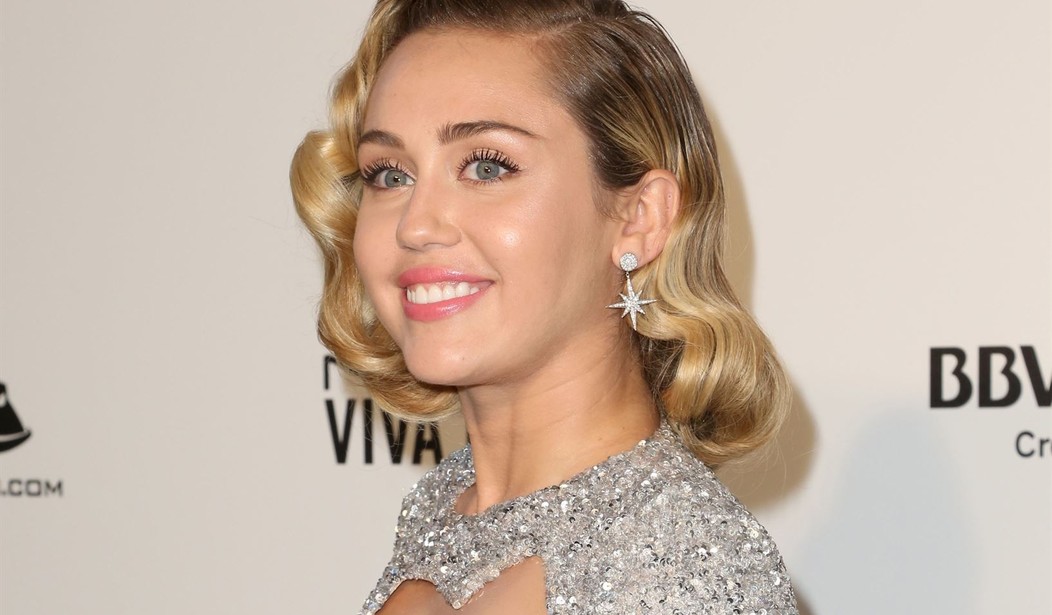
I came across an interesting article in Variety. On Disney+, Miley Cyrus hosted and performed for the 20th anniversary of the "Hannah Montana" series. According to the numbers, millions and millions of people watched it, and more than that, it caused the original "Hannah Montana" series to jump in viewership by 1,000 percent:
Viewership of “Hannah Montana” itself was up 1,000% over the last week compared to the week before it. Despite that the series ended its run on Disney Channel in 2011, its popularity endures: Disney reports that “Hannah Montana” has been streamed for more than 500 million hours to date.
Those are jaw-dropping numbers.
But probably not surprising. I had three sisters, and, growing up, "Hannah Montana" was on in the house quite a bit. Looking back, it was, for all intents and purposes, a fun, wholesome show for the whole family. I'd find myself watching alongside them, even laughing at some of the silly moments. The Disney Channel shows of that age were lighthearted and fun, the drama just deep enough to add depth but not so serious as to make you wonder if it's too old for little ones.
But like most Disney Channel shows of that time, it was about having adventures, growing up, and being a part of things alongside your family and friends. Shows like "The Suite Life of Zack and Cody" and "Good Luck Charlie" were all oriented toward and around experiencing life with the people closest to you. No agendas. No politics. No self-insertions from angry writers. Just innocent fun.
And while much of Gen Z was too young to remember all that, they yearn for it. The rise in Gen Z leaning on media from the 90s and aughts is steadily increasing. In fact, it goes even deeper than that, with many Gen Zers retreating back to 80s media.
According to GWI, a consumer insights tech company, Gen Z is actually the most nostalgic generation of them all:
As a generation, Gen Z are the most nostalgic, with 15% feeling that they’d prefer to think about the past rather than the future. Millennials aren’t much further behind at 14%, and the preference continues to taper off with age.
Gen Z and millennials are driving nostalgia in the media too. Gen Z are in the lead again with 50% of this generation feeling nostalgic for types of media, followed by 47% of millennials.
The New York Times reported similarly, with Dr. Clay Routledge, a social psychologist who specializes in nostalgia writing:
Consumer trends suggest that many members of Gen Z yearn for a taste of the predigital era. The oft-noted increase in sales of vinyl records, CDs, physical books and board games is driven only in part by older adults looking to revisit their youth. Young people who grew up on digital entertainments are also a major force behind this retro resurgence.
He reported that he conducted a survey of 2,000 adults and found that Gen Z yearn for the past by a good majority:
We found that most Gen Z adults — 68 percent — reported feeling nostalgic for eras before their lifetime. Seventy-three percent were drawn to media, styles, hobbies or traditions from those eras, and 78 percent said they believed that new technologies and products should incorporate ideas and design elements from these periods.
Why is Gen Z so obsessed with the past?
It's simple.
No, I mean the past is far more simple than it is today, and before I hear anyone complain that modern technology has made everything simpler, from gathering information to talking to people, I'd actually say that's not necessarily true. Yes, the tools have made it easier to do, but also far more complicated at the same time.
Modern technology has made us disconnected from one another. We can press a few buttons on our phone, and food, groceries, and supplies will show up at our door moments later. We can communicate face-to-face through those same little black mirrors. We can access information at lightning speed and talk to entities that aren't even real, that have the breadth of human knowledge in their back pocket.
But the one that has become more complicated is finding human connection through all that digital ease. We have all become far more disconnected, and with AI on the rise, that disconnection is only forecasted to get worse.
It's a far simpler thing to get on your bike and pedal a few blocks to your friend's house, the one who had the computer, so you two could play games together on it for an hour or two before his parents kicked you both out to go play outside, then go find other friends and find trouble under the bridge near the creek. Far simpler than sending a quick message to your friend via text who may or may not respond immediately because he's busy doing a report for school that, 30 years ago, would have had you both down at the library looking up the info in an encyclopedia.
It's a far simpler thing to get up on Sunday morning and dress for church, where your neighbors and friends are going to be, than waking up and maybe catching the service online.
The things that took more effort and force connection forced a simpler lifestyle because the digital one comes at you with endless information, a lot of it contradictory, partisan, and outrageous, and that encourages you to send simple messages via text rather than agreeing to meet up and really connect over something as simple as tossing rocks into a pond.
Many Gen Zers never truly experienced anything like that, but the way God built us has us all craving it. It's why they know that feeling exists even without having had it personally, and it's why they go and find the media I grew up with so they can live vicariously through what they see on the screen.
It's a heartbreaking thing.