
I was reading my colleague Brad Slager's review of The Bride when something about it stood out to me that is kind of obvious, but I feel needs a bit more attention.
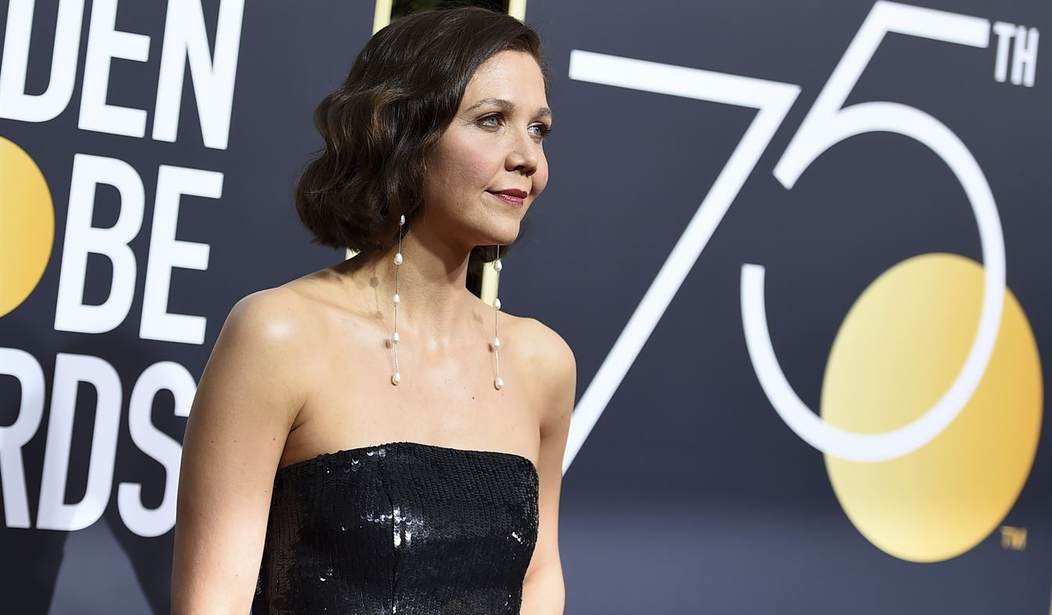
As Slager notes in his piece, The Bride was made by Maggie Gylennhal, who started cooking up the film when Trump was elected to the White House the first time around:
Adding to the challenge was that this was the work of actress/director Maggie Gyllenhaal, who was doing more than filming a gender-switch plotline; as she explains it, this was part of her anti-Trump artistic quest. If that sounds daft and nonsensical, that is only because it is actually bat guano ludicrous.
Gyllenhaal sat with the New York Times for an interview ahead of the release, and she explains that she segued from acting to directing for a primary reason: Donald Trump rose to power.
From everything I've read and heard, The Bride feels like a throwback film that might have done far better during Trump's first term, but thanks to the passage of time and the people's experience, the bitterness that surrounded Trump from the general population is far less intense than it was before. The only people still living like it's 2017 are the media elite of the Hollywood bubble.
The Bride is 2010s feminist slop thrust into the mid-20s in the name of... well... Maggie Gyllenhaal's political indignation.
Her anger being turned into art is perfectly fine. A lot of the most incredible art you've ever seen is catharsis made beautiful, but the issue with modern Hollywood is that it has lost the ability to make its art something that can be universally understood. At the end of the day, this is Hollywood's job. It creates stories that make people want to buy tickets. The Bride is a film created to get Gyllenhaal's rage over Trump expressed in a raw enough way that she gets the same catharsis one gets after a private crashout.
It's a temper tantrum put to a $100 million budget.
At the end of the day, putting makeup and a costume on your raw emotion doesn't make it art. It's just carbon. You have to refine it, cut it, polish it, and only then can it be a diamond. Much of Hollywood skips the first step and just releases what is, effectively, selfish nonsense that the audience cannot live in because the artist didn't bother to make their point something that could be understood by anyone but the point-maker.
I think it's interesting that Guillermo del Toro's Frankenstein, which Brad brought up in his article, approached the same story of Frankenstein from an angle that asked "What is it to be human?" whereas Gyllenhaal's movie broke down to "How can I jam Frankenstein into my political viewpoints?" One asked people to think, the other demanded that people submit to an ideological viewpoint.
One is art, the other is propaganda. One is a universal question that humanity has been pondering since it first looked up at the sky; the other is a therapy session we were ultimately supposed to pay for.
If the shoe were on the other foot and this were a film made to be a metaphor against the Biden or Obama administrations, the failure would, and should, still be the same. Gyllenhaal's political infusion is a day late and millions of dollars short, but ultimately, it's not the politics that was the issue; it was the execution... or the lack thereof. I can watch a movie I disagree with on a political level and still think it was absolutely brilliant.
For instance, I think Sinners was fantastic even though it leans way too heavily into the "Black people are victims" narrative, and I couldn't help but think that Weapons had touches of brilliance despite what could be viewed as having its own various politically-charged statements. Despite both of these movies having elements I disagreed with, I could connect with them and become engrossed in the story for the story's sake.
And that's the key. Tell a good story and allow the viewer to draw their own conclusions. We are the proverbial horse being led to water. If we drink, we drink; if we don't, we don't. You can't shove our heads into the stream and expect us to enjoy being drowned.