
I like to think that I'm a pretty level-headed person and not a lot gets to me. Even the left's incessant insanity and abject stupidity don't often get me out of my happy warrior mentality, and honestly, their radicalism is funny most of the time.
But then things like this Collider article come out that have me wanting to just delete the internet entirely.
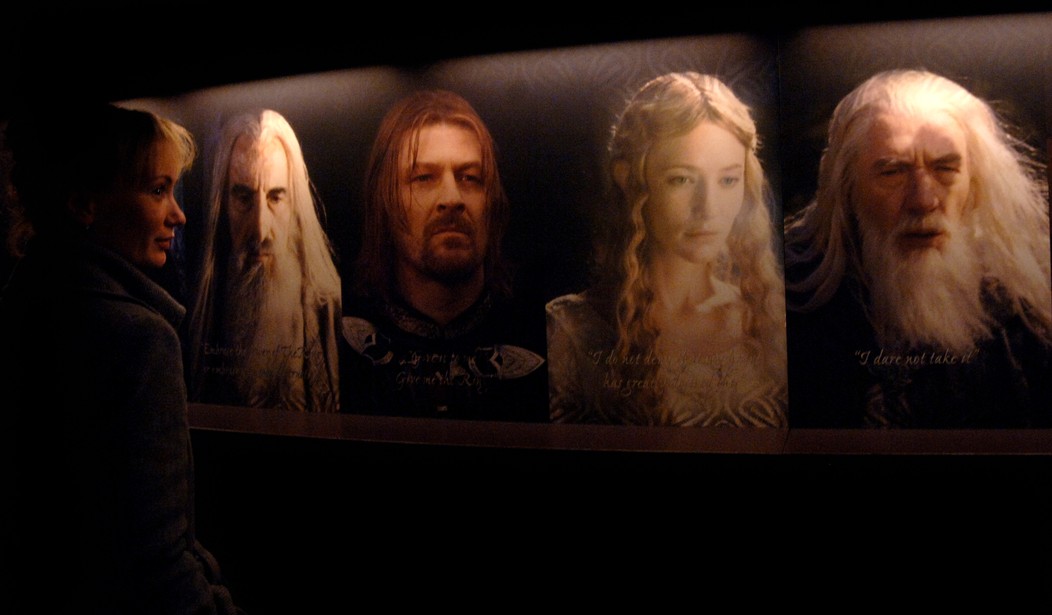
So there I was, minding my own business, when this article started going viral. It's from Collider, and it's titled "8 Reasons It's Hard to Watch the Lord of the Rings Trilogy Today."
Before I clicked on it, I knew what it would say, and even though I was ready for it, it still had me groaning in pain. The eight reasons given are some of the most mind-rotted reasons I've ever read, but to give it credit where it's due, I've never seen what the entertainment industry likes to refer to as the "modern audience" summed up better.
Let me just cut a lot of the fat out for you, because when you boil the eight reasons down to their bare bones, you're really only left with two.
The first complaint is that it requires you to sit, absorb, and pay attention... that's literally it.
Reasons one, two, four, five, seven, and eight all have to do with the idea that you have to give this movie a proper amount of dedicated viewing to understand it. I'd even throw the complaint that the movie's special effects look dated in some spots into this category. Some shots can take you out of the movie, but these moments are few and far between (some CGI moments do look awfully bad), but since most of the movie was shot using minatures and practical effects, it should only add to the movie's respective flavor.
Moreover, The Lord of the Rings is not a tough trilogy to understand. My wife is about as soaked in modern lingo as one can be, and she understood it without trouble. The way they talk is suited toward a medieval fantasy realm, but even that's more like a flavoring than an actual deep dive into how they used to speak in the days of swords and shields.
If I were a gambling man, I'd bet that this article hardly speaks for all of the "modern audience," especially Gen Z, which this article claims to represent. In fact, I'm 99 percent sure the real point of the article wasn't that it's too hard to watch for Gen Z audiences, because Gen Z's response to The Rings of Power, Amazon's horrific take on Tolkien's universe, was just as full of disgust and indignation as everyone else's. The Lord of the Rings still appears near the top of Gen Z recommendation lists, and if they're into the books, the movie is not an issue at all.
I think the real point of this Collider article is point two, in which they complain that there's no room for moral ambiguity in the story:
The trilogy presents a world where moral lines are sharply drawn. Evil is external, visible, and largely unchanging, while good is defined by loyalty, restraint, and sacrifice. This clarity gives the story focus and makes its stakes easy to understand. It also reinforces the mythic structure that defines the films. However, that same structure can feel limiting to audiences who expect moral ambiguity.
They actually say this differently in another paragraph:
The tone of The Lord of the Rings Trilogy comes from a very specific storytelling tradition. The films speak in formal language, rely on mythic stakes, and treat good and evil as clearly defined forces. That approach made sense for adapting Tolkien’s work, and it gave the trilogy its weight and sincerity. Still, that same seriousness can feel heavy for viewers, Gen-Z mainly, who are used to more casual, self-aware blockbusters.
I think this is the real point.
The folks at Collider, the people who consider themselves the "modern audience," don't like it when hard moral lines are drawn.
Now, to be clear, the modern audience is a lie that was cooked up by the social justice-obsessed in the entertainment industry a long time ago. You'll notice that things that are made for a "modern audience" include a lot of moral ambiguity, as well as a lot of nods toward the LGBTQ+ movement, intersectional feminism, and DEI-based rules for creation.
In short, the "modern audience" is a leftist ideal.
Good and evil are things that cannot exist because putting things into good and evil categories doesn't exactly allow some of their beliefs to exist in good conscience. Morality has to be "subjective" so that when a character they think represents the "good" guys does something evil, they still fall into the category of people you need to root for.
A great example of this is Disney's disastrous Ironheart, where the main protagonist kills innocent people and steals money, but is still "the hero" in the room because her identity as a black woman gives her loads of moral currency. In essence, moral ambiguity has to exist so that morality based on identity can thrive.
This article is trying to throw shade on one of the greatest works in film, based on a Christian-influenced story that places evil on evil's side and good on good's side, in hopes of influencing young people into the idea that this kind of tale is old hat and unfashionable.
Might as well call "Collider" a new name. I vote "Wormtongue."