








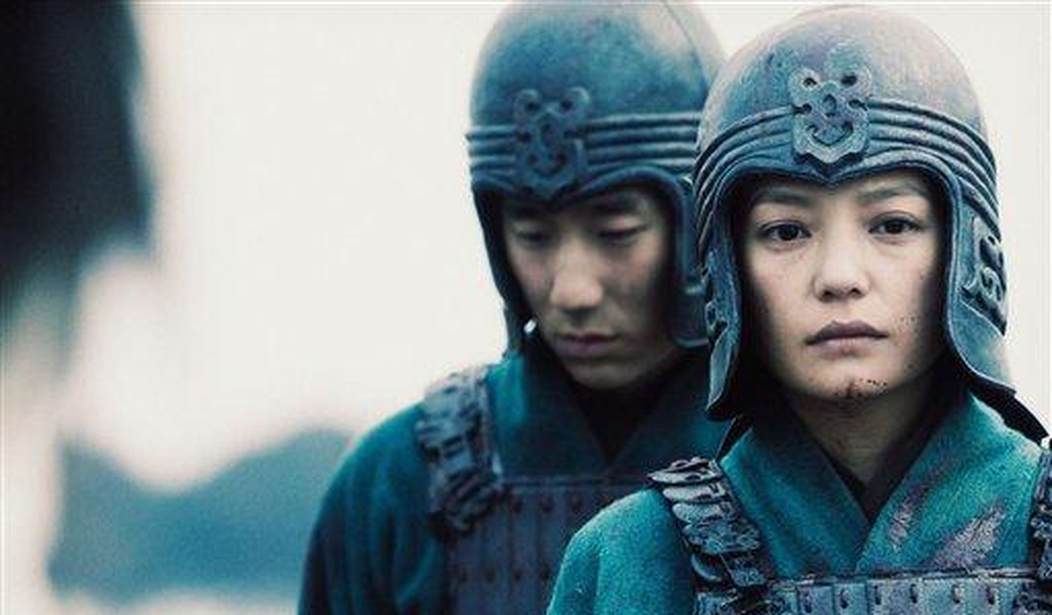

Just like its reaction to the Coronavirus outbreak it was responsible for, China is, once again, attempting to hide its own wrongdoing by media manipulation, and this time it’s trying to distance itself from the bad press caused by human rights violations.
According to CNBC, sources informed Reuters that Chinese authorities put a ban on covering the movie after its links with the Xinjiang region were discovered. This region is currently where the Uighur Muslims are held in concentration camps. The movie’s credits thank the region’s government for its participation in the film:
Three sources told Reuters media outlets had received the notice, two of whom said it was sent by the Cyberspace Administration of China. A fourth source at a major Chinese newspaper said he received a text message with a similar order from a senior colleague.
No reason was given in the notice, but the sources said they believed it was because of the overseas backlash over the film’s links to Xinjiang.
Neither the Cyberspace Administration or Disney immediately responded to requests for comment.
Partly shot in Xinjiang, Mulan’s credits included thanks to the authorities there, which prompted calls overseas for a boycott of the movie. China’s clampdown on ethnic Uighurs and other Muslims in Xinjiang has been criticized by some governments, including the United States, and human rights groups.
Chinese state-run media called the backlash against the film “another manifestation of the extreme ideologies regarding China among US public opinion.”
Regardless, the film, meant to pander to Chinese audiences, is underperforming worldwide including in China where it currently has scored a 4.7 out of ten on the social media site “Douban” in China.
In the United States, Disney is also facing momentous backlash for its association with the human rights-abusing government. Stakeholders in the company are set to take Disney to task for its turning a blind eye to the suffering of the Uighur Muslims in the region, and even filming the movie close to where the camps are.
(READ: Major Disney Stakeholders Are Taking Disney to the Woodshed Over Embrace of China)
How this will play out is still anyone’s guess, but it’s unlikely that Disney will change course and reject China at this point. Not only has it discovered that China is a golden goose, but it also opened up its $5.5 billion resort in Shanghai in 2016. The relationship between China and Disney is too tight to be untied at this time.
Join the Conversation
VIP members get the ability to comment on articles.