








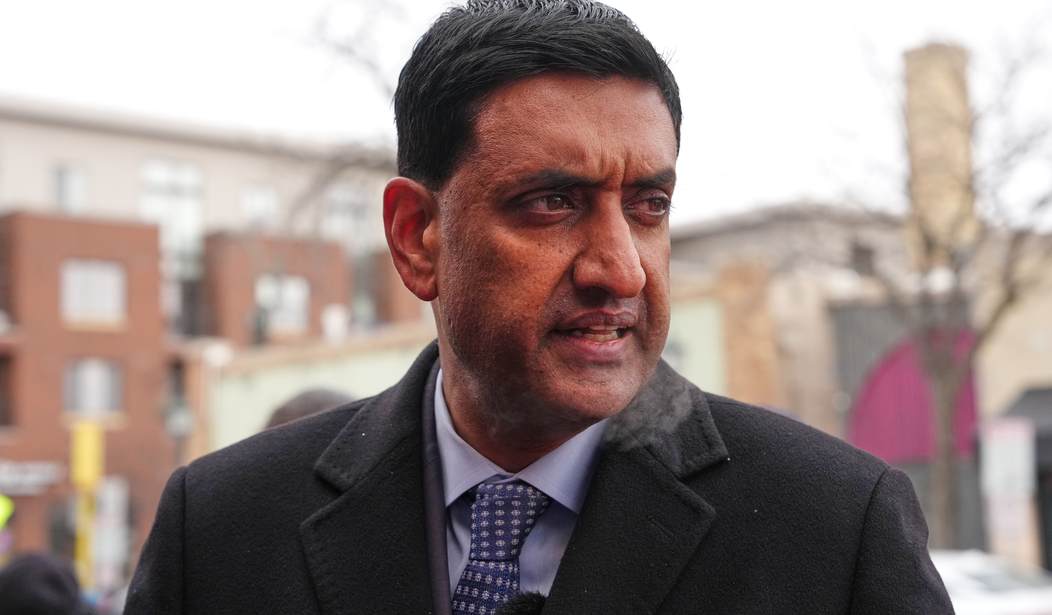
Rep. Ro Khanna (CA-17), the Silicon Valley Democrat who has described wealth inequality as “the moral failure of our time,” now faces a straightforward challenge from Grover Norquist of Americans for Tax Reform. In a letter made public this week, Norquist invited Khanna to lead by example: Write a check for about $11.6 million — 5 percent of his reported $232.7 million net worth — and send it to the U.S. Treasury.
Khanna built much of that wealth through his marriage to Ritu Khanna, whose family founded successful manufacturing and investment businesses, including Transtar Industries. Like many in his district, his portfolio reflects investments in the innovation economy that has defined modern California. Yet he advocates policies that would penalize the very wealth creation he has benefited from.
Americans for Tax Reform President Grover Norquist is calling on Rep. Ro Khanna to practice what he preaches on wealth taxes, sending the California Democrat a letter urging him to voluntarily write a check to the federal government equal to 5% of his reported $232.7 million net…
— The Washington Times (@WashTimes) June 19, 2026
This episode reveals a deeper tension. Proponents of wealth taxes frame them as simple fairness. In practice, they risk undermining the incentives that drive creativity, investment, and job growth. High marginal taxes on income and assets do not just redistribute existing wealth; they change behavior. Entrepreneurs and innovators weigh risks against potential rewards.
When government claims a larger share of the upside, some pull back on bold bets, delay expansions, or move operations elsewhere. Economic research consistently shows that higher corporate and personal income taxes correlate with reduced research and development spending, fewer patents, and slower introduction of new products.
.@grok how much wealth has fled California since Ro Khanna began pushing for a wealth tax in California? https://t.co/buzOzi6szJ
— Thomas Hawk (@thomashawk) June 20, 2026
Silicon Valley itself offers a case study. The region’s dynamism came from risk-takers who poured capital and long hours into ideas that often failed before one succeeded. Heavy taxation on unrealized gains or accumulated wealth makes those risks less attractive. It can encourage capital flight, as seen in responses to past tax hikes in high-cost states.
Khanna’s own district has long relied on talent and investment flowing in, not out. The congressman has also engaged in debates over H-1B visas, not acknowledging the need to protect American workers from displacement while attracting high-skilled talent. That conversation points to another reality: When domestic incentives weaken, companies turn more readily to imported labor or automation to control costs.
NEW @DC_Reporter:
— Matthew Foldi (@MatthewFoldi) June 18, 2026
Here's the letter that @taxreformer's @GroverNorquist wrote to @RoKhanna, offering to help him pay millions of dollars in extra taxes
Norquist, of course, is famous for wanting Americans to pay less in taxes, but he is making a Khanna Exception here https://t.co/rqljgErPBN pic.twitter.com/gVo59iir7f
RELATED: Steve Hilton Exposes the Real Cost of Gavin Newsom’s California
Finally, a Tax Day That Doesn’t Hurt
Tax policies that choke investment accelerate both trends. Firms facing higher effective rates may automate faster or expand overseas rather than hire and train locally. The result is not greater opportunity for American workers but substitution that leaves them behind. Norquist’s letter underscores the practical problem with wealth taxes. Valuing private assets, family businesses, artwork, and illiquid holdings invites disputes, audits, and avoidance strategies.
Enforcement requires intrusive government oversight — exactly the sort of administrative burden critics have long warned about. Voluntary compliance from advocates like Khanna would test the sincerity of the moral claim. Few have rushed to pay more than required.
Conservative thinking on taxes starts from a different premise: Broad-based, lower rates with fewer distortions encourage work, saving, and risk-taking. The post-2017 tax reform experience, despite imperfections, showed stronger investment and wage growth in many sectors before later reversals.
The goal is not protecting any one wealthy individual but preserving an environment where new wealth can still be created and spread through jobs and opportunity. Khanna is right that economic outcomes matter and that stagnant mobility frustrates many families. But targeting accumulated success through annual wealth levies is unlikely to deliver sustained gains for working Americans.
It risks slowing the innovation engine that has lifted living standards for decades. A better path lies in tax policies that reward productivity, streamline regulation to favor domestic hiring over alternatives, and focus government effort on skills, infrastructure, and open competition rather than redistribution by asset inventory.
Norquist offered Khanna a pre-addressed envelope and promised to help publicize the gesture. Whether the congressman follows through is his choice. The larger question is whether policymakers will learn from the pattern: Heavy taxation on capital and success often delivers less revenue, less growth, and fewer opportunities than promised. America’s edge has always been its ability to generate wealth, not merely divide it. Preserving that edge serves far more people than any single tax windfall. Don't hold your breath waiting for that check to clear, though.
Editor's Note: Do you enjoy RedState's conservative reporting that takes on the radical Left and woke media? Support our work so that we can continue to bring you the truth.
Join RedState VIP and use promo code FIGHT to receive 60% off your membership.
Join the Conversation
VIP members get the ability to comment on articles.