






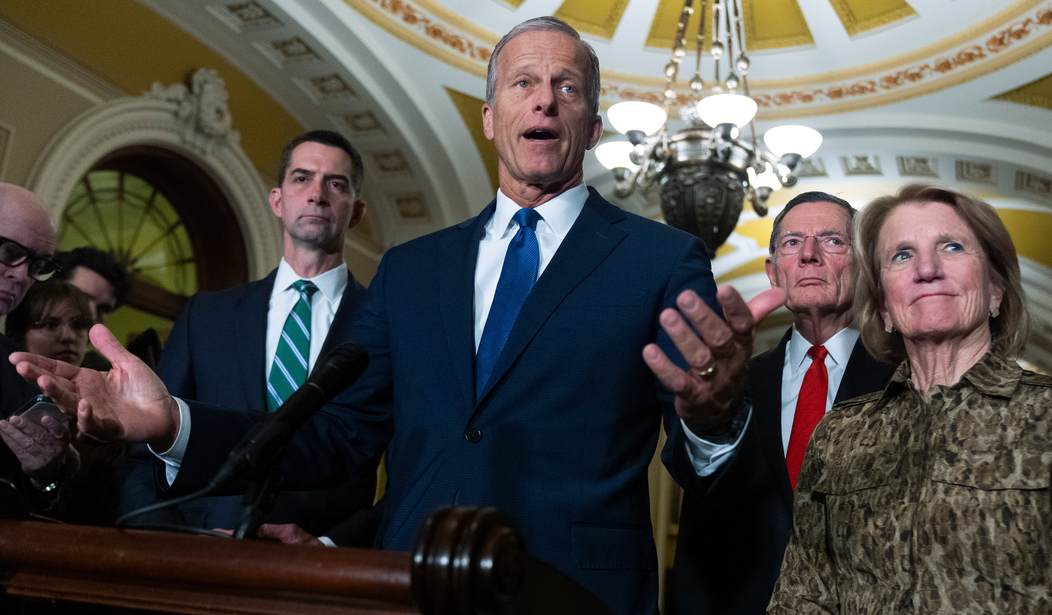
In the high-stakes theater of congressional politics, today’s legislative battles are frequently judged by the yardsticks of the past. For Senate Majority Leader John Thune (R-SD), the current gridlock over federal election reform has revived intense scrutiny regarding his own political origin story.
Critics and conservative activists are increasingly pointing to Thune’s historic 2004 Senate victory over incumbent Democrat Tom Daschle, arguing that Thune’s current handling of the Safeguard American Voter Eligibility (SAVE) America Act contradicts the very principles that propelled him to power.
The 2004 South Dakota Senate race remains one of the most iconic clashes in modern political history. Thune unseated Daschle, then the Senate minority leader, by a razor-thin margin of 4,508 votes. The campaign was defined by fierce debates over authenticity, residency, and the integrity of the vote itself.
During that election, conservative critics and independent researchers exposed that Daschle had claimed a primary residence tax credit on a $1.9 million mansion in Washington, D.C., while maintaining his voter registration in South Dakota. The revelation fueled a powerful narrative that Daschle had become an elite Washington insider who was out of touch with his Midwestern constituency — and fundamentally exploiting lax registration enforcement.
Alongside the residency dispute, the 2004 election was marred by widespread allegations of voter fraud, particularly concerning aggressive Native American voter registration drives on South Dakota reservations. Republican poll watchers challenged numerous ballots, alleging systemic irregularities, duplicate registrations, and illegal voting practices. Ultimately, Thune secured the seat, a victory that grassroots supporters attributed directly to his campaign successfully exposing loopholes in voter eligibility and fighting back against ballot-box manipulation.
More than two decades later, Thune occupies the most powerful position in the Senate. Yet, despite holding the gavel, his actions on election integrity have left the conservative base furious. This legislative session, the primary focus of election reform has been the SAVE America Act.
John Thune Is Reminding Republican Voters Why He Sucks
— NWRain-Judi (@RYboating) May 13, 2026
Leader Thune still refuses to nuke the filibuster and pass the Save America Act.
Any Senator who is against this needs to be put on blast!
Over 80% of Americans (including Democrats and Independents) want secure… pic.twitter.com/zXhLxhSF09
ALSO SEE: Thune's Refusal to Fight for the SAVE America Act Gets a Swampy New Backstory
Grassroots Political Advocacy Fueled the Power of the Vote in Texas
The bill proposes sweeping changes to federal election law, most notably requiring individuals to provide documentary proof of U.S. citizenship—such as a birth certificate or passport—when registering to vote, alongside mandatory photo identification at the ballot box.
Despite strong backing from the House of Representatives and overwhelming support from conservative voters, the SAVE America Act recently stalled in the Senate. Thune, operating as majority leader, opted not to use aggressive legislative maneuvers or circumvent the traditional 60-vote filibuster threshold to force a vote on the bill.
"It's about the votes. It's about the math," Thune told reporters, defending his decision to let the bill languish in regular order. "I have to be the clear-eyed realist about what we can achieve here."
🔥🚨 BREAKING: Leader John Thune says he CANNOT get the SAVE America Act passed with a talking filibuster
— The Patriot Oasis™ (@ThePatriotOasis) March 10, 2026
He doesn't have the votes
"It's about the votes, it's about the math! I'm the one who has to be a clear-eyed realist about what we can achieve."pic.twitter.com/D1nVZp0er8
The failure of the legislation has triggered significant blowback from the very circles that built Thune's career. Activists argue that Thune is turning a blind eye to the exact types of voter eligibility issues and registration games that he fought against in his 2004 race. By allowing the SAVE America Act to stall, detractors claim the majority leader is effectively protecting a broken status quo that permits loose registration standards and weakens public trust in elections.
Organizations advocating for stricter voting laws maintain that without federal mandates for citizenship verification, the integrity of federal elections remains vulnerable. They view Thune’s procedural hesitation as a capitulation to Senate Democrats, arguing that a leader who once benefited from exposing flawed registration practices and fighting fraudulent loops should use every mechanism available to institutionalize stricter standards nationwide.
While Thune's defenders claim that nationalizing election rules conflicts with traditional conservative principles of state-led election administration, grassroots Republicans aren't buying the procedural excuses. They see a glaring double standard: an establishment leader who used the issue of clean elections to win his seat, but who now refuses to wield his immense power to secure the ballot box for the rest of America.
As the election cycle intensifies, Thune finds himself caught between establishment legislative governance and the expectations of a base that demands aggressive action on election security. For a lawmaker whose career began by challenging the established rules of political residency and voter registration, the current debate ensures that his past will continue to shadow his legislative legacy.
Editor's Note: The Democrats are doing everything in their power to undermine the integrity of our elections.
Help us tell the truth about the SAVE America Act and how it will prevent voter fraud. Join RedState VIP and use promo code FIGHT to get 60% off your VIP membership.


Join the Conversation
VIP members get the ability to comment on articles.