






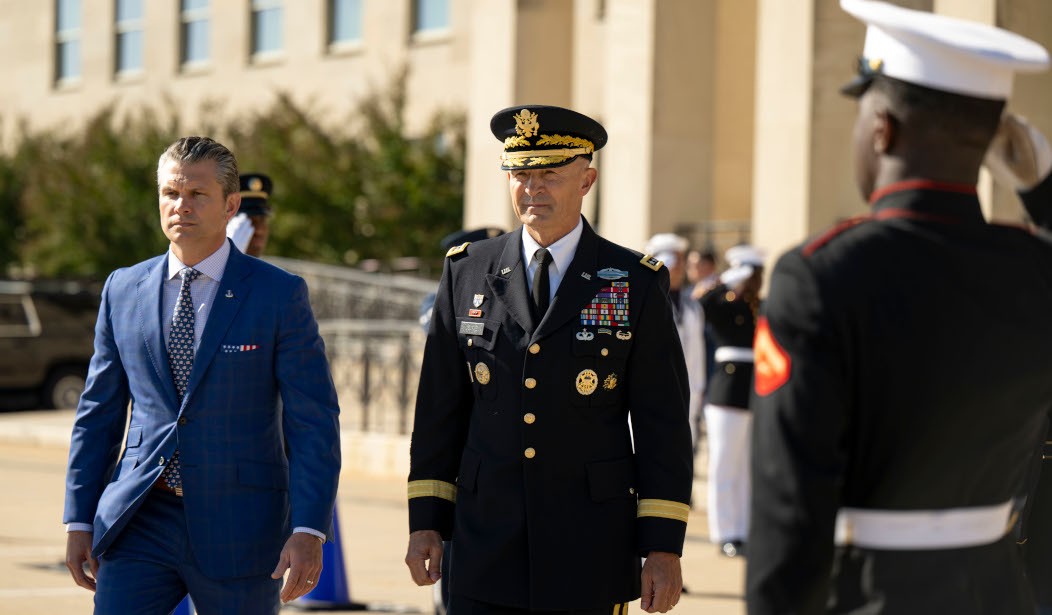
U.S. Defense Secretary Pete Hegseth stood at the Normandy American Cemetery in Colleville-sur-Mer on the 82nd anniversary of D-Day and delivered a pointed message. While honoring the sacrifices of those who stormed the beaches in 1944, he drew a connection to the threats Europe faces today. Some criticized the remarks as political. They were instead a sober reflection on what those graves represent: the high cost of securing liberty and the need to defend it in every generation.
Normandy was chosen for the Allied invasion because it offered a feasible path to breach Hitler’s Fortress Europe. The Germans expected the main assault to be farther north near Calais. Allied planners selected the Normandy coast for its relatively weaker defenses and potential for surprise, despite the formidable challenges of its cliffs, tides, and heavily fortified positions. On June 6, 1944, approximately 156,000 Allied troops, including 73,000 Americans, landed across five beaches in the largest amphibious operation in history.
Hegseth’s D-Day speech at Normandy American Cemetery, France today:
— Visegrád 24 (@visegrad24) June 6, 2026
“Today, different European beaches are stormed by different dangerous ideologies. Beaches in Spain, Italy & Greece. Boats & men arrive. When will Europe do something about that invasion?” pic.twitter.com/dc7HN8yQOa
The price was steep. Allied casualties on the first day exceeded 10,000, with more than 4,400 confirmed dead. American forces bore a heavy share of those losses, particularly at Omaha Beach. Yet the invasion succeeded in establishing a critical Western Front.
It relieved pressure on Soviet forces in the east, enabled the liberation of France, and set the stage for the eventual defeat of Nazi Germany less than a year later. The men buried at Colleville-sur-Mer helped turn the tide of the war through raw courage and coordinated resolve.
🔥Once again, these are urgent and cautionary words directed at Europeans.
— The Lector (@TheXLector) June 6, 2026
America is deeply concerned about the state of Europe and its inaction in the face of mass migration.
America does not want to lose its allies.
👇 https://t.co/QXJty6eLOz
ALSO SEE: Hegseth Remembers Those Who Fought During 82nd D-Day Commemoration at Normandy
A D-Day Letter From a GI to His Bride Highlights the Resilience of the Greatest Generation
Hegseth chose that setting deliberately. Standing among rows of white crosses overlooking Omaha Beach, he recalled the “unbreakable will” of the Greatest Generation and warned that freedom won at such cost can slip away if not actively protected. He noted that different European beaches are now “stormed” by arrivals carrying different ideologies, citing ports in Spain, Italy, Greece, and Bulgaria. The question he posed was a direct challenge to the globalist inertia in European capitals: When will these leaders finally address this influx and its consequences, or is it already too late?"
This is not a casual comparison. The D-Day generation confronted an existential military threat. Today’s challenges involve porous borders, integration failures, and the importation of values at odds with Western liberal traditions. Uncontrolled migration has strained public services, altered demographics in major cities, and, in too many cases, introduced security risks that governments have been slow to acknowledge.
Pete Hegseth (United States Secretary of War) warns Europe must fight 'migrant invasion' in D-Day speech - 'Today beaches are stormed by different dangerous ideologies.'
— David Furneaux (@DavidFurneta) June 6, 2026
The speech comes just one day after JD Vance suggested British student Henry Nowak would still be alive if… pic.twitter.com/JZRcxQHewJ
Pete Hegseth (United States Secretary of War) warns Europe must fight 'migrant invasion' in D-Day speech - 'Today beaches are stormed by different dangerous ideologies.'
The speech comes just one day after JD Vance suggested British student Henry Nowak would still be alive if Britain had taken firmer action on what he termed a 'mass invasion of migrants'.
Addressing attendees at the Normandy American Cemetery in Colleville-sur-Mer during commemorations for the 82nd anniversary of the D-Day landings on Saturday, the US Secretary of War drew a stark comparison between the historic Allied assault and immigration."
Sadly, today, different European beaches are stormed by different, dangerous ideologies," he said.
Europe’s experience with no-go zones, rising crime statistics in migrant-heavy areas, and political instability tied to these pressures is well documented. Hegseth’s point was that ignoring these realities risks undermining the very societies those soldiers died to save. The speech also served as a quiet affirmation of American leadership.
By returning to Normandy, Hegseth underscored continuity with the post-war order the United States helped build, while signaling that alliances work best when partners share the burden of self-preservation. Strong borders are not antithetical to freedom; they are among the practical measures required to maintain it.
Nations that cannot control who enters their territory lose the ability to define and defend their own character. Eighty-two years on, the rows of graves at Colleville-sur-Mer still speak clearly. The men who lie there did not fight for abstract ideals alone. They fought for concrete realities: secure homelands, accountable governments, and the right of free peoples to chart their own course.
Honoring them means recognizing that vigilance remains necessary, whether the threat arrives by landing craft or small boat. Hegseth’s remarks cut through polite evasion. They reminded the audience that freedom, once secured, must still be earned.
Editor's Note: Thanks to President Trump and War Secretary Pete Hegseth's leadership, the warrior ethos is coming back to America's military.
Help us report on Trump and Hegseth's successes as they make our military great again. Join RedState VIP and use promo code FIGHT to receive 60% off your membership.


Join the Conversation
VIP members get the ability to comment on articles.