






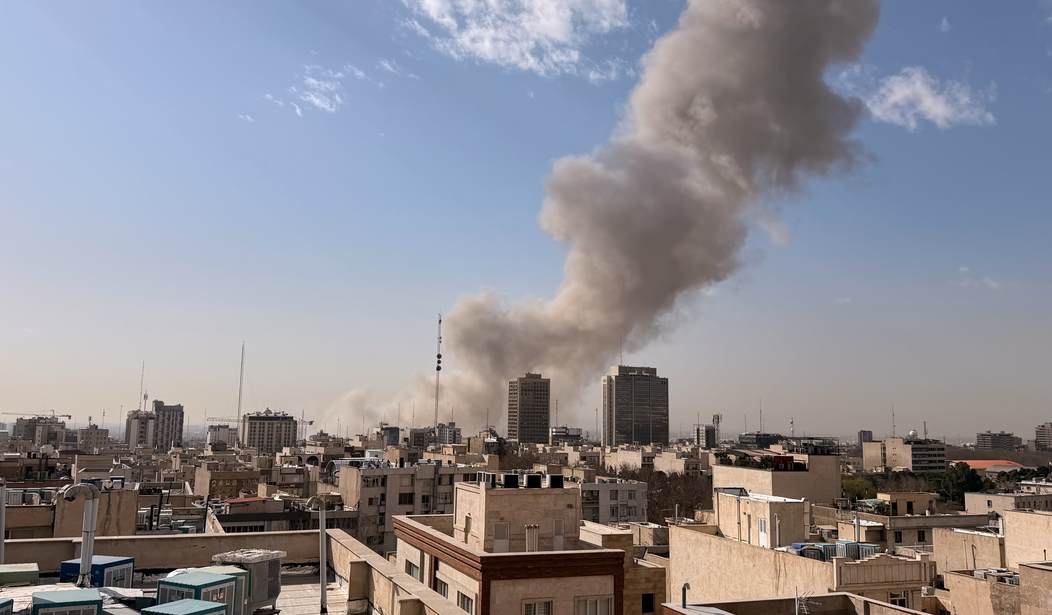
Israel and the United States launched coordinated strikes on Iran Saturday morning, targeting military sites and missile infrastructure in Tehran and other cities. Explosions rocked the capital near key government compounds, with smoke rising over the skyline as Israeli Defense Minister Israel Katz declared a nationwide state of emergency to remove immediate threats to his country. This action follows failed nuclear talks in Switzerland and comes amid Iran's crackdown on domestic protests, marking a firm response to a regime that has long evaded accountability.
The timing reflects months of planning, as U.S. officials confirmed American participation in what one described as "not a small strike." President Trump's administration, true to its promises, stepped in after Tehran rebuffed diplomatic overtures and moved to revive its nuclear program despite heavy damage from U.S. bombings last June. Those earlier strikes at Fordow, Natanz, and Isfahan impaired but did not end Iran's ambitions, a reality now addressed with broader precision against ballistic missiles, launchers, and naval assets. Iran state media acknowledged blasts in central Tehran, including the Pasteh district housing Supreme Leader Ayatollah Ali Khamenei's offices, while sirens wailed across Israel in anticipation of retaliation.
ALSO SEE: UPDATED: President Trump Confirms 'Major Combat Operation' in Iran
I’m telling the free world straight from the heart of #Tehran:
— Yaar - يار قدیمی 🇮🇷 (@YaarGhadimi) February 28, 2026
if the internet gets completely shut down, know that we the people of #Iran want this war to keep going until the Islamic regime is totally wiped out.
Don’t let the left fool you with their anti-war propaganda.
Long…
This is not escalation for its own sake. It is deterrence reclaimed. For decades, the Islamic Republic has sponsored terror proxies from Hezbollah to the Houthis, chanting "Death to America," not to mention holding our citizens hostage for 444 days, while racing toward nuclear breakout capability. Weak negotiations under prior administrations only emboldened Tehran, leading to attacks on U.S. bases and allies. Trump warned repeatedly: Iran would not get the bomb. When talks collapsed Thursday without progress, action followed. The operation's goals — dismantle missile production, neutralize the navy, sideline terror networks — signal that threats to American troops, Israeli civilians, and regional stability face swift consequences.
President Trump's message to the Iranian people:
— Townhall.com (@townhallcom) February 28, 2026
"The hour of your freedom is at hand. Stay sheltered. Don't leave your home. It's very dangerous outside. Bombs will be dropping everywhere. When we are finished, take over your government. It will be yours to take." pic.twitter.com/daqgMN0jiy
Critics will decry this as reckless, but history proves the opposite. Appeasement invited Iran's aggression; strength forces restraint. Last year's strikes bought time, yet Tehran tested limits with missile barrages on U.S. facilities in Qatar. No more. By hitting hard now, before Iran deploys advanced weapons against Europe or the homeland, the U.S. and Israel protect vital interests without ground wars.
God bless the warriors of The West
— Katie Pavlich (@KatiePavlich) February 28, 2026
🇺🇸 🇮🇱
Iran's regime, brutal at home and expansionist abroad, prepares retaliation through IRGC channels. Yet its economy strains under sanctions, its people protest en masse. These strikes underscore a truth: The mullahs' grip weakens when confronted directly. Schools and airspace closed in Israel, U.S. forces positioned defensively — preparations match the resolve.
In the end, this restores balance. Nations like Iran thrive on perceived weakness. President Trump made clear: "They will never possess a nuclear weapon." By standing with Israel, backing words with firepower, America signals to adversaries everywhere: Test us at your peril. The path forward demands vigilance, but Saturday's strikes ensure threats diminish rather than grow.
Editor’s Note: Thanks to President Trump and his administration’s bold leadership, we are respected on the world stage, and our enemies are being put on notice.
Help us continue to report on the administration’s peace through strength foreign policy and its successes. Join RedState and use promo code FIGHT to get 60% off your VIP membership.
Join the Conversation
VIP members get the ability to comment on articles.