
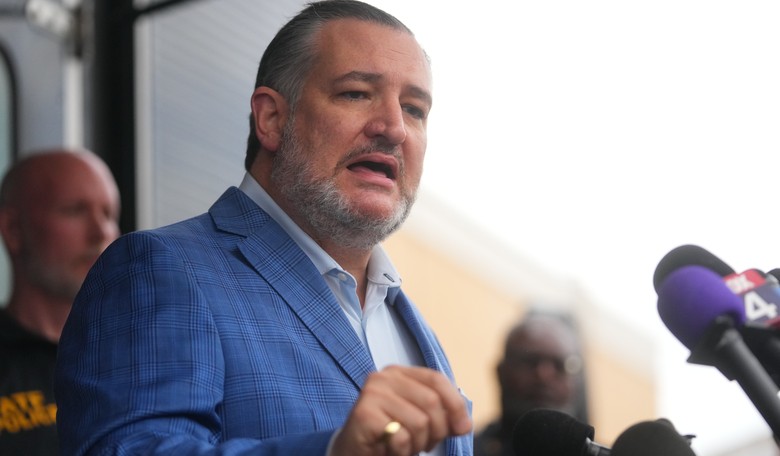
The size of the Democrats' victory in Texas would have seemed almost unthinkable two years ago. Now they've won the governorship, control of the Texas House, and a sweep of the statewide races on the November 3 ballot. For Republicans, the losses were staggering, although Sen. Ted Cruz (R-TX) isn't convinced the results mean the Lone Star State has turned blue for good.#
Cruz didn't even try to sugarcoat what happened when he spoke with CBS Texas over the weekend. Republicans got destroyed at the polls, and he believes voters were sending them a message that the party needs to heed and take seriously.
I don't believe Texas suddenly woke up on election day and became a left-wing blue state. That's not who Texans are. But there's no doubt the voters were pissed off, and they sent a very clear signal. We got to regroup and rebuild. That's why my allies started Saving Texas: to retake the state, to build the infrastructure, and to recruit candidates who can run and win in their districts. I believe in 2028 we're going to retake the state house. We're going to win back some of these congressional seats that we should have won. And we're going to set it up so that we will win back the governorship, lieutenant governor, attorney general, and the other statewides in 2030. If we don't do the work, we don't save Texas.
— Ted Cruz (@tedcruz) November 22, 2026
"I don't believe Texas suddenly woke up on election day and became a left-wing blue state. That's not who Texans are. But there's no doubt the voters were pissed off, and they sent a very clear signal."
His allies have put a name to the comeback effort: Saving Texas. The group plans a headquarters in Austin, with its attention on recruiting candidates, raising money, and preparing for races the GOP used to win without much trouble. Cruz wants to retake the state House and win back lost congressional seats in 2028, then plans to spread the message to statewide offices in 2030.
He also had some criticism for the GOP's campaign operations, particularly Republican lawmakers who had never faced serious competition.
"The Texas GOP will continue to do the work they do, but we need to take this to just a different level. We need to have real resources, real infrastructure, and a real foundation to go in and win races."
Let’s take a look at South Texas. Trump made major gains there in the last election in 2024, the year he carried the state by nearly 14 points. Then Starr, Zapata, Maverick, Hidalgo, and Webb counties each swung more than 38 points toward Democrats in 2026. That's a remarkable change in just two years.
RedState recently reported on analysis that estimated that nearly 45 percent of Democrats' net gains came from Republican voters switching party lines. Republicans in Texas showed up to the polls, but chose a Democrat. The GOP can't handle that with just another round of turnout reminders, emails, or texts.
Outgoing Republican Lt. Gov. Dan Patrick also calls Texas purple. He pointed to independents who might agree with Republicans on policy but still blame them when groceries cost too much.
Democrats, for their part, already have more than 1,000 bills on the table. Among them: repealing school vouchers, expanding Medicaid, raising the minimum wage, and ending tax breaks for data centers. Governor-elect Gina Hinojosa also wants $1,500 payments for Texas households, drawn from the rainy-day fund (about $17 billion in total payments).
School vouchers could cause trouble even before the first vote. Hinojosa has talked about changes to the program; some Democrats want to scrap it. Republicans still control the state Senate, so the new majority in the House will have to negotiate.
Cruz now has to persuade Texas voters who left the GOP or voted against their candidates to give them another look. Democrats, meanwhile, have two years to show those same voters what their new majority intends to do with power. Starting a fight over school choice will give Texans something specific to judge, and South Texas has already shown how quickly opinions can change.