








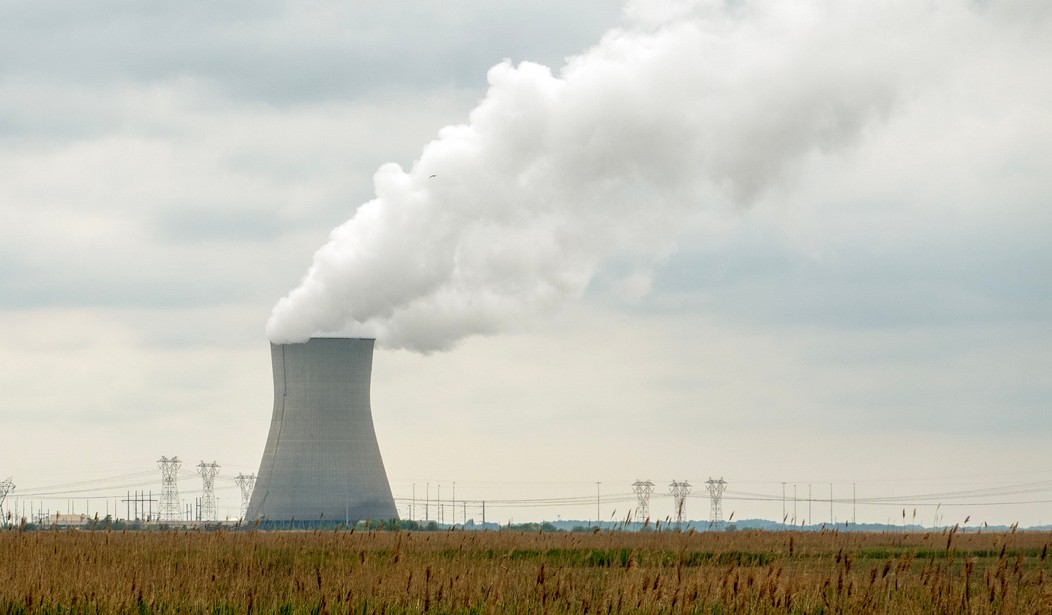
A second privately built nuclear reactor went critical this week in Utah. Less than three weeks ago, Antares Nuclear did it in Idaho, the first privately developed non-light-water reactor to reach criticality in the United States in more than 40 years. Now, Valar Atomics has done it too. The Trump administration set a July 4 deadline. Two companies have hit it.
The Ward 250 reactor completed a zero-power fueled criticality demonstration at the Utah San Rafael Energy Lab. DOE says it is the first reactor built and operated outside a national laboratory under Department of Energy (DOE) authorization.
Valar was founded in 2023. Stayed in stealth until February 2025. Broke ground in Emery County that September on what was, at that point, an empty field. Nine months later, the reactor on that site reached criticality.
Isaiah Taylor, Valar's founder and CEO, demonstrated the timeline:
"Nine months ago, this was an empty site. Today, there's a critical reactor on it, built and operated by the Valar team. We met the milestone the executive order set. This reactor was built to make power, and that's exactly where we're headed."
Ward 250 is a high-temperature gas-cooled reactor with tri-structural isotropic (TRISO) fuel, helium coolant, and graphite moderation. Compact enough to ship in a minivan-sized envelope, designed to be operated remotely, and intended to scale to five megawatts of electricity when fully developed.
Before moving the full reactor to Utah, Valar ran a smaller test configuration, the NOVA Core, at the National Criticality Experiments Research Center in December 2025. Zero-power criticality. Physics confirmed. Then they built the real thing.
Getting Ward 250 to Utah required three U.S. Air Force C-17 Globemaster IIIs. The unfueled components were loaded in California and flown to the test site. DOE says it was the first time a small reactor had been airlifted on a U.S. military C-17.
Energy Secretary Chris Wright didn't undersell it:
"From the first-ever airlift of a small reactor aboard a U.S. military C-17 to successful zero-power criticality testing, Valar Atomics is delivering achievements that mark a revolutionary moment for advanced nuclear in this country."
A reactor you can fly in doesn't need fuel convoys. It doesn't depend on a civilian grid an adversary can cut. Dr. Jeff Waksman, Principal Deputy Assistant Secretary of the Army for Installation, Energy and Environment, said that after Antares went critical, the Army's next requirement is full-power generation, followed by delivery to a military installation.
The company also wants to build what it calls nuclear "gigasites," clusters of thousands of these reactors producing electricity, industrial heat, and carbon-neutral fuels at costs competitive with oil. The investors behind that bet: Palmer Luckey, who founded Anduril and Oculus; Shyam Sankar, Palantir's CTO; Doug Philippone, former head of global defense at Palantir and a Valar board member; and John Donovan, former AT&T CEO and current Lockheed Martin board member. The company has raised roughly $580 million. Valuation hit $2 billion in April.
Read More: Reagan Was President the Last Time America Saw a Nuclear Breakthrough Like This
Valar didn't go through the Nuclear Regulatory Commission (NRC) to build Ward 250. The company used DOE's independent authority under the 1954 Atomic Energy Act, which allows DOE to authorize research reactors without NRC involvement. That works for testing. Commercial sales still require NRC sign-off, which is why Valar is also part of a federal lawsuit alongside Texas, Utah, Louisiana, Florida, Arizona, Last Energy, and Deep Fission, aiming to strip the NRC of its exclusive commercial licensing authority over small advanced reactors and hand it to individual states.
Valar was one of 11 companies selected for the Reactor Pilot Program in June 2025. Two of them have now hit criticality before the deadline.
The regulatory bureaucracy that kept American nuclear frozen for forty years didn't stop either of them. The July 4 deadline wasn't a PR stunt. It was a target. They hit it.
Editor’s Note: Thanks to President Trump’s leadership and bold policies, America’s economy is back on track.
Help us continue to report on the president’s economic successes and combat the lies of the Democrats. Join RedState VIP and use promo code FIGHT to receive 60% off your membership.


Join the Conversation
VIP members get the ability to comment on articles.