






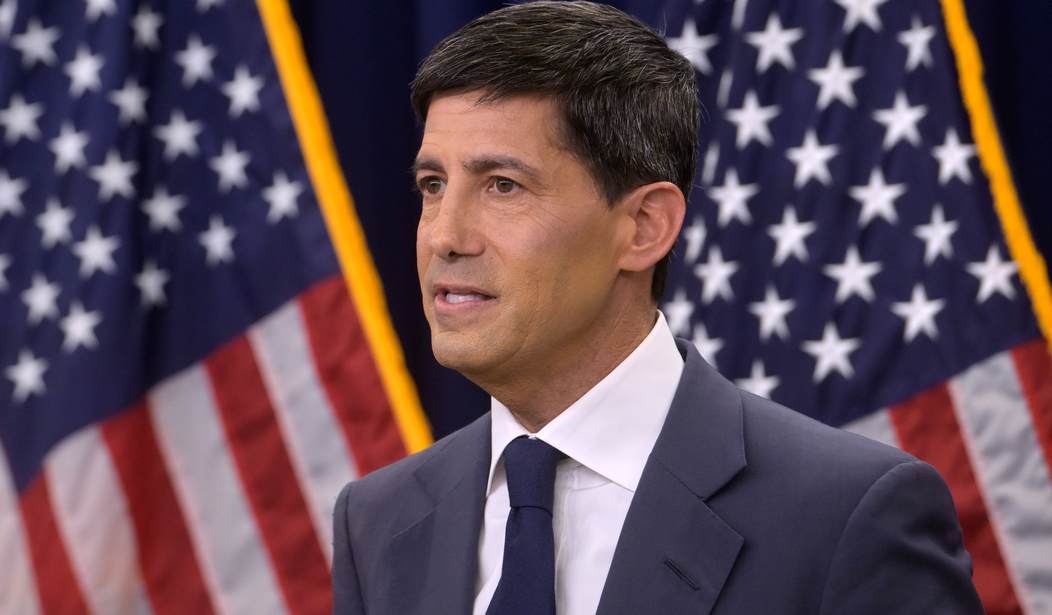
Wednesday marked the second meeting of the Federal Reserve under President Trump's pick for the chair position, Kevin Warsh, to decide on interest rates - and they have once again decided to hold things steady at the current levels.
Fed policymakers leave rates unchanged amid elevated uncertainty https://t.co/wQfviB0V0Z
— FOX Business (@FoxBusiness) July 29, 2026
It was the fifth straight time in 2026 the central bank has kept the rates in place:
The Federal Reserve on Wednesday announced that it will hold interest rates steady due to concerns about elevated inflation amid the war in Iran.
Fed policymakers voted 9-3 to leave the benchmark federal funds rate unchanged at its current range of 3.5% to 3.75%. The move follows the central bank's decision to hold rates steady in January, March, April and June following three successive 25-basis-point rate cuts in September, October and December to close out last year.
The Federal Open Market Committee (FOMC), the central bank's panel responsible for monetary policy moves, noted that "economic activity is expanding at a solid pace despite elevated uncertainty that owes, in part, to the conflict in the Middle East."
READ MORE: New Fed Chair Warsh Oversees First Major Policy Decision As Board Decides on Interest Rates
Trump Welcomes New Fed Chair Warsh During White House Swearing-in Ceremony
The report continued with details on the three members who were in the minority and voted for an increase:
Three FOMC members dissented from the decision, including Cleveland Fed President Beth Hammack, Minneapolis Fed President Neel Kashkari and Dallas Fed President Lorie Logan. Each of the dissenters voted in favor of raising the federal funds rate by 25 basis points.
Kevin Warsh announces the Federal Reserve holds interests rates steady, with internal dissent. https://t.co/M10LUQfAbI pic.twitter.com/9Snkym8UB2
— Washington Examiner (@dcexaminer) July 29, 2026
During his opening remarks at the press conference, Warsh explained that the Federal Open Market Committee (FOMC) meetings "produce policy decisions" - but they also discuss the "big things" as part of a "candid discussion."
Reminding people that this is a "new chapter at the Fed," Warsh shared the four points they kept in mind:
First, we talked a lot about the implications of the past five years of high inflation on the current policy conjuncture. To echo an old phrase, has the past really passed?
Second, my colleagues and I considered the economic shocks of recent years. Strained supply chains arising from the pandemic, military conflicts, energy-supply disruptions, substantial increases in tariff rates, and yes, the surge in A.I.-related investment. These differ in their sources—do they also differ in their effects on output and employment?
Third, we took up the related question of price increases arising from shocks. The business capex boom, for example, is driving up prices of memory and logic chips and associated A.I. infrastructure. Do those changes indicate a broader inflationary dynamic, or do we just focus on them just because they are under the bright streetlight?
Finally, we discussed monetary policy tools and strategies for achieving stable prices. If, as the Fed has long held, interest rate policy should be its primary monetary policy instrument, how much accommodation are we getting from the balance sheet?
As my colleague Bob Hoge wrote earlier in July, one piece of positive economic news the panel likely considered was the number of jobless claims falling to the lowest level since 1969. We also saw a boom in the creation of millions of new U.S. businesses during the first half of the year. With hope, the good news will keep coming through the rest of 2026.
You can read Warsh's full opening statement here or at the link below:
Read Chairman Warsh's full opening statement from the #FOMC press conference (PDF): https://t.co/F3fvrfY4mZ pic.twitter.com/5H20ZhbFsz
— Federal Reserve (@federalreserve) July 29, 2026
Editor’s Note: Thanks to President Trump’s leadership and bold policies, America’s economy is back on track.
Help us continue to report on the president’s economic successes and combat the lies of the Democrats. Join RedState VIP and use promo code FIGHT to receive 60% off your membership.

Join the Conversation
VIP members get the ability to comment on articles.