
There's a lot more to education than just school.
My father was big on reading. Whenever the Old Man was sitting still, he generally had a book in his hand, and his reading was eclectic and widely varied; fiction and non-fiction, ancient and modern. Due to his habit of reading almost everything, he could intelligently discuss astrophysics, geology, art, American and classical history, and much more. I had him beat in economics and biology, but he could have taught college history courses on the American Revolution and the Civil War, two topics which he and I spent many happy hours discussing.
When I was about 14, he returned from town, where, while running errands, he had stopped at the library. He handed me a book; that was Aristotle's Metaphysics. "Read that," he ordered. (Yes, he gave orders, and you could tell the difference between that and a suggestion.) "When you're done," he said, "...we'll talk about it."
I read it, with reluctance at first, then with growing interest. And yes, we discussed it. He started recommending other works as well, and he instilled in me an appreciation for the thinking of the ancients that was lacking in most of my 1970s, small-town, farm-country counterparts. But I'm better for it. A few years later, I read Aristotle's Politics, and I talked that over with Dad, too. Aristotle had a lot to say, and a lot of it still rings true today. Our modern education system, though, sadly neglects these works.
Read More: What's the Real Value of College?
Quality Education Isn't Just a Matter of Money
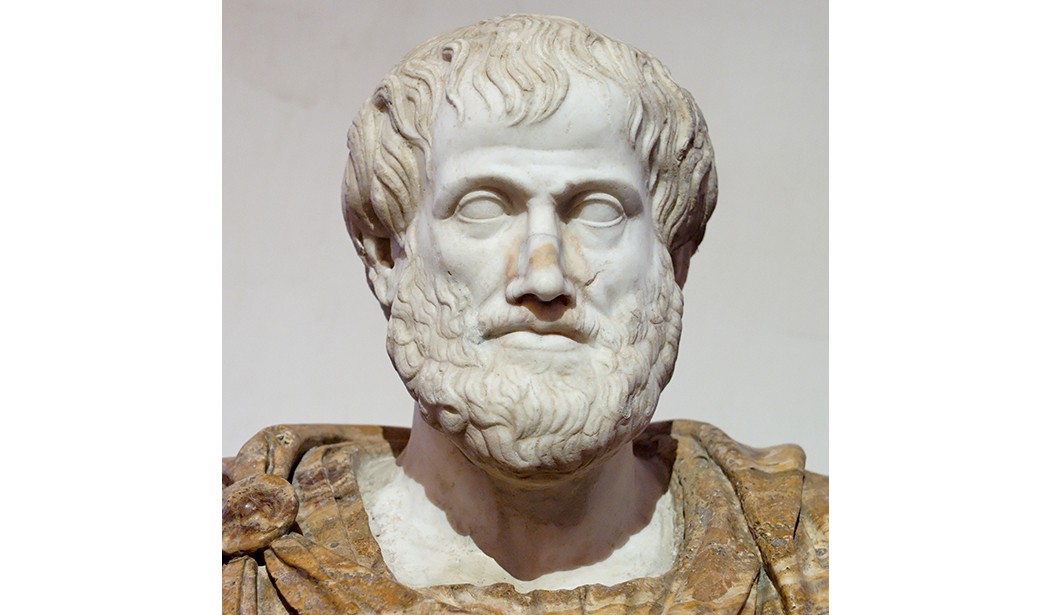
So, who was Aristotle?
Aristotle (born 384 bce, Stagira, Chalcidice, Greece—died 322, Chalcis, Euboea) was an ancient Greek philosopher and scientist, one of the greatest intellectual figures of Classical antiquity and Western history. He was the author of a philosophical and scientific system that became the framework and vehicle for both Christian Scholasticism and medieval Islamic philosophy. Even after the intellectual revolutions of the Renaissance, the Reformation, and the Enlightenment, Aristotelian concepts remained embedded in Western thinking.
Aristotle’s intellectual range was vast, covering most of the sciences and many of the arts, including biology, botany, chemistry, ethics, history, logic, metaphysics, rhetoric, philosophy of mind, philosophy of science, physics, poetics, political theory, psychology, and zoology. He was the founder of formal logic, devising for it a finished system that for centuries was regarded as the sum of the discipline; and he pioneered the study of zoology, both observational and theoretical, in which some of his work remained unsurpassed until the 19th century. But he is, of course, most outstanding as a philosopher. His writings in ethics and political theory as well as in metaphysics and the philosophy of science continue to be studied, and his work remains a powerful current in contemporary philosophical debate.
There's a distinct tendency in some people today to look back on ancient times and think that, just because we stand on the shoulders of thousands of years of technological development, the ancients somehow weren't as smart as we are, but any look at someone like Aristotle should dispel that notion. Few people today could match the depth and breadth of study he engaged in, and if he was handicapped in some ways by the technologies of his time, we can still appreciate him in that context. We may know more things today, but that doesn't make us smarter.
A few excerpts from Metaphysics and Politics have stuck in my memory over the years:
From Metaphysics:
All men by nature desire to know. An indication of this is the delight we take in our senses; for even apart from their usefulness they are loved for themselves; and above all others the sense of sight.
I would argue the first point in one particular; I do not think all people, by nature, desire to know. There are too many people today and throughout history who have been shockingly incurious, which I have always found sad. But we do and should take delight in our senses, in the world they open to us. I'm reminded of this daily, when I go outside in the morning to face another beautiful Alaska day. There is beauty to be found all over, and Aristotle was right to encourage our delight in it.
From Politics:
He who is a citizen in a democracy will often not be a citizen in an oligarchy.
This rings true today, and here is where the difference in time is so clear; Aristotle refers to oligarchy, which was known in his time, but this caution is even more stern in the case of socialist and communist governments, in which the people are even farther from the status of citizen; the common people in those systems are subjects at best, serfs at worst.
Also from Politics:
Men pay most attention to what is their own: they care less for what is common; or, at any rate, they care for it only to the extent to which each is individually concerned.
Here Aristotle foresaw the tragedy of the commons, or to put it more simply, "if everyone owns it, nobody owns it." There is little incentive among too many to care for public property, but when a person owns a thing, he is much more likely to care for it properly.
There are other areas where I think Aristotle was wrong; he wrote, most notably in Politics, about what we would describe as the "distribution of wealth," when we know now wealth is not distributed, but created and earned. But even when he is in error, he is still worth reading and considering. The source of many modern ideas in government, in society, and even in the sciences originated with Aristotle and his fellows in the ancient world.
Some ideas, some notions, seem to be innate in human nature. Aristotle was among the first to document some of these things. And young people, aspiring to be truly well educated, with a broad view of the world, of human history, and of the Western Civilization that produced everything good and modern in the world, would do well to read his work. Aristotle, after all, after over two millennia, had a pretty profound influence on a rural kid from northeast Iowa, who grew up to be... me.
If you've never read Aristotle or any of the other ancient Greek polymaths, all I can say is that it's never too late.