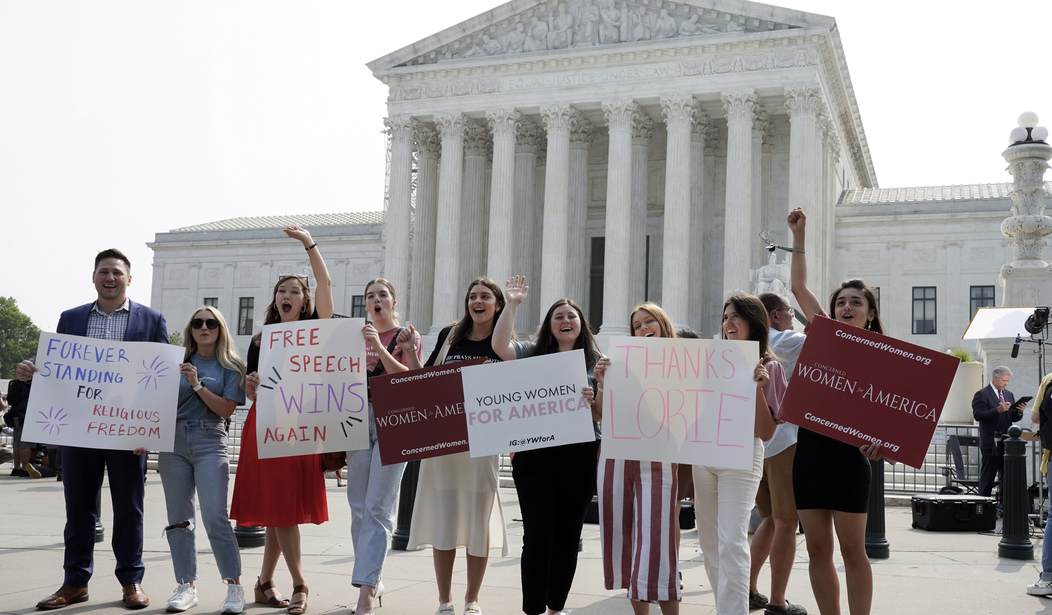

In a very short time, the United States of America will celebrate the 250th anniversary of our Declaration of Independence from Great Britain, in which we did one of the most American things ever: Told the greatest military power of the time where to head in. The British Empire replied with "comply or else," but they were the ones that ended up getting shown the "or else," and America has been free and independent since.
A few years later, our Constitution was written and ratified, along with the Bill of Rights, forming one of the most effective governments in human history. And foremost among the rights recognized in the Bill of Rights is freedom of speech. That's important. Here's why, and I'm going to tell you.
James Madison thought the right of freely examining public characters and measures to be the only effectual guardian of every other right. I’d add that there is one other effectual guardian, which is why, when the Bill of Rights was drafted, the Second Amendment followed the First Amendment.
John Stuart Mill provided what I still think of as the best rationale behind the importance of free speech in his work On Liberty, arguing that silencing an opinion robs a society, both present and future, of the opportunity to exchange error for truth or to sharpen truth by collision with error. Even if an opinion is false, its suppression deprives us of the “clearer perception and livelier impression of truth produced by its collision with error.” Key concept there: All discourse has value, even if it only involves discarding what does not have value.
I would add only this: Human rights, including all the rights listed in our Bill of Rights, are universal. They are the birthright of every human being on this planet. Some of them are denied these rights by illegitimate governments, but that doesn't mean that these rights are not universal; it only means that these people live under one form or another of tyranny.
In other words, free speech applies to everyone, or it applies to no one. That applies to spoken and written words, as well as other expressions. That’s why we let Nazis and the Ku Klux Klan have protest marches. That’s why we let political agitators speak and write freely, no matter how stupid some of those words may be – and take it from me, some of them are pretty stupid. Just look at almost anything that appears in The Nation or Mother Jones. And, yes, I read those lunatic publications; you want to know what the other side is thinking. Call it intellectual reconnaissance.
But those people have the right to write and say stupid things.
Read More: Foretelling the Death of Free Speech
Win for Free Speech in Britain: Criticism of Islam Protected Speech
Here’s why free speech matters, now more than ever.
- Free speech allows for debate. It allows for criticism. It allows us to tell fact from fiction. Without it, only the powers-that-be, the people with the most guns and the biggest whips, have a monopoly on discourse. They will tell you what the “truth” is, and you’ll have to shut up and agree.
- Free speech means we can criticize our government institutions, our elected officials, and any petty bureaucrat who pisses us off. And which among us hasn’t been pissed off by a petty bureaucrat? Protests and speech rights drove the civil rights movement. It drove the Tea Party movement that protested President Barack Obama’s spending excesses. And now, people are increasingly taking conservative ideas into the devil’s den, speaking on college campuses in the style of the late Charlie Kirk.
- Free speech means we have autonomy. It confirms our own right to not only hold our thoughts, beliefs, convictions, but to express them, freely, openly, without fear. It enables the exchange of ideas, and that allows us to know, not what to think, but how to think. “Hate” speech or indeed, any offensive speech, is important for that same reason. In fact, offensive speech may be even more important. Why? It toughens us against disagreement. It shields against weaknesses like those expressed by the “woke” would-be censors.
- Free speech drives the growth of ideas. It’s no coincidence that nations with free speech guarantees have higher per capita GDPs than those where speech is repressed. The free exchange of ideas has not only a great societal effect, but a great economic effect as well. For the other side of that coin, see North Korea.
- Free speech protects anyone in the minority. Any minority, but most especially those in the minority of opinion. Regimes with censorship always turn that censorship first on minority views and perspectives.
- Finally, free speech is a safety valve. It is mentioned as the first of the three boxes by which we, as Americans, can seek redress of our grievances with government: The soap-box, the ballot box, and, in extreme cases, the cartridge box.
- Most of all, free speech is essential to human dignity. If any actor, government or social, official or unofficial, well-meaning or thuggish, tries to prevent anyone from expressing what they believe to be true, then they are attempting to reduce the speaker as nothing more than a subject; certainly, not a citizen.
Free speech doesn’t belong to any group or political party. It’s the right of all free, competent people. Self-government, liberty, property, and republican (small-r) government are impossible without it. There's one last point: There’s no such thing as “my truth.” There is only the truth.
Now, one caveat remains to be discussed in all this: You, me, everyone, have the right to say or write what they please. But this right doesn’t guarantee you an audience. That’s up to you.