






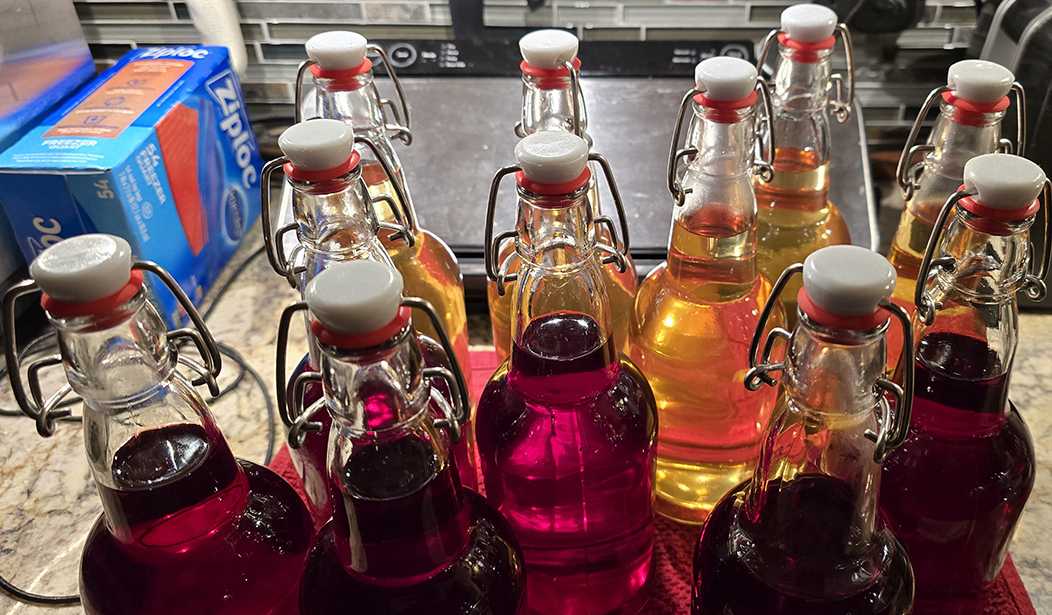
If there's anything as historically and culturally American as bootlegging, I'm not sure what it might be. Not only do Americans enjoy a good snort now and then - just look at what happened to Prohibition here in the USA, wherein it probably made rebellious Americans drink more than ever and ended up being repealed - but there's also a certain satisfaction in evading the tax man for a tipple.
Back in the day, in my old Allamakee County, Iowa, stomping grounds, we local teenagers did just that. Two old guys, members of the extensive Dufy clan that lived in those hills, sold clear white corn squeezings in the traditional Mason jars, as they had been doing since the Depression. It was tough stuff; any leftover moonshine after a party could be used to etch glass, poison rats, or for blasting stumps. And, yeah, all with no tax stamps.
For many years, bootlegging has been legally proscribed here in these United States. But that's changing; one new court case has tossed out the old law against distilling your own booze - as long as it's for personal use.
A U.S. appeals court on Friday declared unconstitutional a nearly 158-year-old federal ban on home distilling, calling it an unnecessary and improper means for Congress to exercise its power to tax.
The 5th U.S. Circuit Court of Appeals in New Orleans ruled in favor of the nonprofit Hobby Distillers Association and four of its 1,300 members.
They argued that people should be free to distill spirits at home, whether as a hobby or for personal consumption including, in one instance, to create an apple-pie-vodka recipe.
So, you still can't distill your own white lightning and sell if for $10 a Mason jar - probably more now, that's just what we paid back in the late 1970s.
The ban was part of a law passed during Reconstruction in July 1868, in part to thwart liquor tax evasion, and subjected violators to up to five years in prison and a $10,000 fine.
Writing for a three-judge panel, Circuit Judge Edith Hollan Jones said the ban actually reduced tax revenue by preventing distilling in the first place, unlike laws that regulated the manufacture and labeling of distilled spirits on which the government could collect taxes.
She also said that under the government's logic, Congress could criminalize virtually any in-home activity that might escape notice from tax collectors, including remote work and home-based businesses.
So, this seems a sound decision, and one that will hopefully stay in place.
Read More: This St. Patrick's Day, the Pub Might Now Come to You
Hangover Incoming: Drunken Raccoon Shatters Scotches and Passes Out
Distilling seems to be the inflection point. Fermented booze has long been legal for making for personal consumption or gifts. I dabbled with home brewing beer for a while, and my wife annually produced batches of clear, tart dandelion wine and rich, fruity raspberry wine. Now, though, it looks like I may have to set aside a corner of my workshop for a still.
Honestly, we shouldn't have to seek government permission to make anything for personal use. This was never about public health or safety; it was about taxation, and making sure the government got its cut of the price you pay for every snort you take, be it in your favorite watering hole or in your house. But that's changing, now, and that's a good thing.
Cheers!
Editor’s Note: Do you enjoy RedState’s conservative reporting that takes on the radical left and woke media? Support our work so that we can continue to bring you the truth.
Join RedState VIP and use the promo code FIGHT to get 60% off your VIP membership!

Join the Conversation
VIP members get the ability to comment on articles.