
Breaking up, as the old song goes, is hard to do. But the United States, as I've been saying and writing for some years, is drawing into two separate camps, red and blue, liberal and conservative, traditional and, well, a little crazy. When this whole thing started, the divide was mostly ideological, but more and more, people are voting with their feet, and the divide is becoming geographical, in a way it hasn't been since 1860.
We've been watching as people flee the economic dumpster fires that are the big, blue states, or more accurately, the big, blue cities. The divide is accelerating as the people who can flee do; New York City, to name one place, has shifted to the left to the point where they have elected an outright communist as Mayor, while Los Angeles and Chicago have contented themselves with just electing incompetents.
What's interesting is looking at the data below the state level, where you'll see this isn't just a state-to-state migration. An exclusive editorial over at Issues & Insights has crunched some county-level numbers on this Great Sorting.
Most analyses of internal migration patterns look only at state-level data. And what they show is that blue states are losing population to red states, and have been for many years.
I&I wanted to go deeper, so we used the latest Census data on migration between counties, and compared that with how these counties voted in the past three presidential elections.
What we found was that millions aren’t just moving out of blue states, but are moving out of blue counties within states.
Trump won 2,589 counties in each of the past three elections. From 2020 to 2025, those counties gained 5.4 million people due to net migration — which measures how many people move into and out of an area. The 433 counties where Hillary Clinton, Joe Biden, and Kamala Harris carried the day saw a net loss of 5.43 million people.
And the 121 counties in which Trump won at least one of the past three elections saw a net gain of 29,000 people over those years.
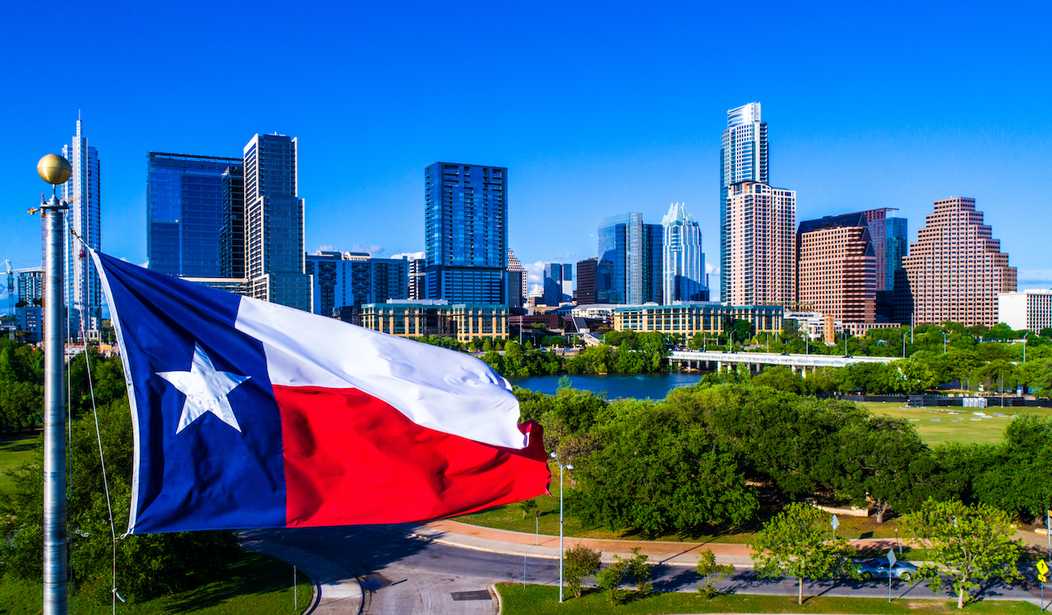
We've seen the results of the state-to-state sorting already. And we've seen states swing both ways; as recently as 2000, Florida was a must-have swing state in presidential elections, whereas now that state is solidly Republican. Colorado, where I lived for many years, has gone the opposite direction, and while Colorado serves as a lesson of the perils of massive blue-state migration to what was once a swing state, the Centennial State's case is a little different; the influx in Colorado began in the late 1980s and was driven largely by Colorado's scenery, outdoor opportunities, its status as the "cool, hip" place to be, and later, by that state's being the first one to legalize recreational marijuana.
For the most part, the Great Sorting seems to be holding along ideological lines, with the two sides pulling away from each other, politically and geographically. I&I has charted the major winners and losers on the county level, and it's illustrative; here's their chart:
The Great Sorting: Winners and Losers at the County Level pic.twitter.com/DML8n8PrvX
— Ward Clark (@TheGreatLander) April 10, 2026
So, what will happen in the next few decades, assuming this trend continues?
Read More: The Boom Belt: A New Economic Success, or the Footprints of Secession?
Post-Election, Red Rural Counties Are Once Again Talking About Splitting off From Blue States
This looks a lot like a national divorce in the making, but not necessarily at the state level. Consider a major reshuffling of state lines, as has already been proposed in schemes like the State of Jefferson, the Greater Idaho Movement, the efforts to separate South Illinois, and various other county-level reshufflings and proposed separations around the country.
This Great Sorting may well leave our major cities isolated in a way they never have been, undoing the great influence that huge blue cities have over what would otherwise be red states; this would dramatically reshape the political map. Consider California alone, that vast Democrat stronghold that has reliably sent its huge (but shrinking) electoral votes to Democrat presidential candidates since 1988. Right now, California controls 54 presidential electoral votes, but what might the once-Golden State's electoral picture look like if the coastal cities of San Francisco and Los Angeles were broken off into the State of California Coast, and the rest of the state were separated into the State of Greater California? The Central Valley and the northern part of the state may well end up as Republican strongholds, breaking up the Democrats' iron grip on that big allotment of electoral votes. All one needs to do is look at the county-by-county results of the 2024 presidential election to see how that might work out.
As the two sides, the two parties, the two Americas, tend more and more to pull apart, such a great reshuffling of state lines may be the only way to keep the republic together. It may be the only way to keep the increasingly divided United States united.
It's hard to see this happening. It would involve the voters, the state legislatures, and Congress, all willing to engage in a massive redrawing of America's political map. The Democrats, of course, would oppose this at every turn, despite their support for secession in 1860. This reshuffling would, after all, swiftly reduce the Democrats to what they are rapidly becoming in any case: A niche party of coastal elites, radical leftists, and the urban dependency class. And if this reshuffling happened, you would see the major cities deteriorate still further, as their far-left leadership continued detonating their local economies; just look at what the communist Zohran Mamdani is already doing to New York, as an example.
The next few decades are bound to be very, very interesting indeed. It's possible that the United States, in 50 years, may look very different from what it does now, whether or not the reshuffling of state lines takes place. The Great Sorting is already in progress, and there's no going back now.