
In the 1950-1962 novel series Cities in Flight, by science-fiction author James Blish, the author describes a future Earth where faster-than-light space travel enabled the Western world to leave Earth and colonize the galaxy. But the Soviet Union, still in place in the future depicted by these Cold War-era novels, outlawed space travel. When the nations of the West left, the Soviets, as Blish described it, spread across the surface of Earth like lichens. The Soviet system devolved into something called the Bureaucratic State, which was eventually rendered moot by a renaissance of space travel and another exodus into the stars.
So, why should this have any relevance to us today? Well, here's why, and I'm going to tell you. We have, here in the United States, today, the embryo of Blish's planet-spanning Bureaucratic State. We call it the Deep State, we call it the Swamp, and it's made up in large part of unaccountable executive agencies that the president has surprisingly little control over. A quick read of the Constitution tells us that this shouldn't be happening, and now a Supreme Court decision may well put paid to this impending Bureaucratic State by returning unfettered control of the Executive Branch to the Chief Executive. An editorial at Issues & Insights has some details on just how this might happen, and it all begins in 1935, with a Supreme Court decision on a case in which President Franklin Roosevelt fired an FTC commissioner, and that decision is now back under scrutiny with — you guessed it — a case involving President Trump's intent to fire an FTC commissioner.
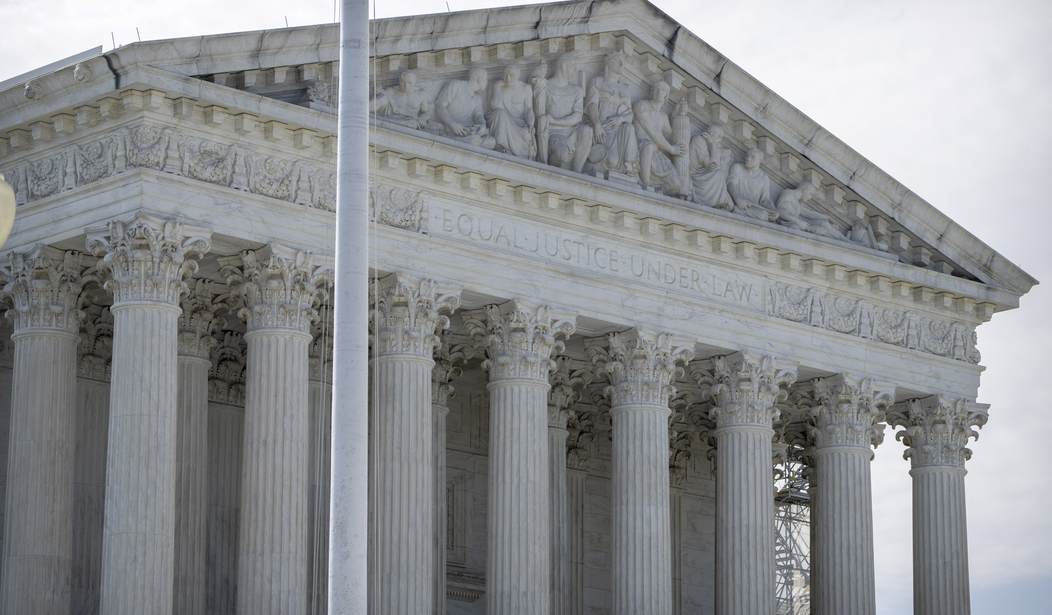
During oral arguments this week, liberal Supreme Court Justice Sonia Sotomayor told Solicitor General D. John Sauer, “You’re asking us to destroy the structure of government.”
To which anyone following this case should say “Amen!”
The case involves Trump’s decision in March to fire Rebecca Kelly Slaughter, a member of the Federal Trade Commission whom Trump appointed to the FTC in his first term, but decided that letting her remain would be “inconsistent with the administration’s priorities.”
Slaughter says her firing was illegal, pointing to a 1935 Supreme Court ruling – Humphrey’s Executor v. the United States – which involved FDR’s firing of an FTC commissioner whom FDR believed was thwarting his activist agenda. In that ruling, the court said that when Congress created the FTC, it dictated that the president could fire a commissioner only for “inefficiency, neglect of duty, or malfeasance in office,” and because the FTC was merely a “quasi-executive branch agency.”
Although that 1935 ruling temporarily thwarted FDR’s big-government ambitions, it had the effect of putting big government on steroids.
After the 1935 decisions, these quasi-independent agencies started blossoming like thistles in a summer pasture. They have been a thorn in the side of the Executive Branch ever since, as we have reported here at RedState on many occasions. Now, this new case, Trump v. Slaughter, may well overturn all this.
Read More: New: Supreme Court Sides With Trump on Removal of FTC Commissioner
Federal Judges Blame Trump and SCOTUS for a Problem They Created; We Need to Fix It Now
Oral argument in the case was held on Monday, but a couple of interesting tidbits have already popped up, according to Issues & Insights:
During oral arguments, Justice Sotomayor fretted that overturning Humphrey’s Executor would “take away from Congress its ability to protect its idea that the government is better structured with some agencies that are independent.”
There’s just one problem. Congress doesn’t get to decide on its own “that the government is better structured with some agencies that are independent.” The Constitution determines the structure of our government. And if the framers of the Constitution had wanted a fourth branch of government, they would have included a provision in the document establishing it.
You’d think a Supreme Court justice would understand that.
Instead, the Framers of the Constitution gave the president sole authority to run one of the three co-equal branches of government.
Indeed, we would think that a Supreme Court justice would understand the differences between men and women, but recent years have disabused us of that notion.
Read More: NEW: Just Fired FTC Commissioner Loses His Mind, Accuses Trump of Breaking the Law
Here's the thing: The Constitution gives the president authority over the Executive Branch. Article 2 of the Constitution is very clear on that:
The executive Power shall be vested in a President of the United States of America.
There is nothing in the Constitution about any "semi-independent" agencies, bureaus, or offices. The executive power is vested in the president. As President Truman famously claimed, the buck stops there. The president runs the executive branch.
It's anybody's guess how Trump v. Slaughter will be decided. But if a part of this decision overturns, in whole or in part, Humphrey's Executor, then it may well present the Trump administration with a historic opportunity to swing a broad blade at all of these extra-constitutional organizations, to downsize or (preferably) eliminate them. This may be one of the most consequential decisions the Court will make in this term, and they should, indeed, strike down the Humphrey's Executor ruling, and in so doing, restore the intended constitutional order.
For my part, I'll be watching the outcome of this case with great interest.