






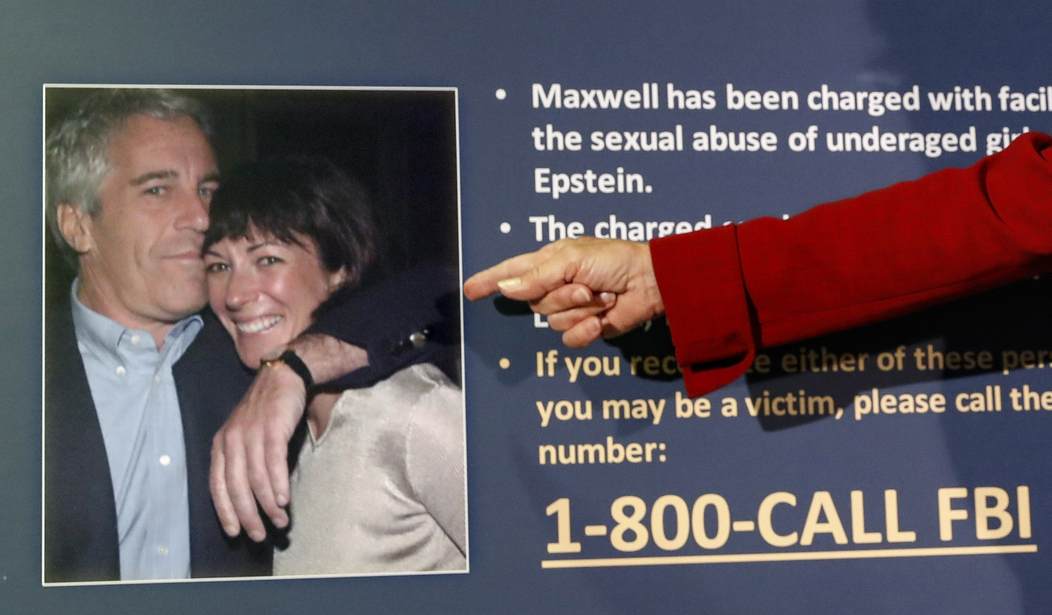
Remember over the summer when the Department of Justice (DOJ) sought leave from courts in Florida and New York to unseal grand jury transcripts in the criminal cases involving Jeffrey Epstein and Ghislaine Maxwell? Well, in light of the recent passage by Congress of the Epstein Files Transparency Act, the DOJ is again requesting the courts to unseal the grand jury transcripts and exhibits in those cases.
The prior attempts were unsuccessful, with judges in both venues shutting down the request. In his denial of the DOJ's request in the Maxwell case, Judge Paul Engelmayer explained his decision thusly:
A member of the public familiar with the Maxwell trial record who reviewed the grand jury materials that the Government proposes to unseal would thus learn next to nothing new. The materials do not identify any person other than Epstein and Maxwell as having had sexual contact with a minor. They do not discuss or identify any client of Epstein’s or Maxwell’s. They do not reveal any heretofore unknown means or methods of Epstein’s or Maxwell’s crimes. They do not reveal new venues at which their crimes occurred. They do not reveal new sources of their wealth. They do not explore the circumstances of Epstein’s death. They do not reveal the path of the Government’s investigation.
Insofar as the motion to unseal implies that the grand jury materials are an untapped mine lode of undisclosed information about Epstein or Maxwell or confederates, they definitively are not that. A “public official,” “lawmaker,” “pundit,” or “ordinary citizen” “deeply interested and concerned about the Epstein matter,” Motion to Unseal at 3, and who reviewed these materials expecting, based on the Government’s representations, to learn new information about Epstein’s and Maxwell’s crimes and the investigation into them, would come away feeling disappointed and misled. There is no “there” there.
READ MORE: New: Judge Denies DOJ Request to Unseal Grand Jury Materials in Ghislaine Maxwell Case
Federal Judges Rule on Efforts to Unseal Epstein Grand Jury Testimony
Will the results be different now that there's legislation backing the DOJ's request? Possibly. Here's the crux of the renewed request:
6. Rule 6(e) sets forth the “General Rule of Secrecy” for grand jury materials. Illinois v. Abbott & Assocs., Inc., 460 U.S. 557, 566 (1983). As the Supreme Court has explained, “Congress, of course, has the power to modify the rule of secrecy,” but “the rule is so important, and so deeply-rooted in our traditions, that we will not infer that Congress has exercised such a power without affirmatively expressing its intent to do so.” Id. at 572-73; see also United States v. Sells Engineering, Inc., 463U.S. 418, 425 (1983) (“In the absence of a clear indication in a statute or Rule, we must always be reluctant to conclude that a breach of this secrecy has been authorized.”). Here, there are multiple features of the Act that support an inference that Congress has affirmatively expressed its intent to modify the rule of secrecy with respect to the grand jury materials at issue in this case.
7. First, the Act expressly references this specific investigation, and there can be no question that Congress was aware that this investigation included a grand jury investigation. Thus, the Act’s reference to “all . . . investigative materials in the possession of the Department of Justice, including the Federal Bureau of Investigation and United States Attorney’s Offices,” is best understood as encompassing grand jury materials. Act § 2(a). Although the Act allows for the withholding or redaction of certain “segregable portions of records,” Act § 2(c), some of which may be included in the requested grand jury materials, nothing in the Act suggests that grand jury materials as a category are exempted from the Act’s references to investigative materials. Congress also passed the Act after the motions in this Court and others to unseal grand jury materials had been denied, suggesting that at least one of the reasons for the Act was to mandate disclosure of the grand jury materials subject to those rulings.
8. Second, the Act effects a categorical disclosure requirement that, subject only to the Act’s exceptions, indicates an intent to override any contrary provisions of existing law.
...
9. Third, the Act manifests a Congressional intent to override some of the underlying bases for grand jury secrecy. One of the purposes for the rule of secrecy, and one of the primary purposes that continues to apply even after a grand jury investigation has concluded, is “to protect … unindicted individuals from the anxiety, embarrassment and public castigation that may result from disclosure.”....In the Act, Congress has declared that these concerns may not be used as a basis to withhold the disclosures required by the Act. Act § 2(b)(1).
It's about as strong an argument as the DOJ could hope to mount. Now, whether the judges will see it differently given the passage of the act, of course, remains to be seen. We'll keep an eye on it and report any updates as warranted.
Editor’s Note: Do you enjoy RedState’s conservative reporting that takes on the radical left and woke media? Support our work so that we can continue to bring you the truth.
Join RedState VIP and use the promo code FIGHT to get 60% off your VIP membership!

Join the Conversation
VIP members get the ability to comment on articles.