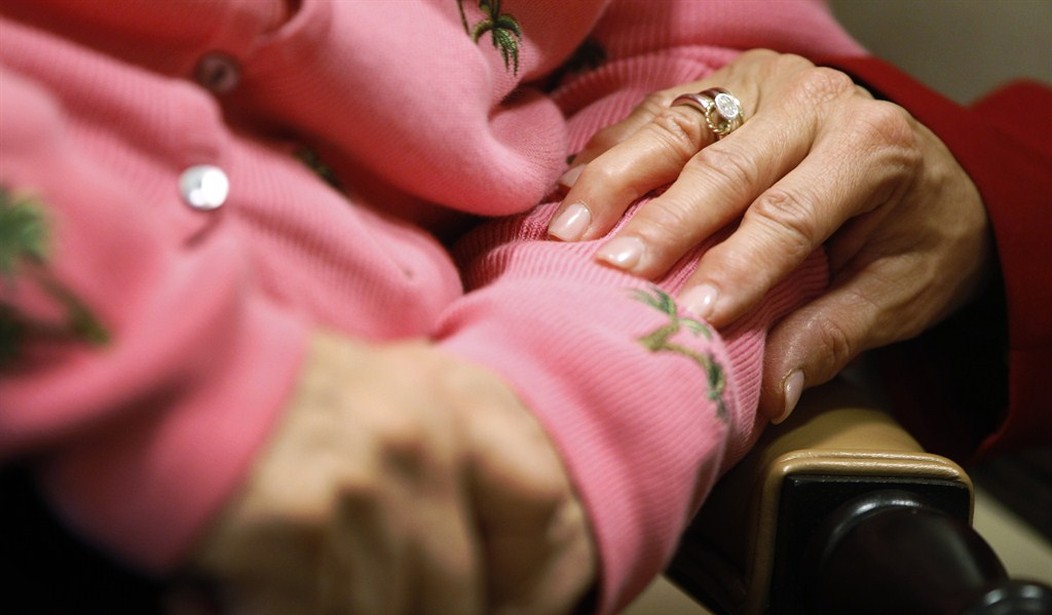

As I've talked about before, "scanxiety" is a very real thing, something anyone who has to periodically have CT scans, x-rays, etc., done (and their loved ones) will tell you.
My scanxiety first started shortly after my mom's (who was 79 at the time) October 2022 colon cancer diagnosis, which was discovered during her colonoscopy. The surgical oncologist who had agreed to take her case the following week immediately ordered CT scans to determine if there was clear evidence that the cancer had spread elsewhere.
The days leading up to the scans, and then the day of the scans, were when the scanxiety kicked in. What they found, thankfully, lent credence to the belief that it had not spread to other organs. The surgery she had to remove the tumor two weeks later resulted in them finding evidence of disease in three of the 15 lymph nodes they also removed, which was what prompted a formal Stage IIIB diagnosis and the recommendation that she undergo chemo.
SEE ALSO (VIP): Caregiver's Diary Part 58: The Fear of the Unknown
Related to scanxiety is the anxiousness one gets the closer we come to the time for the periodic follow-up appointments to do bloodwork, so they can check to make sure the numbers look okay.
Mom's scans are done once a year. And for the two years after she completed chemo, she would see her medical oncologist every three months for labs. For colon cancer, one of the most closely watched numbers is the CEA (Carcinoembryonic Antigen), which is a tumor marker:
Tumor markers are substances either released by cancer cells into the blood or urine or substances created by the body in response to cancer cells. Tumor markers are used to evaluate how well a patient has responded to treatment and to check for tumor recurrence. Research is currently being conducted on the role of tumor markers in detection, diagnosis, and treatment of cancers.
According to the National Cancer Institute (NCI), tumor markers are useful in identifying potential problems, but they must be used with other tests for the following reasons:
- People with benign conditions may also have elevated levels of these substances in their blood.
- Not every person with a tumor has tumor markers.
- Some tumor markers are not specific to any one type of tumor.
Fortunately, we've been blessed with encouraging numbers and results between the scans and the periodic lab work to the extent that those every-three-months visits became every four months last year.
But there is always the fear that things could change, that the labwork will yield results that are a cause for concern, further testing, etc.
Those fears are present today, as I prepare to take Mom in for her latest follow-up. We are, of course, praying for the blessing of good news from the results that will come in, but we are also mentally preparing ourselves for the possibility that it won't be news we want to hear.
Adding to the stress is the fact that not all of the results come in during the appointment, meaning that some of the most important ones will come in through the online portal, where I'll likely see them before the doctor does. I'm familiar enough with numbers to know when something looks off, the CEA number especially, and I'd have to be the one to first tell mom about it.
So, needless to say, I'm praying for calm and peace, and the strength to be able to inform mom without having an emotional breakdown in the event something concerning pops up. She's been through so much and come so far, and even though she puts on a brave face on appointment days, I know she's a bundle of nerves, too.
Whatever happens, though, I will be by her side to support her every step of the way, as I know she would be for me if the situation were reversed.
Please keep us in your thoughts and prayers today. Thank you.
DIVE DEEPER: To check out my previous Caregiver's Diary entries, please click here. Thank you!