
Everyone who has ever served in our nation's armed services is familiar with the concept of armchair generals; the peacetime placeholders who, when it comes to a shooting war, generally can't hack it and are replaced very quickly by the coarser, more aggressive types. There's a great illustration of that in the 2019 Roland Emmerich film Midway, when Mark Ralston, as Admiral Ernest King, tells Woody Harrelson's Admiral Chester Nimitz, " When they get in trouble, they send for the sons of b*****s."
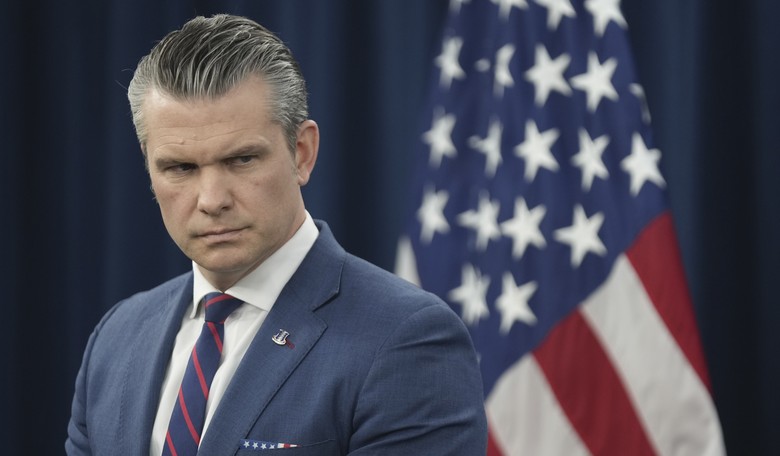
Here's the problem: In any future near-peer conflict, the United States won't have time to swap out the soft-shelled armchair generals for the SOBs. Fortunately we have a Secretary of War who gets that. On Tuesday, Secretary of War Pete Hegseth took to his official X account to announce a new program, the Joint Warfighter Evaluation, which is intended to separate the wheat from the chaff.
Today, I am announcing the Joint Warfighter Evaluation. pic.twitter.com/F0JIfbmEKs
— Secretary of War Pete Hegseth (@SecWar) September 22, 2026
The Secretary of War said:
A couple of months into the job, Chairman Caine gave me a portrait of General George C. Marshall, who Winston Churchill famously called "The Organizer of Victory." That portrait is a constant reminder of our mission: To cut bureaucracy, and demand true meritocracy across our senior ranks.
To do that, today, I am announcing the Joint Warfighter Evaluation. Starting this year, eligible O-6s—that’s colonels and Navy captains screening for one-star—will undergo this assessment to stratify their ability to fight, adapt, and win. While the backbone of our military is our NCOs and our petty officers, victory depends on the commanders who lead them.
America needs warfighters who can master a chaotic battle space. This principle is proven. Before World War II, General Marshall used the Louisiana Maneuvers, matched by the Navy’s fleet problems, to test commanders under realistic friction. Peacetime
reputations dissolved as leaders like Eisenhower, Nimitz, and Bradley emerged. The Joint Warfighter Evaluation brings that standard to the modern multi-domain fight. This evaluation is an objective equalizer. The scenario only cares about operational decisions under pressure.
One year ago, I tasked Stu Scheller and his team with challenging generations of promotion assumptions. Stu, thanks to your commitment, this reform is ready. In 1941, General Marshall did not look for consensus builders. He searched for warfighters. Our troops deserve commanders chosen by proven competence, not paper credentials. The Joint Warfighter Evaluation ensures our flag is carried by our most lethal and most adaptable leaders.
This is how these things should be done. This is how these things must be done, for the good of the republic. In any future near-peer conflict, there won't be time to build effective leaders from scratch. In any future near-peer conflict, it will be too late to go look for the Halseys, the Nimitzes, the Eisenhowers, the Pattons that will lead our forces to victory. We won't have that luxury of time and distance that we had in 1941. We have to be finding these people now, and just as it takes stone to hone steel, we have to put them through rigorous paces to ensure they will meet the test when the time comes. We have to find the SOBs, and they should be the ones we promote, with the only criteria being ability. That appears to be what this Joint Warfighter Evaluation is intended to do.
In these matters I'm fond of quoting the Greek philosopher Heraclitus, who wrote these words that still ring true today.
Out of every one-hundred men, ten shouldn’t even be there, eighty are just targets, nine are the real fighters, and we are lucky to have them, for they make the battle. Ah, but the one, one is a warrior and he will bring the others back.
This is as correct today as it was in Heraclitus's time. Secretary Hegseth is determined to build a force of soldiers and, more to the point, warriors. Ensuring that our forces are made up of only the technically and tactically proficient, the hard, the motivated, the determined, the skillful and innovative tacticians and leaders, will go a long way towards ensuring that goal, to finding and promoting warriors, not placeholders, not politicians.
On the battlefield, after all, as we see here, one warrior is worth nine soldiers — and 80 targets.