
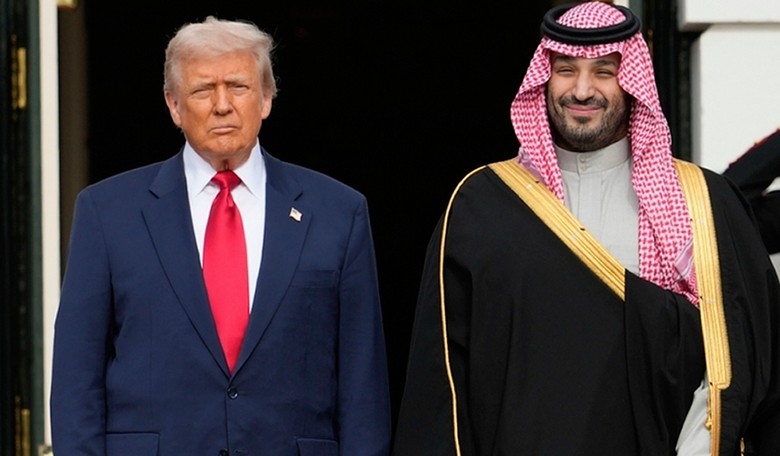
In yet another interesting development from the troubled Middle East, the Crown Prince of Saudi Arabia, Mohammed bin Salman, met with the American head of Central Command, Admiral Brad Cooper (CENTCOM), in Jeddah on Monday. The two reportedly discussed events in Yemen, most notably the advances made by Houthi rebels along the Red Sea coast and near the Bab el-Mandeb Strait.
The meeting comes after reports that the Crown Prince asked the Trump administration for help dealing with the Houthis, who are also attacking Saudi installations in addition to opposing the Saudi-backed Yemeni government.
Saudi Crown Prince Mohammed bin Salman discussed regional developments with U.S. Central Command chief Admiral Brad Cooper in Jeddah on Monday, Saudi state media said, amid escalating hostilities with Yemen's Iran-aligned Houthis.
The meeting comes days after three sources familiar with the matter told Reuters the crown prince had sought military assistance from President Donald Trump to help fight the Houthis.
Trump did not agree to U.S. strikes on the group, but Washington told Riyadh it would provide intelligence-sharing and targeting assistance, the sources added.
That last part is especially noteworthy, since earlier on Monday we reported on how China is reportedly offering satellite intelligence and targeting assistance to Iran.
There's another interesting data point:
The Houthis, who control the most populous parts of Yemen and much of the north, have been launching attacks towards Saudi Arabia since declaring a naval blockade against Riyadh in July, with strikes targeting Saudi vessels in the Red Sea.
Meanwhile, Saudi Arabia requested the postponement of a meeting between Tehran and Gulf powers that was supposed to take place in Oman on Monday, Iran's foreign ministry spokesperson said on Monday.
So, we have a key meeting called off; the Iranians are still taking the occasional potshot at United States forces and other regional targets, while their proxies, the Houthis, are pushing north in Yemen towards Saudi Arabia, which is, aside from Israel, the closest thing the United States has to an ally in the Muslim world. On Saturday, we also reported serious damage from a drone attack on a key Saudi oil pipeline, wherein the drones were launched from Iraq, where Iranian-backed militia groups are known to be operating.
Saudi Arabia has a substantial military force, consisting of about 225,000 active-duty troops, 1,500 tanks, and over 7,000 armored vehicles, mostly American-made. They can also field an air force of around 380 combat aircraft and over 250 helicopters, with smaller numbers of transport and training aircraft, which include American F-15 and now F-35A fighters.
Finally, they also have a few small coastal-defense ships, essentially a frigate navy, but their ships are capable of launching missile attacks on land targets.
With some of the same intel that China is providing Iran, there would seem to be little reason that the Saudis couldn't, as the military saying goes, grow a p**r and push south to deal with the Houthis once and for all, especially with American reconnaissance and targeting assistance. That would take a major Iranian proxy group off the board, as well as taking the pressure off the rather uncertain legitimate Yemeni government.
Meanwhile, expect things in the Middle East to grow more uncertain. The Iranians are almost certainly trying to hold out until after the American elections in November, in the hopes that this may result in a moderation of American policy; and if you needed yet another reason to vote in November, well, here you are.