


The Democrat nominee for the Senate in Michigan, Abdul El-Sayed, has a lot of reasons not to vote for him.
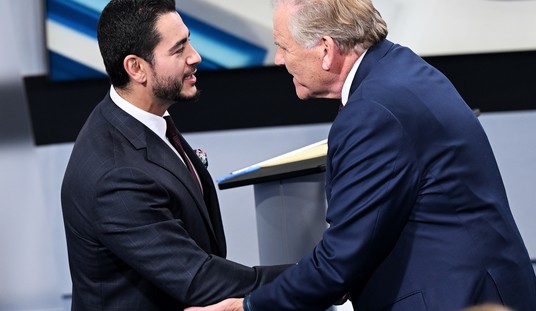
Republican candidate Mike Rogers pointed out a bunch of them during their debate on Wednesday night, including his terrible positions on ICE and the police.
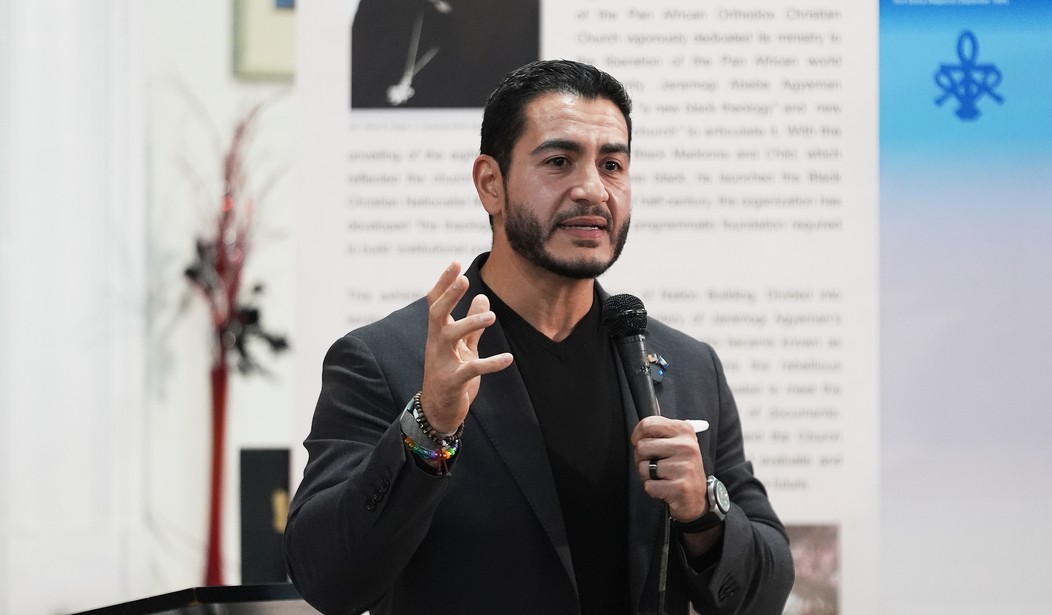
But there's a big one that El-Sayed revealed this week as well that isn't getting as much attention as it should: his glaring misunderstanding of the Second Amendment and the Bill of Rights.
There are so many things wrong in this statement, it's hard to know where to begin.
Abdul El-Sayed on the Second Amendment: "When they promised the right to bear arms, they had muskets. So, yeah, everyone should have equal rights to a musket." https://t.co/Fu1EOJmrH2
— Bobby LaValley (@Bobby_LaVallley) October 20, 2026
"I'm going to swear an oath to the Constitution. Constitution has a Second Amendment," El-Sayed said.
"But the Second Amendment, just so we all are clear, even the most conservative folks hew to this idea called originalism. And originalism is the idea that you should interpret the Constituation in the context in which the Constitution is written.
When they promised the right to bear arms, they had muskets. So, yeah, right, everyone should have equal rights to a musket, you know what I mean?
And then let's also ask about why the Second Amendment was written, and what the Bill of Rights was intended to do. The Bill of Rights was about a compromise to protect people from government tyranny under a Constitution because the people who were voting to ratify that Constitution had just lived under a government tyranny from the British. So the idea was that you have the right to bear arms against your government, should they become tyrannous. And the way that we enacted that was that we...built the Coast Guard and the state militias that are supposed to be able to protect.
Now a lot of folks want to interpret all the rest of the Constitution in the original term, and then want to interpret the Second Amendment in the most extreme version possible. And they tell us that the Constitution says, you can have any gun, for anyone, anywhere, at any time. Which is just not consistent with any interpretation of the Constitution at all. And so, the question we need to be asking is: are there some guns that are built just to kill as many people as possible? And do we really think that those guns ought to be just publicly available?"
First, let's start with the fact that he seems to not understand the Bill of Rights, which alone would be disqualifying. He talks about when "they promised these rights" and that the Bill of Rights was a "compromise," as though the government was according us these rights.
No, the rights are unalienable, God-given rights, not accorded to you by the government. That's basic constitutional understanding 101. It wasn't a "compromise" — the point of the Bill of Rights was that these were rights that the government could not take away or infringe upon. If he doesn't grasp that, that's a problem.
Then he tries to use originalism as a justification for saying that would mean we could only carry muskets. First, that's ahistorical on the facts because there were more weapons than muskets. But further, if that kind of argument were true, if you extrapolated that out, then he wouldn't have a free speech right if he's using a modern microphone or tweeting on X. It's a silly argument. It's an argument that the Supreme Court rejected in District of Columbia v. Heller (2008), where the Court found that the Second Amendment applied to bearable arms, including modern weapons that were not in existence at the time of the founding. As someone who is running for the Senate, he should have that basic understanding. But he doesn't.
Put down the mic and get thee a speaking trumpet to practice your freedom of speech
— Mary Katharine Ham (@mkhammer) October 20, 2026
El-Sayed also inartfully seems to be trying to make the "state militia" argument as well. This sounds similar to something he's said in the past when he claimed in 2022 that the right didn't protect individual gun ownership, arguing only community-based groups like militias and police should have firearms. That argument was also rejected in Heller, which said there was an individual right to bear arms, unconnected with service in the militia.
Then, at the end, El-Sayed makes it clear he thinks there are guns they should be going after.
All of this is disqualifying when he has a problem with basic concepts that he would have to swear to uphold.