






If you had told anyone in the spring of 2020 that Donald Trump and CBS News White House correspondent Weijia Jiang would one day hit the floor together as gunfire erupted around them, and that Trump would come out of it calling her work “fantastic,” they would have laughed you out of the room.
And yet here we are.
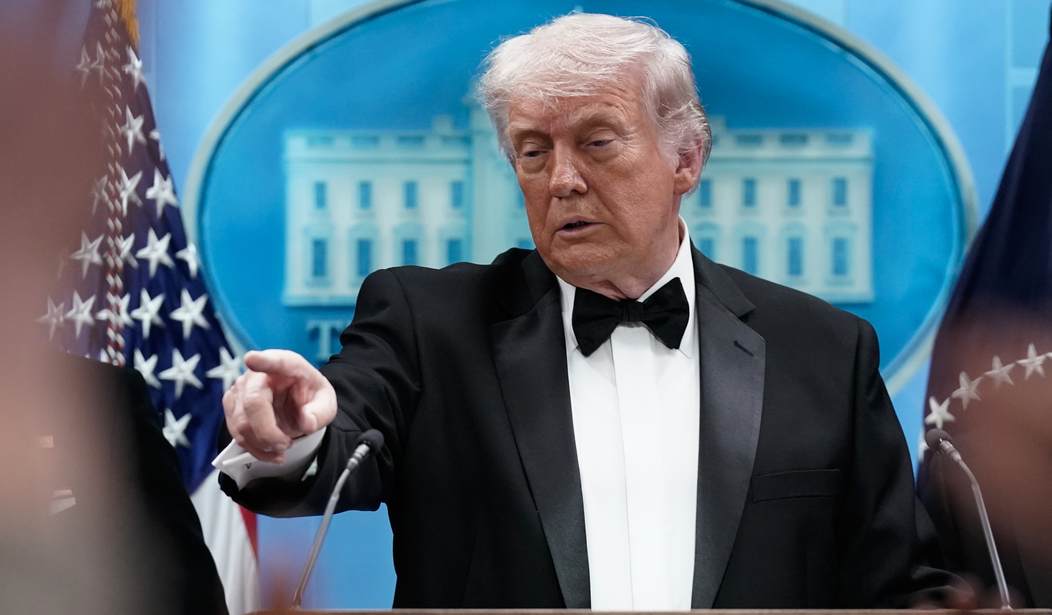
Saturday night’s shooting at the White House Correspondents’ Association dinner at the Washington Hilton produced one of the stranger moments in their relationship. When Trump took questions from the White House briefing room after the incident, still in his tuxedo, he gave the first question to Jiang, who was serving as WHCA president.
“Madam chairman,” Trump said, “I just want to say you did a fantastic job. What a beautiful evening.”
The compliment landed in a room still digesting the chaos from hours earlier. For anyone who has followed the Trump-Jiang dynamic, it was a jarring moment in a relationship built almost entirely on conflict.
A History Built on Confrontation
The two have crossed swords repeatedly, almost always during the COVID briefings of Trump’s first term.
The first major flashpoint came in April 2020, when Jiang pressed Trump on why he hadn’t warned Americans sooner that the virus was spreading rapidly, even as he was holding large campaign rallies. Trump cut her off.
“Just relax,” he told her. “Keep your voice down.” Her voice, by most accounts, had not been raised.
Weeks before that, Trump had already made his feelings about her reporting style clear. After Jiang questioned him about senior adviser Jared Kushner’s comments on the federal stockpile of medical equipment, Trump told her she should be “ashamed” of herself and accused her of asking the question in a “very nasty tone.”
The exchange that drew the most attention came in May 2020. Jiang challenged Trump’s repeated claims that the United States was outperforming every other country on COVID testing and asked why he framed the pandemic response as a global competition when Americans were still dying by the thousands every day.
Trump’s response put him in the headlines for days.
“Maybe that’s a question you should ask China,” he said.
Jiang, who was born in China and immigrated to the United States as a child, pushed back directly, asking, “Sir, why are you saying that to me, specifically?”
Trump said he wasn’t saying it specifically to anyone, then called it a “nasty question,” attempted to move on to CNN’s Kaitlan Collins, and ultimately walked off the stage and ended the press conference.
The ‘Kung Flu’ Backdrop
The “ask China” exchange didn’t happen in a vacuum. Two months earlier, in March 2020, Jiang had reported on Twitter that an unnamed White House official had called COVID-19 the “Kung-Flu” directly to her face. She declined to name the official, which prompted a public demand from White House counselor Kellyanne Conway that she do so.
That disclosure kept the administration’s language around the pandemic in the news for months. When Trump himself used the phrase at a rally in June 2020, Jiang pressed press secretary Kayleigh McEnany on why the president used “racist phrases.” McEnany deflected.
Saturday Night
According to reporting from The Washington Post, Trump and Jiang were mid-conversation on the dais when shots rang out near the main security screening area of the Washington Hilton just after 8:30 p.m. Secret Service agents swarmed the stage. The president and first lady were evacuated. Guests dove under tables.
Jiang, still in her evening gown, returned to the stage after the suspect was taken into custody and delivered a calm statement to the shaken crowd. She told them the program would continue, drawing applause. Later, she confirmed the dinner would be postponed and thanked law enforcement for protecting the roughly 2,600 guests.
Speaking to CBS afterward, Jiang described the moment the shots were fired. She and Trump had been close enough to touch as agents moved in. “I had no idea what was going on,” she said.
Her public remarks circled back to the night’s central theme. “When there is an emergency, we run to the crisis, not away from it,” she said.
At the post-incident press conference, Trump described how agents had pulled him from his seat between Jiang and Melania Trump. He praised the Secret Service’s response. And he opened the floor by complimenting the woman who, six years ago, he had told to “ask China.”
Does It Change Everything?
Trump’s graciousness toward Jiang Saturday night does not rewrite the record of their earlier confrontations, and Jiang’s professionalism in a crisis does not erase the substance of the questions she raised during the COVID years.
What it does illustrate is something that gets lost in the permanent war between the White House and the press corps: the people at the center of these fights are, in a crisis, still people. They shared a frightening few minutes on a stage in Washington, and for one night, that counted for more than five years of bad blood.
Trump told reporters he wants to reschedule the dinner within 30 days. The WHCA board said it will assess what happened and determine how to proceed.
Both sides will return to their corners soon enough. But Saturday night was something different.
Join the Conversation
VIP members get the ability to comment on articles.