



Most of us in the United States go through our days assuming we’ll get home safely, find whatever we need with a few taps on a screen, and settle our disputes under at least the pretense of the rule of law. We rarely have to think about physical survival, much less whether we’ll have to fight for it. It’s easy to forget how much of the world has no such assurance. The violence we’ve watched unfold in Europe should remind us that there are people determined to take that security from us, too. Without men willing to stand watch in dangerous places, they’ll get their way.
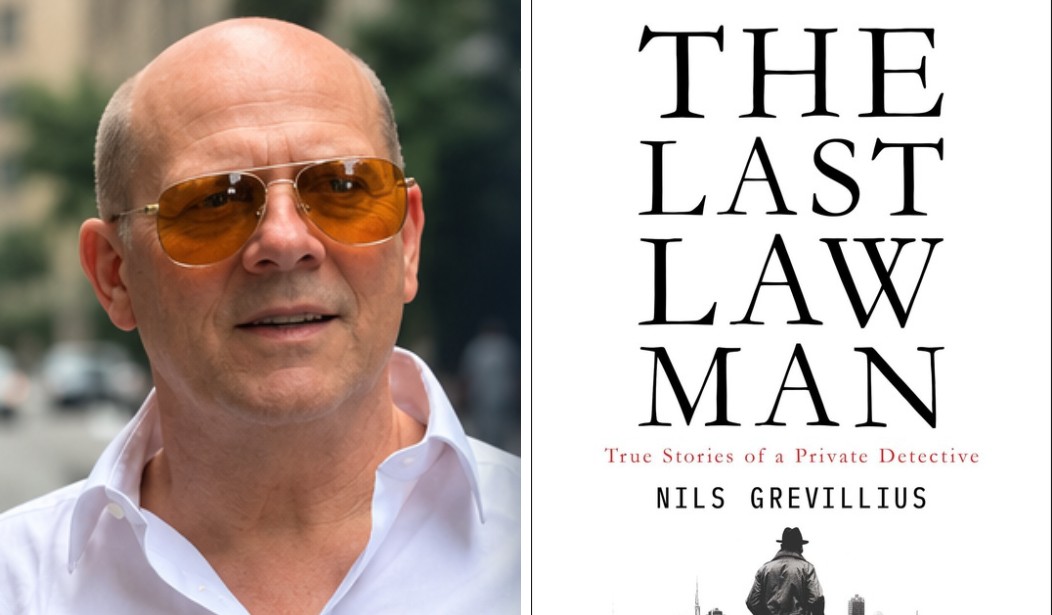
One of those men is my friend Nils Grevillius, a U.S. Army veteran who worked in clandestine counterintelligence then joined the Pinkerton Agency as a private agent before hanging out his shingle as a private detective in Los Angeles in the aftermath of the Rodney King riots.
Me and Superman had a fight. I hit him in the head with my Kryptonite. I hit him so hard that he went insane. Now I'm dating Lois Lane! https://t.co/ooxHvRE5H2
— Nils Grevillius (@DetectiveNils) November 11, 2026
I met Nils back in 2014 as we were both doing battle with liberals in the Santa Clarita Valley Open Forum on Facebook (from which he and his many aliases have now been perma-banned). Over the years he's become a trusted friend who's good for either an off-color limerick to make me laugh or to advise when I receive serious threats to my safety, depending on what's needed that day.
Nils has regaled me with countless stories over the years, so I'd been looking forward to reading his memoir, The Last Lawman: True Stories of a Private Detective, from the moment he told me he'd gotten a book deal. I expected stories about military intelligence, surveillance, gangsters, private investigations, and all the other things you'd expect from someone who's spent a lifetime chasing bad guys. Those stories are certainly there, and they're fascinating. What stayed with me after I finished the book, though, wasn't the details of his capers (investigating the Wonderland murders) or the big names he encountered (Whitey Bulger), but something much quieter. What stayed with me is the story of a man who's spent his life learning how to confront evil without allowing it to consume him.
That may sound overly dramatic until you remember what Nils actually did for a living. Most of us spend our careers around reasonably decent people. He deliberately sought out the people the rest of us hope never cross our paths. Criminals. Predators. Career con artists. Organized crime figures. People capable of extraordinary violence. That kind of work changes a person. It has to.
What surprised me most was how willing he was to admit exactly how much.
Early in the book, Grevillius describes learning to shut off his fear of death. Then comes the sentence that stopped me cold: "But the problem with switching off fear of death is this process can switch off the ability to love." That isn't something you'd expect to read from a former soldier and detective. It's certainly not the kind of vulnerability modern culture assumes men like him are incapable of expressing.
As someone who worked in criminal courtrooms for decades, covering some of the most heinous murder trials in North Carolina history, and as a woman whose late partner spent those same decades secretly going in and out of hostile countries on classified missions, I've met plenty of men who've learned to compartmentalize. They almost have to. You can't spend decades immersed in the worst parts of humanity if every horrific case or experience follows you home.
What we don't often hear is what that compartmentalization can cost. Nils is brutally honest about what it cost him over the years, and how "the God [he] didn't believe in" has allowed him to "have the life [he has] enjoyed ever since as a detective and father."
Those are the stories I’m grateful he told. They helped me understand the friend I already knew, through the people he misses and the responsibilities he accepted when there was nothing easy about accepting them.
The older I get, the less interested I am in hearing from people who project toughness, and the more interested I am in hearing from people who have carried enormous burdens without allowing those burdens to make them cynical, bitter, or emotionally unreachable. That is what makes The Last Lawman more than a collection of war stories or detective cases. It's an honest look at what it costs to spend a lifetime standing between order and chaos — and the daily decision to remain fully human anyway.
(Find out more about Nils here, and purchase the book (or audiobook) here.)
Editor’s Note: Here at RedState, we’ve been dealing with real government suppression of free speech for YEARS. Despite the threats and consequences, we refuse to go silent and remain committed to delivering the truth.
Help us fight back against government censorship by joining RedState VIP and using promo code FIGHT to receive 60% off your membership.


Join the Conversation
VIP members get the ability to comment on articles.